A flower and even a potato garland were used to felicitate Muncherji (Munchi) Nusserwanji Cama when he won the Bombay Parsi Punchayet (BPP) trusteeship elections on July 4, 2011. His eyes twinkling, he got the last laugh on his critics who had variously denigrated his rotund frame as a pendo (round sweetmeat) and potato. Appreciating the confidence of the voters, in his victory speech he mentioned that he hoped to "open a new vista…(and) write a new history for the community.”A decade later, on July 3, 2021, the 64-year-old scion of the illustrious Cama family that owns Mumbai Samachar and was well connected with the Petit and
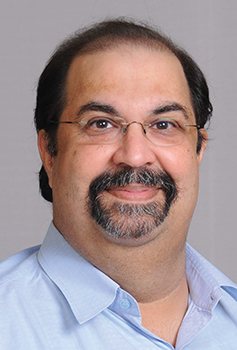
Wadia families as also the trusts managed by them, succumbed to cardiorespiratory failure at his home in Bombay.
"Muncherji was a trustee of the BPP from 2011 to 2018 and during this period he contributed the wealth of his time, talent and governance skills to the BPP board,” noted a condolence message from the trustees and staff of the BPP. "He was deeply involved in the working of every trust whose board he adorned and the BPP was no exception. He was meticulous and thorough in all his decision making and served every institution including the BPP with sincerity of purpose and full-fledged dedication. He was kind and generous but at the same time he was a strict disciplinarian and boldly outspoken. He was religious and a man who lived a very principled life…He was a ‘sethia’ in the true sense of the word.”
Keeping track of the attendance of BPP trustees, Cama maintained a roster marking the time when his co-trustees walked in and out of the Tuesday board meetings. This would be periodically shared with Parsiana until 2015 when he submitted his resignation and subsequently withdrew it on a technical issue. For the next three years he had to wage a legal battle at the Charity Commissioner and the Bombay High Court to restore his rights as a trustee by which time his seven-year tenure was nearing an end. According to a write-up in the online Parsi Junction of July 11, 2021 brought out by a loyalist of the former BPP chairman Dinshaw Mehta, "Masoor pav trustees mistreated the aristocratic Cama.”
Frustrated by the functioning of the BPP board, Cama had written in his resignation, "For some time now I have realized that sitting through endless, meandering Tuesday meetings was achieving virtually nothing but the opportunity to view some trustees brazenly inciting others to react to their unparliamentary barbs and accusations. Watching some of the BPP trustees revert to what might be termed childish behavior was unpleasant and pointless.” He preferred to devote his time "to other great institutions with which I am associated and where my fellow trustees and I can, and do, make a difference,” he noted.
"A trustee must manage for today and have a vision for tomorrow,” believed Cama who considered trusteeship as an "office of service,” stemming from a "burning ambition… to leave the trust property in a better condition than when I found it… I like to put myself in the shoes of the settlors and wonder how they would feel about the current affairs.” To ensure that the trustees’ wishes were respected, Cama would study in detail every trust deed for he refused to condone any "violation of the law or the trust deed… The trustees’ duties are to merely maintain and keep available the religious institutions to the public for the purposes they were intended,” Cama had expressed in an interview with Parsiana and during his election campaign (see "More beneficiary friendly,” and "Muncherji’s march,” Parsiana, July 21, 2011).
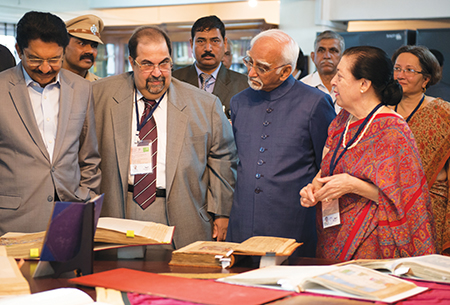
Muncherji Cama (top and above) at the K. R. Cama Oriental Institute in 2015 with
(front row, from l) Ch Vidyasagar Rao, Mohammed Hamid Ansari and Homai Modi Photo: Devki Dhuldhoya
From l: Dr Nawaz Mody, Rustam Vakil, Ratan Tata and Cama
Cama winning the Bombay Parsi Punchayet trusteeship elections in 2011 with
Dinshaw Mehta (at the mike) and jubilant supporters
As president of the K. R. Cama Oriental Institute (KRCOI, named after the oriental scholar Khurshedji Cama who was Muncherji’s grandfather’s cousin), Muncherji’s "guidance and inspiration” was phenomenal, stated joint honorary secretary Dr Nawaz Mody. She described the president as "a colossus with a wonderful mind.” Having worked with him for over 25 years she found him to be "extremely thorough and painstaking.” Whether it was introducing a speaker, organizing international seminars, preserving and digitizing old manuscripts and books, renovating the hall or galleries, launching beautiful publications or the annual Journal of the KRCOI which was recently recognized by the University Grants Commission as "an international journal of repute,” his commitment was unmatched. Under him, the KRCOI introduced new courses and activities and celebrated their centenary in 2016. He was happy to see scholars from overseas come to the Institute to study the religion and the community.
"I am not the bribing sort; I am the fighting sort,” Muncherji had candidly admitted in an interview with Parsiana (see "Recognition for restoration,” May 7, 2014) before clarifying that he had mutually settled several cases for the Garib Zarthostiona Rehethan Fund (GZRF) when he became a trustee there though he did not shy away from litigating when the circumstances demanded. Since every flat is allotted on merit without accepting any monetary reimbursement, the trust is very strict that no one can sell or demand compensation when handing over vacant possession after the death of the occupants "otherwise charity is not going to be served,” emphasized Muncherji who was subsequently made GZRF president.
The GZRF manages around 50 buildings with nearly 500 flats. Their properties include the Murzban Colony at Lal Chimney, another Murzban Colony at Gilder Lane, two widows’ chawls, as also some estates on Wadia Street and Avabai Cassinath Street in Tardeo, plus buildings in Dadar. The trust bears all charges for repairs to the properties, including the interiors for those who cannot afford it. The restored 100-year-old buildings at Murzban Colony at Lal Chimney had earned the UNESCO Asia-Pacific Award for Cultural Heritage Conservation in 2017. The Albless Dispensary and the Bai Ratanbai F. D. Panday Girls High School at Gilder Lane too are run by GZRF.
"Under his guidance the Panday School has moved forward in leaps and bounds. Only a phone call away, he has been my mentor as I took on the mantle of principal of the School in 2017,” stated Hutoxi Mistry at the online condolence meeting convened by the School on July 15. Alluding to his "wonderful, witty, humorous, straightforward and benevolent nature,” she mentioned that keen to see more Parsi students at Panday, he even took an interest in the free lunch menu provided to Parsi students.
"I used to call him King Cama. He always reminded me of Henry VIII —gentlemanly, soft-spoken, supportive of the poor and ill, he helped quietly and compassionately,” declared the erstwhile principal of Panday School Silloo Commissariat. Whilst appreciating the good work and loyalty of his workers, there were times when "he was very jovial and friendly but woe betide if he lost his temper when he made you shiver and quake.” When some new rules had brooked opposition from the parents in 2003, Commissariat remembered him "taking over the reins. Formidable and august he stood at the entrance and said ‘This is my School. You shall not enter it if you break the rules. I shall not tolerate your nonsense.’”
Working as an accountant for the GZRF for nearly two decades, Mahazarine Patel referred to him as "a humble and polite person with a certain grace and dignity.” Since he reposed "complete trust, one worked hard and lived up to it,” she mentioned. A poem composed by Panday School administrator Freny Mehta eulogized his many assets. One of the verses noted, "Young and old looked up to him with wonder and awe/ Grit and determination in all his actions they saw.”
"Literature was an open book for Munchi, law and politics were no strangers,” recalled Prof Aban Sethna, referring to his "many-splendored personality. Insisting that he be addressed as Munchi, informality was one aspect of his nature, the ability to put people at ease. On the other hand, he would stand no nonsense. No one could take him for a ride.”
Senior trustee of A. H. Wadia Trust, Jehangir Wadia described his co-trustee Muncherji as "a fantastic man with a golden heart and wonderful head. Dedicating himself to the poor, he was at their service day and night.” Particularly sympathetic to the critically ill who desperately required funds, he would convince his co-trustees to sanction generous amounts instead of a pittance saying, "In times of need, don’t make a person run around approaching different trusts.” "Initially I did not agree with him but now I fully endorse this approach,” added Wadia. Muncherji showed largesse not only to Parsis but to members of all communities. To show consideration towards the infirm recipients of doles from the A. H. Wadia Trust, Muncherji insisted the monies be sent to the ground floor instead of the donee having to climb three floors.
Pragmatic in his approach, on the subject of declining community numbers, Muncherji had responded, "It’s a change — adapt to it. Don’t think you are going to stop it… Importing Zoroastrians,” however, was not an option. When criticized for permitting liberal views to be expressed in Mumbai Samachar, Muncherji had responded, "A newspaper is not a preserve of one person. We are not tyrants. It is a combined effort. Our family policy has been to never interfere in the editorial policy. If an advertisement appears in the paper that does not mean we endorse it. This is a democracy.”
"He was well read, witty and had the most amazing sense of humor. At public meetings it would be a joy sitting next to him simply to hear his witty comments spiked with caustic humor,” recalled BPP trustee Noshir Dadrawala. "At the food table, he would tell you the right sandwich to pick or the right cut of meat to select. He loved good food and that ran in his family.”
While literature and languages came effortlessly to Muncherji since his early days at the Bharda New High School, he had a "mental block against algebra and geometry” eased by Dr Mehroo Bengalee (later vice chancellor of the Bombay University) who had taken him under her wings, he had acknowledged. When pursuing commerce in college, Muncherji got 99/100 in accountancy although he was sure of scoring full marks. His parents, Banoo and Nusserwanji, advised him to be content with what he got but Bengalee convinced them to permit him to make an application to the Bombay University for reevaluation saying, "You must always encourage your child.” It was then confirmed that he had not made a single error but the paper-setter had miscalculated the total marks that could be obtained as 99 instead of 100!
"I couldn’t have asked for a better brother. He was supportive in every respect. I could turn to him for anything and be assured of his guidance,” remarked Hormusji, the youngest of the three siblings, the eldest being Dr Villy Cama. Growing up in a joint family, they always had company. While Muncherji was drawn to the arts, Hormusji was fascinated by mechanics. "We complemented each other,” said Hormusji who has been happy to look after the printing press while Muncherji oversaw the editorial content of Mumbai Samachar.
The three directors of The Bombay Samachar Private Limited "enjoyed an excellent working relationship,” confirmed Mehli Cama, son of Nusserwanji’s brother Rusi. "We Camas pride ourselves as being one family. Our fathers were extremely close as brothers. The five of us (including Mehli’s sister Avi Dastoor) grew up as brothers and sisters, enjoying family dinners and holidays together in Khandala and Mahabaleshwar. Munchi and I were extremely close, sharing a love for British Raj books, history, art, culture and good movies,” recalled Mehli. As children, "The two of us would sit with our grandparents and hear stories of good old days. Later in our youth on our trips to the Ripon Club, we would sit with Ratan Bhavnagri, senior partner of S. B. Billimoria and Company, who was a great storyteller… As collectors of oral Parsi history from the 19th and 20th centuries Munchi and I were actually planning to collaborate and bring out a book” to document these stories for posterity.
Fluent in French, Muncherji enjoyed reading French novels. He had completed part I of his MA in Latin but not part II as there was no one competent to set the examination paper. Later he did a postgraduate diploma course in Arabic and computer technology. Fond of western music, in his younger days he had learnt dancing under J. J. Rodriguez. He rated himself as a neophyte bridge player.
Although confined to the house for over a year, Muncherji continued to keep himself informed of developments where he was trustee. On the night before his demise he was chatting with the family and texting from his phone. As was his practice, the lark awoke before 5 a.m. on July 3 and asked for a cup of coffee. Before it could be brought to him, he had breathed his last. His last rites were performed at the Worli crematorium.
Realizing that the Zoroastrian religion is a "mystery” to the young, he believed that unless the prayers are translated and explained, the level of religious knowledge would remain marginal. With the number of worshippers declining at fire temples in remote areas, Muncherji was of the view that every Parsi baug should have an agiary.
Religion should be studied and practiced, believed Muncherji to whom trusteeship was "a sacred duty; a contract between us and our maker.”
The temperate trustee is survived by his sister Dr Villy and brother Hormusji.