The ambience and food served in
London’s Dishoom restaurants are inspired by Bombay’s Irani cafes
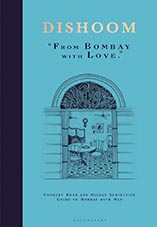
For the festive occasion of Jamshedi Navroz, Parsiana brings readers the following recipes, reprinted with permission from Dishoom: "From Bombay with Love” by Shamil and Kavi Thakrar and Naved Nasir with photography by Haarala Hamilton (Bloomsbury Publishing, UK £ 26). Dishoom is a chain of restaurants in London which attempts to recreate the ambience of "an
Irani cafe deeply rooted in some aspect of Bombay history,” write the authors, restaurant owner cousins Shamil and Kavi, and their chef Naved.
The first Dishoom restaurant opened in 2010 mainly to serve Londoners good food and drink. But, as the authors’ knowledge of Irani cafes and their role in Bombay’s civic culture deepened, they soon realized the need for "breaking down barriers… As you enter our restaurants, you might spot a statue of Ganesh, the elephant-headed Hindu God who removes obstacles, sitting companionably alongside an Asho Farohar, a symbol of Zoroastrianism...We love serving you dishes cooked in Parsi, Muslim, Hindu and Christian traditions.”
The book (see "Dishy Dishoom,” pg 206 ) is "replete with recipes and stories to share with all who come to your table. There is nothing that we love more than feeding you all in our restaurants, and we are extremely happy to be sharing our Dishoom recipes, so that you can cook them in your own kitchen,” write the authors.
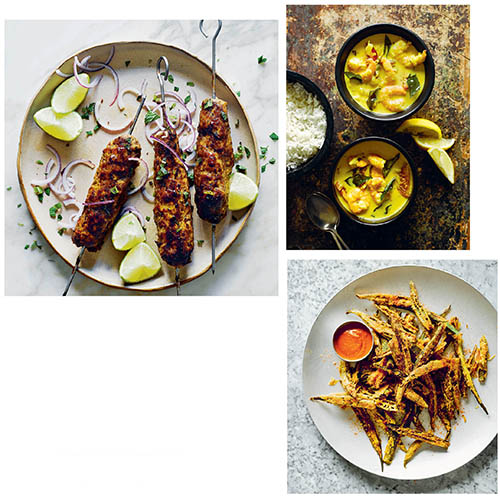
Top (l): lamb sheekh kababs; (r) prawn moilee; (above) okra fries Photos: Haarala Hamilton
LAMB SHEEKH KABAB
Serves 4
A sheekh kabab is formed from spiced lamb mince, wrapped around a skewer, then grilled. To create our mince for this recipe we blend a mixture of 80% lean lamb leg and 20% fresh lamb suet (fat) to give the best balance of fat for optimum succulence. If you can manage this at home, we strongly recommend it. If you’re unable to buy lamb suet and your lamb mince is quite lean, processed cheese slices are a secret trick that will add a welcome richness. For the most succulent kababs, finely chop the cheese, mix with your lamb mince and then pass through the fine setting of a hand mincer.
Corriander seeds (2 tsp)
Cumin seeds (2 tsp)
Coriander stalks (10 g)
Green chillies (2-3, 10 g)
Red onion (50 g, roughly chopped)
Lamb mince (500 gm, 20% fat)
Processed cheese slices (2, finely chopped, optional)
Fine sea salt (1½ tsp)
Garlic paste (25 g)
Ginger paste (15 g)
Black pepper (1 tsp, freshly ground)
Garam masala (2½ tsp)
Mint leaves (chopped), red onion slices and lime wedges for garnish
Warm a dry frying pan over medium heat. Add the coriander and cumin seeds and toast for two minutes, shaking the pan regularly. You should be able to smell the spices. Tip them out onto a plate and allow to cool, then crush to a powder using a pestle and mortar or spice grinder.
Using a blender or mini food processor, briefly blitz the coriander stalks, green chillies and red onion to a coarse paste (do not make it fine).
If you have a mincer, pass the lamb (with the cheese, if using) through it for especially juicy kababs. Put the lamb mince and salt into a large bowl and mix well to ensure they are thoroughly combined. Add the coriander, chilli and onion mix, along with the crushed toasted seeds, garlic and ginger pastes, black pepper and garam masala. Mix vigorously for two to three minutes (using a stand mixer if you have one). You should see tiny white strands forming in the meat, which indicates that it is ready. Cover and refrigerate for 30 to 60 minutes. (If you are using wooden skewers, soak them now.)
Portion the kabab mix into 10 balls, each weighing 60 g. Push a kabab stick through the center of each, then press the mixture into a thin sausage shape around the skewer, using your hands. The prepared kababs can be covered and stored in the fridge for three to four hours if you’re not grilling them immediately.
Heat the grill to medium high. Grill the kababs for four to six minutes, turning regularly, until nicely browned and cooked through, but still soft and tender inside. Let the kababs rest for two minutes, then transfer them to plates and garnish with chopped mint and red onion. Serve at once, with lime wedges.
OKRA FRIES
Serves 4
Shamil grew up resisting okra (ladiesfingers, bhindi) – he never got past the slimy texture. However, Naved’s recipe has since convinced him and many other lifelong okra-avoiders. These little snacks are crispy, light and deliciously addictive. They are even better when dipped in chutney. The bowl will be empty before you know it.
Okra (175 g)
Garlic paste (4 g)
Ginger paste (4 g)
Deggi mirch chilli powder (¼ tsp)
Vegetable oil for deep frying
Chickpea (gram) flour (15 g)
Cornflour (10 g)
"Magic” masala (½ tsp)
Chilli, coriander-mint and/or tamarind chutney for garnish
Wash the okra under cold water and pat completely dry with kitchen paper. Take off and discard the top of each okra, leaving the tail intact. Slice in half lengthways if young and small; quarter the okra lengthways if large.
Mix together the garlic and ginger pastes, chilli powder and four tsps water. Add the okra pieces and mix well to ensure they are well coated. Mix the two flours together. Sprinkle over the okra and toss very gently to coat.
Heat the oil in a deep fryer or other suitable deep, heavy-based pan to 180°C. Fry the okra in the hot oil, in batches if necessary, until golden and crispy, about four to five minutes. Drain on kitchen paper, sprinkle with "magic” masala (made by mixing sea salt, amchur and deggi mirch chilli powder) and serve immediately, with your choice of chutney(s).
PRAWN MOILEE
Serves 4
This is Naved’s special dish at Dishoom Covent Garden. It’s a light, fragrant and utterly delicious South Indian style curry, packed with juicy prawns and tempered with coconut milk. Although it looks impressive, it is actually very easy to make, so you can serve it either as a week night supper or as an indulgent dinner. We serve it with idiyappam, the white, lacy noodle pancakes, also known as stringhoppers. If you can’t get these, it goes just as well with steamed rice.
Green chillies (6)
Vegetable oil (55 ml)
Mustard seeds (2 tsp)
Fresh curry leaves (30)
Spanish white onions (300 g, sliced a little chunky)
Garlic paste (15 g)
Ginger paste (15 g)
Fine sea salt (2 tsp)
Black pepper (1 tsp freshly ground)
Ground turmeric (1¼ tsp)
Fresh root ginger (25 g, cut into matchsticks)
Coconut milk (400 ml)
Coconut cream (250 ml)
Large prawns (24)
Medium tomatoes (300 g, cut into small bite-sized wedges)
Lemon wedges to garnish
Remove and discard the stalks from the chillies, then slice each one into three or four long strips. Set to one side.
Place a large saucepan over medium heat. Add 40 ml of the oil, let it warm for a few seconds, then add the mustard seeds and 20 curry leaves. Let them crackle for a few seconds. Add the onions and sauté lightly for 12 to 14 minutes, until soft but not colored. Add the garlic and ginger pastes, salt, black pepper and turmeric and sauté for three minutes, stirring regularly. Add the sliced chillies and ginger matchsticks and cook for three minutes. Pour in the coconut milk and cream and simmer for 20 minutes, stirring occasionally.
While the curry is simmering, place a small frying pan over medium high heat and add the remaining oil. Toss in the rest of the curry leaves and fry for one minute, until crisp. Drain on kitchen paper and set aside.
Add the prawns and tomatoes to the sauce and simmer gently for a further five to six minutes, until the prawns are cooked; do not overcook or they will be tough.
Serve with the fried curry leaves scattered over and lemon wedges on the side.