Memories are what build up family histories, and collective memories then forge further links to form histories of institutions, communities (a notable example of this is how a publication like Parsiana contributes to the archival memory of the Parsi community, of course) and civilizations.
A microcosmic version of this occurred when readers in Bombay opened The Indian Express on the morning of April 25, 2018 and saw an article titled "The Art of Listening” by Pooja Pillai, centered around the music collection of Prof Sheryar Ookerjee (1925-2013).
The collection was gifted by Ookerjee’s family, Pervin and Seán Mahoney, to Cona, an artists’ hub (founded by Shreyas Karle and Hemali Bhuta) that explores connections between the arts — painting, music, cinema. Well-known Calcutta-based writer Aveek Sen mentored a project around Ookerjee’s music collection that included discussions with famed Indian musicians Aneesh Pradhan and Nityanand Haldipur. As Ookerjee’s step-daughter I had seen his interest in discussing the different approaches of Western and Hindustani music with other scholars like Profs Antarkar and Patankar of the Indian Philosophy and Aesthetics Departments at Bombay University.
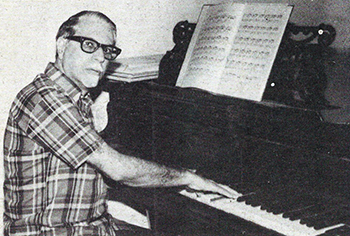
Prof Sheryar Ookerjee: excitement of discovering new music
While Ookerjee pursued an academic career — he retired as head of the department of philosophy at Wilson College and had a stint teaching at City College of New York, at the invitation of another music fanatic, Prof Kaikhosrov Irani — his interest in music deepened. It started in his student days during the 1940s when many Parsi homes would have a piano. This was the era before globalization, before the Net, and before the National Centre for the Performing Arts made concert-going a way of life. Around this time other music-lovers started organizations like the Bombay Madrigal Singers Organisation, the Paranjoti Academy Chorus, and the Gramophone Society (where people met and listened to records).
With strict import controls and foreign exchange restrictions, building a music collection meant requesting a friend visiting from abroad to bring an LP (long playing) record, or hunting for second-hand LPs when departing diplomats sold off their household wares.
For Ookerjee, the excitement of discovering new music forged new bonds of friendship. Through his eyes I can now recall the Home Listeners’ Eras: Paleolithic 78s, Neolithic LPs, Jurassic tapes, easy-to-carry cassettes, CDs… I also recall how a rare concert by a Yehudi Menuhin or an Arthur Rubinstein would be absorbed by listening and re-listening to the program, attended in rapt silence, and discussed even years later. In fact, Ookerjee’s concert reviews for the Sunday Observer, the Indian Post, and the Independent — newspapers themselves long forgotten now — form an integral part of Bombay’s memory archive.
PERVIN MAHONEY
mahoneysp@gmail.com