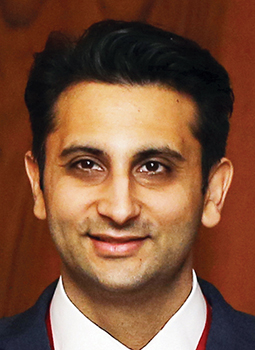
"Whatever happened in the second (coronavirus) wave in India should never happen again,” says Adar Poonawalla (pictured), chief executive officer of the Serum Institute of India (SII) founded by his father, Dr Cyrus. "Every country in the world was vying for vaccines and was looking at India for supplies, but SII had to stop exports to cater to local demand… I don’t want to make a choice between an African country or a South American country and India…There should be enough for everybody,” he was quoted by Business Standard (BS) (August 3, 2022).
 To this end SII is creating a 3,00,000 sq ft "plug and play” vaccine manufacturing facility at Manjari near Poona. The new facility, Adar’s brainchild, will be available to any country that may need urgent supply of vaccines in the event of an outbreak, stated BS. By end 2021, SII was making 250 million doses a month. It is now planning a four billion annual dose capacity. "Of this around two billion annual doses will come from the new pandemic facility.”
The first vaccines to roll out from the new unit will be for HPV (human papillomavirus, an infection that commonly causes skin or mucous membrane growths), followed by vaccines for malaria and meningitis, stated the report.
SII supplied "about 80% of the (anti coronavirus) doses used in India’s vaccination program,” and is reportedly holding about 200 million doses of Covishield in cold storage, stated the financial paper. Of these, 20 to 30 million doses will begin to expire starting August 2022. The booster drive "has revived some demand” and the company may end up salvaging 50-100 million doses as a result, noted the report.
SII is no longer making Covishield, Adar told BS. Its facility would "start making the Omicron variant of the Novovax vaccine soon.”
The privately held firm is also exploring new-age vaccine delivery systems. The BS issue of August 6 also carried a write-up on SII ("SII’s new-age jab for growth”) which noted the company was developing "delivery of vaccines using newer technologies such as skin patches and high speed jets… ‘I have always dreamed of having alternative delivery systems to deliver our vaccines effectively. We have an oral vaccine for children for rotavirus — this helps to do away with needles and injections. For instance, we have a flu vaccine which is a nasal vaccine,’” says Adar.
For patch technologies, "Just put a patch on your arm and the vaccine can be absorbed by the body. This technology is in the early stages of clinical development because one has to show comparability that his technology works and gives the same immune response… Pre-filled syringes to deliver vaccines is just an alternative to administer a vaccine — it’s ready to use and thus easier for a doctor or nurse. This product, however, would cost more. It would be a niche product for high-income markets, including some products for the Indian market as well,” says Adar.
"Work on vaccine skin patches and high-speed jets has begun globally,” states BS. "Research has shown that the immune response from the patch was 10 times more than vaccine delivered into the muscle via an injection.”