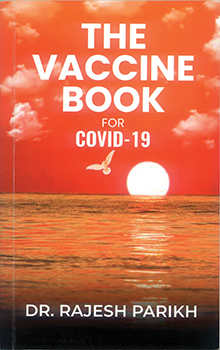
The Vaccine Book For Covid-19 by Dr Rajesh Parikh. Published in 2021 by Sanganak Prakashan, 5, Shanti Niwas, St Ramdas Rd, Mulund, Bombay 400081. Pp: xvi + 284. Price: Rs 299.
With the world living in the shadow of the Covid-19 virus with its continuing mutations, The Vaccine Book by Dr Rajesh Parikh (pictured) certainly needs to be read. The only remedy to negate or minimize the scourge is the vaccine.
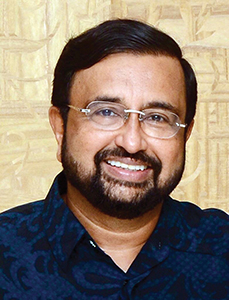
The author, director of medical research and an honorary neuropsychiatrist at Jaslok Hospital and Research Centre, instills in us pride and admiration for the early pioneers in the medical field whose work and dedication saved the lives of millions, at risk to themselves and their families’ well-being. It was an English physician, Edward Jenner, the father of vaccination who, through his work on cow-pox, discovered the smallpox vaccine. Today this disease has been virtually eradicated worldwide.
The book unfurls through its well-designed chapters the various aspects of vaccine development. The first chapter brings alive the trials and tribulations they must have undergone to establish the role of vaccines in the prevention and cure of diseases such as anthrax, rabies and cholera, as also tuberculosis. It is because of them that these diseases have been nearly eradicated, with greater chances for survival should they occur.
Parikh, who is married to Dr Firuza (née Sherdiwalla), director of the Department of Assisted Reproduction at the Jaslok Hospital and Research Centre, has impressed on the need for pre-clinical trials on animals to first establish safety for use on humans. Thereafter clinical trials from Phase I to III are held and finally approval is sought from bodies such as the Food and Drug Administration. Only then can pharmaceutical companies come forward to manufacture and market them. Simultaneously, large scale trials on humans commence. Even after this, some vaccines may need to be withdrawn or modified should inadvertent reactions occur.
Realization of the virulence of organisms like bacteria and viruses has been well brought out in the description and sequencing of the various pandemics that have affected our world, from smallpox, through the Spanish Flu, to the not so distant AIDS/HIV pandemic. A graph gives us an idea of the millions who have died from these ailments, even exceeding the deaths due to all the wars in the world till today. In comparison, the deaths due to the Covid-19 virus appear minuscule.
The book takes us through the Hunan Seafood market, with its fascinating animal wares, the infection of Covid-19 in one individual in mid-November 2019, its announcement as late as December 31, 2019, and its rapid spread thereafter, turning it into a worldwide pandemic.
It is fascinating, and at the same time disturbing to read about the manner in which politics and rivalry among major pharmaceutical companies play a part in causing delays in distribution and implementation of the vaccine program. The financial turnover will appear staggering to the average citizens who are finally concerned with their immunity.
We are made aware of the efficacy of all the different vaccines, as also the possibility of occasional adverse reactions. These are, however, few and far between. The final salvation lies with the vaccine. False, erroneous beliefs and public paranoia about vaccines should be quelled. This is detrimental to the overall control of the viral spread.
The last chapter emphasizes the necessity for caution, the importance of masking and social distancing even after taking the vaccine. Parikh pins hope on artificial intelligence to make the world a better place.
The book is definitely worth a read. One would find the answers to all our doubts and queries regarding today’s big question: To be vaccinated or not. The answer clearly lies in the affirmative.
Dr PILLOO HAKIM
Dr Hakim is professor emeritus, Grant Medical College and Sir J. J. Group of Hospitals, Department of Ear, Nose and Throat (ENT) and Head and Neck Oncology, and honorary consulting ENT surgeon at Saifee and The B. D. Petit Parsee General hospitals.