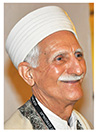
Died: Mobed Mehraban Khodamorad Firouzgary, 90, Iran’s seniormost priest, respected by the local as also the global Zoroastrian community for his extensive knowledge of rituals and customs, and his practical advice to coreligionists; on March 7, 2025 in Tehran.
A long-standing member of the board of directors of the Iran Anjuman e Mobedan (Council of Mobeds), at the age of 86, the Ministry of Justice of the Islamic Republic of Iran appointed him leader of a four-member Zoroastrian consulting body to assist Iranian law courts to resolve disputes pertaining to the personal laws of Zoroastrians. The senior priest had then urged, "Please pray with me that no conflict will come up at any time or is reported to me” as a court could seek the consulting body’s views on issues like marriage, divorce, adoption or inheritance. Firouzgary had further announced, "I have submitted to the pressure of accepting this post just because I consider it my duty towards our community. Otherwise it would have taken a heavy toll on my conscience, especially knowing that our religious yardstick for meting out justice ought to follow that of our spiritual judge Meher Yazata who uses hazangro gaoshahe (1,000 ears) and baevar chashmano (10,000 eyes), indicating that no verdict should be issued unless 1,000 witnesses have been heard and 10,000 documents (all pertaining to that one case) are examined personally!”
For many years the sole Zarathushti marriage licence issuing authority in Tehran appointed by the Justice Ministry, when Parsiana needed to confirm facts and figures regarding Zoroastrians in Iran, we would invariably turn to Firouzgary. He was among the few knowledgeable Iranians who both understood English and responded to our email queries.
Reputed for his honesty and humility, Zoroastrian institutions and researchers in different parts of the world similarly frequently sought his expertise. As noted Shervin Farridnejad, Professor of Iranian Languages at the University of Hamburg, "The passing of Mobed Firouzgary is a profound loss for the Zoroastrian community. He was a man of deep kindness and great spirit, always generous with his time and wisdom. His endless compassion and willingness to answer even the most difficult questions will be remembered with gratitude.”
Top and above, center: Mobed Mehraban Firouzgary with female mobedyars in Iran
Acknowledging his influence, a tribute on the Parzor website noted: "He taught us true selfless service as we watched a frail body but determined spirit carry on teaching all those around him, Zoroastrians and non Zoroastrians, the path of truth… What did he teach us? To follow Zarathushtra’s message for its universal truths, to explain carefully each symbol in a ritual, especially the rituals of life’s journey — the sudreh pushi, the wedding, the journey of the soul into the heavenly garden of light and song.”
"I have decided to donate my body, after death, to the Tehran University Medical College for the benefit of medical studies, mainly to avoid soil pollution in view of the only possibility, in Iran, for the disposal of the dead, which is burial,” Firouzgary had announced around five years ago. Knowing that the dakhmas in Yazd and Kerman went out of use in the 1970s, and the ones in Tehran even prior, Firouzgary sought to adhere to traditions but believed that "even a priest has to use logic,” as conveyed in an interview with Parsiana in 2005.
"The religion teaches me that I have come to this earth with its equal distribution of good and evil, to cultivate my vohu mano (good mind), to follow the path of Asha, without recourse to the use of force for any gain. I am debarred from living an inactive or ascetic life. I must keep myself active in speaking good words and performing good deeds; in creating a healthy social order and a cheerful community. To me, happiness is a God given gift,” the cheerful priest had impressed on the audience at the 8th World Zoroastrian Congress in London in 2005 when speaking on the subject, "Zarathushtis of Iran: A community that thrives on festivities and believes in charity.”
Top and center:Firouzgary leading celebrations in Iran; r: being felicitated by Dastur Khurshed Dastoor
at the Iranshah Udvada Utsav Photo: Jasmine D. Driver;
above, from l: Dr Armaity Desai, Dastur (Dr) Firoze Kotwal, Firouzgary, Prof Jamsheed Choksey
at the UNESCO meet in Delhi Photo: Amordadnews.com
When Zoroastrians in Iran announced their decision to accept female mobedyars in 2011, Firouzgary was among the four mentors responsible for their training. Despite the women’s professional preoccupations, they were made proficient in the Avestan language and Din Dabire alphabet, the Pahlavi script, Avestan grammar and other religious literature. Their official curriculum required fluency in the recitation of the entire Khordeh Avesta and portions of the Yasna including the Gathas, etc for performing the outer rituals; as also learning the translations, interpretations and philosophy of the scriptures.
Mehraban’s elder son Farrokh commented, "On his unwavering journey of dedication to the spiritual and cultural preservation of the Zoroastrian community… he encouraged his family, friends and others to appreciate and incorporate the values of good thoughts, words and deeds in their daily lives… while he balanced his job (at IBM International and subsequently Honeywell Controls in Tehran) as an electronics engineer and spent time with his family.”
Regretting that outmigration, late marriages and fewer births were reducing the number of Zoroastrians in Iran, Mehraban had mentioned in the Parsiana interview that he was the 11th child of his parents! When he was in the fourth grade, his father who was a full-time priest at the Dadysett Agiary in Bombay decided to bring him to India with the intention of getting him admitted to the M. F. Cama Athornan Institute. The principal though refused admission to Mehraban because he was already 12 years old and couldn’t hope to become a navar before puberty. A dejected father and son were lunching at Café Mondegar in Colaba where the boy was offered a job. After three months at work, the family decided to send him to Boys’ Town in Nasik as a day scholar, while he resided with elder brother Sorab whose family ran a bakery in the city. Having learnt all his prayers during his school days, after matriculation he went back to Iran where he did his bareshnum and qualified as a mobed before returning to India to complete his Interscience from Jai Hind College and graduating in electronics and radio engineering from St Xavier’s Technical Institute.
For nearly a decade he worked for J. N. Marshall and Company, holding responsible positions at their branches in Bombay, Delhi, Madras, Kanpur and Bangalore. While in Delhi, the intense summer heat felled his young wife Pilloo, Farrokh then being only six months old. Later in life Mehraban married Meherangiz and they had a son, Mehrdad. Seeing Iran develop under the Shah, Mehraban and family decided to settle there where over the years his religious acumen and practical solutions earned him immense trust and respect from his own and sister communities.
Above l : young Mehraban Photo: Amordadnews.com; above r, from l: Meherangiz, Mehrdad,
Farrokh, Mahnaaz, Ervad Bahrom, Gohar and Mehraban Firouzgary
Happy that the Islamic government adopted the Zoroastrian calendar months, starting the year on spring equinox, he advocated that it "ought to be considered as the logical calendar by the Zarathushti community,” whereby the seasonal gahanbars could be observed at the appropriate time. When the government and religious authorities of the Islamic Republic of Iran approved Zaad Rooz e (birthday of) Zarathushtra (the sixth day after Navroz) amongst its annual national bank holidays beginning 2021, it was a cause for celebration by Zoroastrians in Iran.
Ever striving to bridge the orthodox-liberal divide, Mehraban believed, "It is my sincere prayer that reason, logic and intelligence should prevail in all our community undertakings.”
The dedicated priest is survived by his sons Farrokh and Mehrdad, and younger sister Shirin.