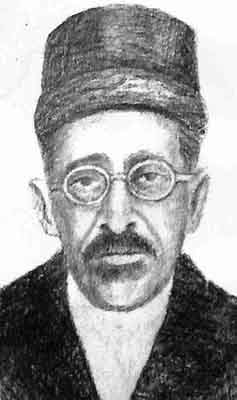
I read with interest "Unsung scholar” (Parsiana, December 21, 2020-January 6, 2021) on the historian Prof S. H. Hodivala (pictured). He had written an article in the Journal of the Iranian Association, Vol II, January 1914 titled "The traditional dates of Parsi history.”
 The objects of the Iranian Association were to maintain the purity of the Zoroastrian religion and remove the excrescences that have gathered around it; to expose and counteract the effects of such teachings as tend to corrupt the religion of Zarathushtra by adding elements foreign to it that bring about the degeneration of a progressive and virile community like the Parsis, and make them a body of superstitious and unpractical visionaries (there is a reference to this even in Dastur Maneck Dhalla’s book, A Saga of a Soul, written in the 1940s); and to promote measures for the welfare and advancement of the community.
Members of the managing committee of the Association were: president H. J. Bhabha; vice president J. A. Dalal and L. N. Banaji. Other members were D. F. Gimi, Ardeshir Servai, Padamji B. Desai, N. N. Katrak, M. F. Anklesaria, D. M. Madan, P. A. Engineer, N. N. Kanga and Jamshedji Nadirshaw.
In his article Hodivala explains that our knowledge of our ancient history is based on a poem Kisseh-i Sanjan written in 1599. There is much confusion regarding dates as there is no recorded history but a surmise is made depending on the events mentioned in the poem and matching it with the historical facts available. Thus, "the same event (the arrival of the Parsis at Sanjan) occurred in 716, 839 and 905 AD… I believe these dates to be speculative dates, calculated dates, ex post facto results of calculations made upon the basis of a few generally accepted postulates, but combined diversely by different persons with conjectures, emendations and probable estimates of their own... Our ignorance of early Parsi history in this country is today almost as dense as it was 50 or 100 years ago.”
PROCHY MEHTA
Calcutta
prochymehta@gmail.com