Number 56 recalls the warmth he received from his teachers at the Surat Parsi Orphanage
Framroze K. Patel
There were four "righteous teachers” who made me what I am today. Bhagwanji, a teacher at the primary school at Davier with a student population of 80, was my first guru. I was probably one of three Parsi students. My fellow students were Brahmins, Jains and members of scheduled castes/tribes. It was truly an integrated school. The medium of instruction was Gujarati. Prema, who was an assistant at the local dispensary, taught conversational English to a few students. Bhagwanji, a strict disciplinarian and a bachelor in his sixties, was my private tutor. Take a look at a page dated November 4, 1942 from my homework book to gauge the standard of education at a primary school in a sleepy village called Davier. I was not even seven years old. I challenge the reader to solve a single problem without a calculator.
On August 2, 1943 my navjote was performed in the morning, and on the same day my mother took me to Surat and around five in the evening handed me over to Dastur Khurshed Dabu, who was then the principal of the Surat Parsi Orphanage (SPO). He told my mother, "Mai, he is our responsibility now.” My mother hugged me and said, "They will educate you and you will have a bright future here.” Goolbai, my saintly mother, had become a widow at 33. She had been married for only six years. I was her third child in the care of Zarathushti orphanages. My sister, Rati, was educated at the Petit Orphanage in Bandra and my brother Adi, was a student at the Petit Orphanage in Poona. I can only imagine how my mother must have felt when she decided that all her children should be educated in three different orphanages.
For those fortunate children who were blessed to grow up at SPO, it was like attending the Indian Institute of Technology (IIT). The late Nusserwanji Vakil, president of Surat Parsi Panchayat (SPP), used to say that "our responsibility is to train the students who will be the ‘core’ of the community, not the ‘cream’ of the community.” The SPO building was palatial, being once the palace of the Nawab of Surat.
Bottom: Parsi Orphange and Surat Parsi Panchayat office; Top (from left): Orphanage founder Rustam Kuka, Dastur Khurshed Dabu, Ervad Eruch Daboo, Dr Ratan Marshall and Noshirwan Karanjia
The daily routine was rigid. Boarders would get up at 5.30 am sharp, take a bath and by 7 go for prayers and morning tea with one loaf of bread. At 8, we would assemble for self-study, and by 10 there would be breakfast. From 11 until 5.30, with a break for lunch, we would attend Sir J. J. High School (SJJH). During my time (1943-1958) there were 184 resident students at SPO. Most of them were sons of farmers of southern Gujarat and some from Bombay. Almost all of them were orphans; some of them had lost both parents. Once a boarder entered the orphanage, he would be known only by his assigned number. My number was 56.
We had very a disciplined life. After school physical exercise was compulsory. I passionately hated this ritual. Dinner would be served at 7. We were well fed three times a day. The menu for lunch and dinner never changed. It was not gourmet food, but it was more than most of us would get at home. We were required to do humbandagi before eating. After last roll-call and prayers at 9, the boarders would return to their dormitories. This routine continued for 16 years. During those days, the parents of the boarders were asked to pay an annual contribution of 1.5 anna, i.e. less than one-tenth of a rupee. If the parents could not pay, the SPP would forego the amount.
Khaki short-pant and khaki shirt uniforms were required in school, the same dress as the Indian postman. While I attended Sir K. P. College, I wore the same uniform provided by the orphanage, the "postman’s suit” and a black skull cap, "kali topi.” We were allowed two breaks: during Diwali (three weeks) and summer break (six weeks).
The two "Nar-Asho” — righteous Zarathushtis — who guided me and showed the right path during my formative years at SPO were Ervad Eruch D. Daboo and Dr Ratan R. Marshall, the secretary of SPP. At the Orphanage, our character was molded by our teachers who were both strict disciplinarians and kind at heart. The teachers were our parents and gurus who acted like "benevolent dictators.”
Women students learning touch typing 1949-1959, at the Cambay Institute
Daboo sahib was a most compassionate principal who had absolute authority over our lives. He would decide whether a student should go to a technical school or a college, or whether he should repeat a class. Every decision he made for me turned out to be in my best interest. He decided that I should pursue my studies in commerce; he convinced SPP that they finance my study for a Masters in Commerce at K. P. College (I was the first and probably only student to finish a Masters while at SPO). Daboo and Noshirwan Karanjia were instrumental in encouraging me to study for The Institute of Cost and Works Accountants, London (ICWA), along with my Masters studies. Daboo sahib spoke to Vakil, to recommend me to Sir Rustom Masani, vice-chairman of Tata Iron and Steel Company Limited (TISCO), for my "articles” at TISCO. He did this for me, not because I was his pet student, but because he took his responsibility as a "benevolent teacher” seriously and acted judiciously.
As a child I used to stutter a lot. Marshall sahib used to organize elocution competitions for the Zarathushti children of Surat. He encouraged me to participate in them. After two or three failed attempts, Marshall sahib took me under his wing and made me practice standing alone in a room. Like King George the VI, I used to put two large marbles in my mouth while practicing. There was a noticeable improvement. The child who could not speak without stuttering, twice won the Mahatma Gandhi Elocution competition, open to all the commerce colleges of Gujarat University, and the All India Commerce College Elocution competition (Jalan Trophy) for his alma mater, Sir K. P. College of Commerce. All this was possible because Marshall took interest in a child who had problems speaking in public.
Those students who were attending higher education at Parekh Technical Institute or local colleges walked between four and five miles each way daily. No special privileges were granted to these students. In spite of the hardships, we were eternally grateful that SPO prepared us for an infinitely brighter future. Speaking for myself, I would not be where I am today, but for the educational opportunities provided by SPO.
At SJJH, the student population included local Zarathushti students in addition to boarders of SPO. If a student managed to reach 11th standard he would appear for the Secondary School Certificate (SSC) examination. In addition to high school curriculum courses, education in commercial subjects like book-keeping, accounting, typing and Pitman’s shorthand was mandatory.
Commercial education at SPO was the sole responsibility Karanjia sahib. He was a past boarder of SPO (his number was 139). Even though he did not graduate from high school, on August 15, 1932 he started a school called Cambay Institute of Commerce (Cambay Institute) in Cambay, his home town. He started with one student, one Royal typewriter and three typing stools. During 1940, he joined the teaching staff of SJJH, at the request of Dabu, who earlier had denied him permission to appear for his matriculation exam. Karanjia, in addition to being a staff member at SPO continued to operate Cambay Institute and prepare students for diploma courses in Pitman shorthand and typing, book-keeping and accounting.
By the 1950s every student studying for a Bachelor of Commerce degree at Sir K. P. College of Commerce, Surat was attending Cambay Institute for accounting and auditing courses. The prestigious Cambay Institute which is celebrating its 75th anniversary in 2007 is now run by Karanjia’s children and their spouses. In 75 years, more than 60,000 students were privileged to study commercial courses there.
Karanjia sahib taught me debits and credits. I passed the London Chamber of Commerce examinations in book-keeping and accounting in 1950 before I graduated from high school. Karanjia was instrumental in convincing Ervad Eruch Daboo, the succeeding principal of SPO, that I should continue my commercial education at Sir K. P. College of Commerce, Surat. The SPP continued to finance my higher education until I completed my Masters of Commerce from Gujarat University, and two parts of the ICWA course, for which I was enrolled at the School of Accountancy (Glasgow), a correspondence school, while at SPO. The tuition fee and examination fees were paid by SPP.
The SPP continued to finance my "articleship” at TISCO at Jamshedpur and J. R. Nanabhoy (of Bombay) even after I had physically left the Orphanage in 1958. My association with SPO, which started on August 2, 1943, came to a very happy ending in August 1959 when I accepted my first job at Sarabhai Chemicals (Squibb), Baroda, as an assistant cost accountant at a princely sum of Rs 450. I was the most fortunate and luckiest "orphan.” Without hesitation I say, "All I am and all I wish to be is due to the education I received because of the generosity of Rustam Kuka sahib, the founder of the Orphanage, teachers like Karanjia sahib, and the trustees of SPP. I am eternally grateful to these great teachers whom the Prophet Zarathushtra refers to as "Ahura Mazda’s helpers.”
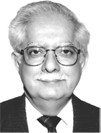
After migrating to the United States, Framroze Patel earned licenses to practice as a Certified Public Accountant, Business Valuation Analyst and Forensic Accountant. He was the former president of the Federation of Zoroastrian Associations of North America.