The presence of learned advisors who explain and expound on the scriptures is a must for the community to perpetuate the right cult and traditions
Faribourz Nariman
Most sacred scriptures were, at one time, pre-literary oral traditions. It was much later that they were put in writing, the texts being on parchment, paper, etc. With the spread of literacy, even commentaries on sacred texts were set down. Today, every Hindu, Jew, Christian or Muslim who knows the language of his scripture will be able to read a manuscript or a printed text, but not necessarily understand its contents. Such a situation necessitates exegesis (an explanation and interpretation). Those who are qualified to expound/interpret the scriptures are known as exegetes.
Historically speaking, the Book of Nehemiah viii.8 in the Old Testament throws some light on the need for expounding the scripture to the Jews after their subjugation by the Persians. In the book we are told that Ezra read the law to the people, but it was interpreted in Aramaic (instead of Hebrew) by his assistants, interpreters who were called Meturgemans.
Above (from left): Ervad Tehmuras Anklesaria, Ervad Sheriarji Bharucha, Ervad Jamsetji Nadirshaw; Khurshedji Cama, Ervad Khurshedji Kateli, Ervads Kavasji Kanga and Edulji Antia Above (from left): Sir Rustam Masani, Dasturs (Drs) Peshotan and Darab Sanjana Photos: Parsi Lustre on Indian Soil
As evidenced by the existence of commentaries on different scriptures, the function of exegesis has been seminal. However, the task of an exegete is exacting as his understanding requires surmounting of stumbling blocks like:
The abstruse language of certain parts of the scriptures. At times, we find just subtle allusions to rites, deities, etc.
Different levels of reference like literal, moral, allegorical and anagogic.
Sometimes different parts of the scriptures are at variance with each other.
Mistakes committed by scribes/copyists.
The existence of variants in two or more manuscripts of the same text.
Use of words derivable from more than one root, leading to incompatible meanings.
Doubts as to whether a word is to be taken as a proper noun or an epithet.
At times, certain words/passages are so obscure that even savants and scholars have to leave them untranslated.
Deciding whether an injunction at one place overrides another at some other place.
The question of palimpsest, that is manuscripts in which the original writing has been "rubbed or scraped away” and the space filled with new matter.
The use of words/passages which call for amendment.
When Alfred Lord Tennyson remarked "…Words like nature half reveal and half conceal the soul within,” he was generalizing. But if his remarks were to be employed for words of scriptures they would have deep significance. To bring to light what is "half concealed” only a person who is endowed with lumen internum ("inner light”) would be well-suited to accomplish the task. In other words, mere university education would not help one to be an exegete. Though knowledge of the language of scripture, grammar, etymology, history (both political and religious) would be required for textual criticism which occupies an important place in interpretation of scriptures, without lumen internum a man would be "blind” as well as "lame” to traverse the field of exegesis. In the first century of the Christian era, Philo Judaes had devised a set of 25 rules with a view to safeguard the divine revelation from misrepresentation and misinterpretation.
The Parsis have been, and are, at a double disadvantage in that, unlike Sanskrit, Hebrew, Aramaic, Greek or Arabic, Avesta and Pahlavi are not spoken languages. Again, Parsi exegesis has its own difficulties. There are two types of Pahlavi — book Pahlavi and inscription Pahlavi. Further, Pahlavi has only a syllabary and hence, in a number of instances, everything depends on how an exegete wants to read a word. For a non-philologist to dabble in such intricacies would be an exercise in futility. Parsi exegesis requires a level of learning and insight which would be unattainable for most of our professionals as well as commoners. Even according to Pahlavi text, aasn khrat ("innate wisdom,” the Latin equivalent of which is lumen internum) is required so that an exegete can be regarded as "spiritual director.”
Today, there are hardly 20 Parsis who can read the printed texts in Avesta and Pahlavi, making dependence on exegetes inescapable. In Sasanian times, priests like Tansar and Kartir contributed greatly as exegetes. Their labour of love safeguarded orthodoxy of doctrine and its corollary, holiness of life. Works like the Denkard and the Datistan-i-Denik tell us how the exegetes of those days were instrumental in edifying members of the community.
Coming to the 19th and the first half of the 20th century, we find a number of scholar-priests and scholars toiling as exegetes to keep the faith alive. Among these were at least three pairs of father and son like Peshotan and Darab Sanjana,Tehmuras and Behramgore Anklesaria and Maneckji and Jamshedji Unvala. Altogether at least 30 to 35 scholar-priests and scholars were there to guide the community via their books, articles and lectures. Besides, there was the Jarthoshti Dinni Khol Karnaari Mandali, the membership of which was limited to scholars of Avesta-Pahlavi. Also there was the Parsi Federal Council and the Jarthoshti Dharma Sambandhi Kelavni Aapnaari ane Gnyaan Felaavnaari Mandali contributing their mite towards religious education of the Parsis. The community could also boast of at least eight or 10 scholars of modern Persian — Sir Rustam Masani, who was the president of the K. R. Cama Oriental Institute for a number of years, was one such.
Not that there was a total absence of heresy or apostasy during the first half of the 20th century. Cries for having an electric crematorium at Doongerwadi were heard and performers of navjotes of (illegitimate children) did raise their heads. However, such cries were promptly muzzled; the performers of the infamous Vansda navjotes were duly castigated by some exegetes.
Partly due to the apathy of the Bombay Parsi Punchayet (BPP) and some other trusts and partly because of the antagonistic attitude towards religion and religious studies adopted by some well-to-do members of the community, there has been a depletion of scholars during and after the 1960s. What is more, there has been a corresponding proliferation in the number of imposters, pretentious humbugs, intellectual snobs and posturers who sought to interpret, rationalize or explain away certain aspects of traditional orthodoxy as might be distasteful to the modern man. Though these pretenders came from different walks of life and belonged to different age groups, a common factor was ignorance of Avesta-Pahlavi wedded to individualism. Some such persons had, and have, a good command of spoken/written English/Gujarati and their basic inability to read/interpret the scripture does not prevent them from reading into the sacred texts "meanings” to suit their blasphemous designs. They want religion but not what makes for religion. Some of them call their choice "new-age religion,” others call it "rectified religion,” yet others label it "pragmatic religion!” In truth, agnostics or atheists are, in many ways, better than such pretenders who dish out a hotchpotch of religious principles, Victorian values, secularism, humanism, theosophism and what have you.
Crumbs of information gathered from disparate sources, sometimes reworked by a copywriter, an astrologer or a columnist whose pen is always for sale to the highest bidder, are presented through write-ups or lectures likely to prove detrimental to our religious heritage. Overtly or covertly, they challenge the few genuine exegetes that we have by appealing to the "sense of reason” of the masses to "judge” certain theological issues. But theological questions cannot be submitted to the judgment of the general public. Since fake exegetes, now in the majority, have no knowledge of Avesta-Pahlavi, the question of etymology does not arise. To nullify this serious drawback, they indulge in the use of popular etymology (not to be confused with folk-etymology), and as Prof A. S. C. Ross has observed: "… it can only be by pure chance that a popular etymology is right, and an etymology cannot ever be matter for discussion between a philologist and a non-philologist.” The odd thing is the mood of many of the "highly educated” is one of bitter irony or even buffoonery. Due to this mood the Pundole Chalval could gain some adherents in the recent past; but thanks to an exegete like the late Dastur (Dr) Hormazdyar Mirza, the movement was thoroughly exposed.
Before closing here is one point germane to the subject. The fact that there are divergences in the translations/interpretations of two or more exegetes in no way gives licence to fake exegetes to intercede or to interpose since the scripture and the pronouncement of Zoroastrianism cannot be topics of common discussion.
The crisis we have faced during the last 50 or 60 years owes much to the fact that we, as a community, conceded unwarranted liberties to fake exegetes. And strange as it may sound to many non-philologists, the literal meaning of "crisis” is "judgment.” To save the community from further contagion we must disable fake exegetes and allow genuine exegetes to take their rightful place. The legendary Iranian heroes constantly fought to conquer dragons, demons and sorcerers, or were engaged in the age old struggle between Iran and Turan. The learned counsel of genuine exegetes would enable the faithful to fight with present day "dragons, demons and sorcerers.” An eminent Iranist like Marian Mole has remarked: "There needs only to exist a community however small it may be where the right cult is practiced and where its traditions are perpetuated. This will surely result in the final victory of the good principle.” And leadership of an exegete is essential to ensure that the "right cult is practiced” and "the traditions are perpetuated.”
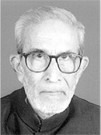
Faribourz Nariman is an Iranist and a scholar of comparative religion who has attended several international congresses and seminars on oriental studies, art and archeology, etc, and presided over the Iranian section of the All-India Oriental Conference on six occasions. A visiting professor at the Bombay University, he has delivered lectures on Zoroastrianism, Iranian and Indian art, architecture, etc under the auspices of various organizations in India and abroad.