Died: Keki Nasserwanji Daruwalla, 87, retired officer of the Indian Police Service (IPS), Zoroastrian representative on the National Commission for Minorities (NCM), internationally acclaimed writer and poet; in Delhi on September 26, 2024 following delayed stroke related complications and aspirated pneumonia.
The India International Centre in Delhi which was almost like a second home to Daruwalla was where a memorial meeting was convened. He had friends there from every stage of his career — the police, the Prime Minister’s Office, the NCM, as also the writers, artists and thinkers who frequented the venue. And those who spoke or read from his published works shared their favorite lines with the gathering.
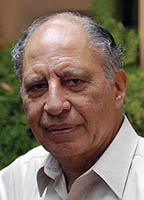
During his 37 years with the IPS he had made a mark as assistant superintendent of police in Uttar Pradesh followed by a spell with the erstwhile Special Service Bureau, the foreign intelligence (the Research and Analysis Wing) and as special assistant on international affairs to the then Prime Minister, Charan Singh. Following a year’s study leave as a Queen Elizabeth II House Fellow at Oxford University his last post in government service was as chairman of the Joint Intelligence Committee (JIC).
Having worked with Daruwalla for over a decade in the cabinet secretariat and observing his kindness and sincerity, Vappala Balachandran, a former special secretary in the cabinet secretariat wrote in The Wire on September 27, "It is said that sometimes creative writers turn out to be good intelligence officers as both need curiosity, observation, imagination and constant questioning to find answers. That was true of Keki.” As chairman of JIC, "the chief’s analytical and interpretation abilities as the highest intelligence arbitrator are put to test in presenting a holistic picture to the cabinet… In between his heavy official work, he would take time off, go into isolation in his own house and produce those gems of books. One of his common ways to ‘recharge’ his creative mind was by holding small marbles in his palm and gently shaking them!” added Balachandran.
As member of the NCM from 2011 to 2014 he supported different community projects, recalled Parzor founder Prof (Dr) Shernaz Cama who had known him since her MA days at Delhi University where he came to lecture. He would attend Parzor meetings to understand the importance of the Jiyo Parsi program and also accompany them on their visits to the Ministry of Minority Affairs and the Planning Commission which ultimately resulted in Jiyo Parsi being announced in the 2013 budget. After his visit to the Meherjirana Library in Navsari "he followed up on the preservation program as well as met the library staff and introduced the new collector to them. He also began our discussions with the Census Commission (regarding obtaining a count of the Parsi community in India). Unfortunately, the 2021 census has still not taken place,” she added.
Erstwhile trustee of the Delhi Parsi Anjuman, "He last came to the Anjuman to honor senior Supreme Court advocate Fali Nariman but by then was in a wheelchair and not able to communicate,” revealed Cama. As per his wishes, the geh sarna prayers for Daruwalla were recited at the Parsi aramgah after which the body was taken to the electric crematorium and the ashes brought back for interment at the aramgah.
Acceding to Parsiana’s request, his daughters Anaheita Kapadia and Rookzain Sorabji, and peers Firdaus Gandavia, Hoshang Merchant and Geeta Doctor who had interacted with him shared insights that revealed many facets of his personality.
Top and above: Keki Daruwalla (garlanded) with family, Anaheita Kapadia and
Rookzain Sorabji (standing, 2nd and 5th from l); above l: Khurshid
Reinvented himself
Anaheita Kapadia and Rookzain Sorabji
He was the most sensitive and liberal soul, leaving everybody to chart their own course in life. There was never any pressure on us to study English literature, the love of his life, or to try writing poetry or prose at any point at all.
Daddy completed his bachelors and masters in English from Government College, Ludhiana where his father was principal. He then appeared for his Civil Services Examination, standing seventh in the country. But being only 20 years of age he could not enter the Indian Administrative Service or the Indian Foreign Service where the minimum age requirement was 21 years so he joined the police force.
He was captain of the cricket team in college and played cricket for Punjab in the Ranji Trophy. He also played table tennis at the state level and tennis till his early eighties at a local club. As recently as a couple of months before he passed away, his friends recall greeting him on his daily walks in the colony.
The last of eight kids, our father was born in Lahore when our grandmother Shirin (née Moghrelia) was 42 years old. Four of his siblings died in infancy. For a while the family lived in Lyallpur (now Faisalabad in Punjab, Pakistan). During his teens, Dad and his family stayed in a palace in Junagadh, his father Nasserwanji being appointed tutor to the Crown Prince Muhammad Dilwar Khanji. Besides formal education in languages and sciences, Nasserwanji who had returned from England after completing a Diploma in Education and a Tripos in Economics from Cambridge University, had to teach grooming and etiquette, as well as a whole range of sports. Keki and his three elder brothers Freddy, Jal and Tehemtan learned horseback riding, shooting and other outdoor and indoor sports and games taught to the Prince. In 1947 the Prince’s family left Junagadh overnight and relocated to Pakistan.
Dad believed wholeheartedly in good thoughts, words and deeds and he taught us to follow those precepts and always go back to them for guidance on any issues we faced in life. He followed the routine of wearing the sudreh kusti and did his daily prayers while our devout mother Khurshid had longer prayer sessions every morning and night. He would watch fondly as she bustled about doing chalk and fussed over torans (fresh flower garlands), divas, and readying her little ses for festivities, and sagan on birthdays, anniversaries, marriages and first day at new jobs, etc. He continued all the little traditions she had followed and did a divo by her photo every day. He loved her dearly and was distraught after she died in a horrific auto accident in 2000 in Austin, Texas just as he retired. Inconsolable at her passing, he fell grievously ill a year later with only a 30% chance of survival. That incident shook him up.
He reinvented himself as a poet and author, turning his passion for poetry and prose from a hobby into a full-time undertaking. He published book after book, travelling all over India and the world attending and speaking at literary conferences. He lived a full life, brimming with energy, constantly on the go. A role model in how to overcome and face adversity. We are so proud of him, not just for his many achievements but for making the humongous effort to let go and be there for us and his grandkids.
Living in the north he watched rituals practised by many faiths. He believed that many of the views espoused by some of the orthodox Parsis contradict the fundamental Zoroastrian precepts and could never understand how hurting another human being on the basis of rigidly following a ritual was justifiable.
Above l: Keki as a young police officer; r :with his father Nasserwanji
Revisiting Daruwalla’s oeuvre
Firdaus Gandavia
"History is a khazana (treasure), and you could always muddy your hand, as you lifted things from the past. History is the past and the past is reliable unless some of the BJP (Bharatiya Janata Party) braves want to change it,” Daruwalla had remarked when commenting on the historical element which dominates most of his work during an interview for A House of Words, a festschrift which was published in his honor.
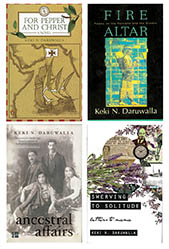
He was not only a famous poet who inspired a multitude of younger poets but was also a novelist, a short story writer, a columnist and author of a travelog, Riding the Himalayas, and a children’s story, The Scarecrow and the Crow. Seventeen of his books were published, some of which have been translated into Spanish, Swedish, Magyar (Hungarian), German and Russian.
He was awarded the Commonwealth Asia Poetry Award in 1987, the Padma Shri in 2014 and the Poet Laureate Award at the Tata Literature Live Litfest in 2017. Forty years ago he had been honored with the Sahitya Akademi Award which he returned in 2015 after the writer M. M. Kalburgi was assassinated. He strongly felt that the Akademi had not supported "the values that literature stands for, namely freedom of expression against threat, upholding the rights of the marginalized, speaking up against superstitions and intolerance of any kind.”
It is evident that his career with the IPS affected his poetry. This is most noticeable in his early poems like "Curfew in a Riot-torn City.” The imagery is powerful, the subject matter dark and laced with irony as "curfew stamps across the empty street.” The town is "tumor-growth;” "Night slips gingerly along the cleaver’s edge/ in butcher-street.” In "Gujarat 2002,” with imagery quite startling and shocking, he describes the blood on the street. "Fire and skin turn into one blinding sheet…boards are warped, the steel blackened... Gasoline alights with a splash everywhere.” The tragedy is heightened by the fact that "Killer and killed are one — they speak the same language.”
But some of his poems have a very personal touch as when he speaks about his wife in "Nurse and Sentinel (Poem to a Dead Wife),” where he describes with great gentleness, his wife’s care of her ailing father. Also a similar feeling is evoked when he convinces his granddaughter that "Night should hold no terrors, child, / Nothing is wrong with black and dark…There are no ghosts, there are no ghouls.”
In later life, Daruwalla saw himself more and more as a fiction writer. His first novel For Pepper and Christ (2009), was set in the time of Vasco da Gama and, occasionally, the weight of history tended to slow the tempo of the novel. The second one, Ancestral Affairs (2015) was more than a family saga. He blended his interest in history and politics by setting the novel in 1947. Although familiar with the Parsi ethos, the novel is devoid of the eccentricities and the idiosyncrasies which one generally associates with Parsi novelists.
Daruwalla’s sensitivity is also seen in several of his short stories, each with a different theme and a plethora of vibrant and thought-provoking characters. The most moving, of course, is his much anthologized short story "Love across the Salt Desert” where an Indian trader, Najab, falls in love with Fatima, a Pakistani girl who is ready to quit her home and cross the salt desert to live with her loved one. "The salt desert divided both physically and symbolically the two countries. For her (Fatima) it meant just a shift in dialect, a smear of Kutchi and a little Sindhi sandpapered away.”
Keki (l) receiving Padma Shri from then President of India Pranab Mukherjee
Large-hearted poet
Hoshang Merchant
Keki wrote a blurb for my first book, Flower To Flame (Rupa): "Here is a tour of the world in 40 poems from the ruins of Persepolis to the Bengal Tiger. Hoshang Merchant is unreliable and he always keeps up the surprises.”
We met a decade later and he asked if I was the same poet who had sneaked in a gay poem or two. We left it at that. Keki was a man of tact… Keki stood outside cliques.
When my American sister left me a few thousand dollars I didn’t need I started the Whabiz Merchant Memorial Lectures gifting the money to 10 NRI (non-resident Indian) speakers. Keki sagely suggested I cut down the number by half and use the rest of the money myself. He inaugurated all 10 lectures, generously reading his new poems, standing us drinks at the India International Centre, Delhi and introducing us to his friends. Keki mentioned that erstwhile attorney-general for India Soli Sorabjee had suggested he sue the driver who left his wife (Khurshid) dead in a road accident. But Keki left it at that. Keki was a decent man.
He was no coward. I remember him reading his poem on the quelling of the Meerut riots as a police officer. The man meant business: I could see him leading a flag march. And the poem did its job as indeed the man and the poet had. When he was posted at Oxford, he used the time to write Fire Altars, my favorite book, which is about the Greek rendition of Persian history. Keki was a historian and a poet intelligently balanced between the East and West.
And he always helped me out with bureaucratic delays, nudging people in high places, admonishing me once for submitting an incomplete application.
An age and a way of generous living has passed away with Keki.
Remembering Keki
Daruwalla
Geeta Doctor
He was not an easy
man to know.
Keki Daruwalla in his prime,
when I met him, was cautious in 1974.
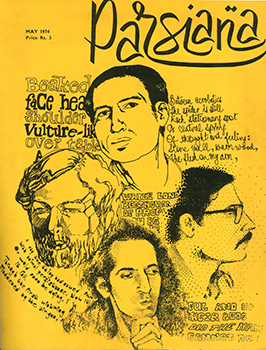
Re. Under Orion his first published poems.
In answering the questions I put to him
As a policeman-poet-Parsi from Lahore
Now billeted in UP. Not yet a Padma Shri.
He deplored the landscape as he called it
Of meaninglessness. Yet found words,
images, that would forge them into steel.
Metaphorically he clanked
his visor down and levelled
a steely gaze at me.
He’s seen it all: the beatings,
the betrayals, the flaying of a truncheon
on a felon’s back, an epileptic
wife whose mouth is prized open
in one of his most visceral poems
while her two children, flee the
scene, like winged birds in his
exact words.
As to The People Daruwalla
is terse epigrammatic, detached,
when he observes.
"If we had a plague/Camus style/
And doctors searched for the virus/
There would be a black market in rats.”
While he himself demonstrated
where he stood upright, returned
the Sahitya Akademi Award
Received for his verses
Keeper of the Dead in 1984
To protest the beating of the
Living Dead for their right to
Dissent in print in 2015.
Yet there was a gentler side
to him when as a new Father
he wrote comforting his baby
daughter’s arm freshly etched
with small-pox vaccine across
his shoulder, marveling
at her cinnamon scented skin.
Soldier, statesman, poet emeritus,
He was at heart a family man.