Died: Dr Keki Hormusji Gharda, 95, chairman and managing director of Gharda Chemicals Ltd (GCL), chairman of Gharda Medical Foundation and Bai Ratanbai Gharda Hospital Trust; on September 30, 2024 in Bombay.
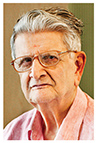
"Scientist, entrepreneur, innovator, philanthropist,” the four major preoccupations that characterized their founder’s life, were referred to in the GCL and Gharda Pariwar announcement for the memorial meeting in his honor on October 5. "Innovation gives me the most satisfaction,” the trailblazer had acknowledged in an interview with Parsiana (see "The chemistry of Gharda,” July 7, 2011). He had started his chemical enterprise by renting a shed at Vakola which had erratic water and electricity supply, using a drum as a desk and a carboy as a seat. Over the last 60 years it grew to encompass an empire whose net worth was shown as Rs 4,665 crore as on March 31, 2023 on crisilratings.com, the website of Credit Rating Information Services of India Ltd.
The company enjoys a pioneering status in the agrochemicals (insecticides, herbicides and fungicides) industry, with many firsts in the field of dyestuffs, veterinary drugs, pesticides and polymers. The first product Gharda manufactured was a dye, popularly known as German blue, which because of its low price forced the original manufacturing giant Bayer to exit from this business.
"In this business you have to be clever and resourceful to double your assets every four years,” the technocrat, whose company would export 65% of its production, had told Parsiana. Having built up an internationally reputed company despite the plethora of controls and regulations in force in India before liberalization, the founder had declared, "I don’t fret; I am a person who works hard, enjoys what he’s doing and doesn’t care whether he is successful.”
In 1970, GCL received the prestigious Sir P. C. Ray Award for Development of Indigenous Technology from the Indian Chemical Manufacturers Association, an honor the company was conferred again on eight subsequent occasions. Awards for exports, energy conservation and management, etc from the Government of India and organizations like the Federation of Indian Chambers of Commerce and Industry also followed.
In his personal capacity, the scientist was honored with the Chemical Pioneer Award from the American Institute of Chemists, Philadelphia, USA; a gold medal from the Society of Dyers and Colourists, UK; the Chemical Industry Stalwart Award from Chemtech Foundation; the Outstanding Zarathushti Entrepreneur of the Year award from the World Zarathushti Chamber of Commerce; the Padma Shri by the Government of India; and the Lifetime Achievement Award from the Indian Council for Food and Agriculture. "My principal reward is in being happy with what I am doing,” the enterprising chemist had remarked.
His wife Aban, who had a doctorate in sociology, supported him in all his initiatives for 55 years until her demise in 2017. With no offspring, the couple was content to lead a simple Gandhian life, devoid of pomp and luxury, till the very end. "I used to joke that she had the most educated driver and I had the most educated cook anybody could have! For years we kept no servants,” Keki had revealed.
Top: Dr Keki Gharda; above: the factory (l) and library he initiated
Aban worked alongside him as director on the board of the parent company, Gharda Chemicals as also its offshoots — Gharda Scientific Research Foundation, Gharda Medical Advanced Technologies Foundation, Gharda Investment Company, Gharda Pesticides, Gharda Consultants.
Besides their chemical industrial empire, the couple immersed themselves in humanitarian projects, establishing the Gharda Institute of Technology near Chiplun, two small hospitals in Dombivli, and Lote Parshuram (on the Bombay-Goa Road), introducing mobile clinics and libraries attached to their factories, and village development activities at Ankleshwar and Panoli in Gujarat. "Our overriding philosophy is one of participative development. We strive to make villagers self-reliant and feel ownership of projects that are implemented,” it was stated on the Gharda Foundation website. The Gharda Institute of Technology offers courses in chemical, mechanical, civil, computer electronics and telecommunication engineering.
Born into a middle class athornan family, Keki’s father Hormusji was a government employee. Keki studied at St Stanislaus School, Elphinstone College and the Institute of Science in Bombay. Independent and outspoken, clashes with professors were not uncommon! Showing his entrepreneurial spirit from a young age, when chemical reagents he required were not available in the college laboratory, from his pocket money he purchased materials like sulphuric and nitric acid, and succeeded in making reagents which he officially sold to the college.
He later pursued a master’s degree in chemical engineering followed by a doctorate from the University of Michigan, earning scholarships from chemical and agro giants like Dow, Monsanto and DuPont. He then started teaching at the University of Oklahoma. On his return to India seven years later, his father’s ill health and subsequent demise made him stay back with his mother. He taught for a while at the University Department of Chemical Technology in Bombay where too his unorthodox teaching method went beyond the text books. He would impress on his students: "You are all going to hold responsible positions in the chemical industry where there will be a huge price to pay for any mistakes that you may make. So I will not give you any special credit for the right answers, but heavy penalties for the wrong ones.”
Describing himself as "a Parsi by birth and an Indian by nature,” Keki had no qualms about admitting to Parsiana that he is not religious minded: "I’m an agnostic, not an atheist.” While GCL had provided Doongerwadi an ozonizer (a gaseous disinfectant to purify the air) some years ago, observing that corpses were only getting baked in the sun in dakhmas he had indicated a preference for cremation. Ultimately his body was consigned to the dakhma.
He considered himself "a simple person with a complicated mind.” A voracious reader, Keki is known to have enjoyed his trips to bookstores and admired the "Lake Poets” (group of English poets who lived in the Lake District of England in the first half of the 19th century comprising amongst others William Wordsworth, Samuel Taylor Coleridge and Robert Southey) with 14th century English poet and author Geoffrey Chaucer being his all-time favorite. Detective stories helped keep his "mind sharp,” he stated. The Bai Ratanbai Gharda Memorial Library in memory of his book-loving mother was housed in the basement and the Reading Room on the first floor of the glass-fronted Gharda House, headquarters of GCL, in Bandra. In an interview with Parsiana (see "Books and bene-
volence,” April 21-May 6, 2019), Keki well remembered his mother Ratanbai advising him, "It is your duty to make as much money as you can, but you have to die poor.”