Died: Phiroze Ratanshaw Vakil, 81, senior criminial lawyer and public prosecutor, at Bombay’s Breach Candy Hospital following cardiac arrest on October 1, 2004.
Known to have practised criminal law "faultlessly, selflessly, with integrity and with sound knowledge of his subject” many considered Vakil "a titan in the field,” noted a tribute in The Times of India (TOI) of October 2, 2004.
A veteran of many criminal cases, to Vakil was entrusted the thankless responsibility of officiating as senior public prosecutor in the historic Best Bakery re-trial in Bombay. Following the communal carnage in Ahmedabad where many Muslims had been massacred, the entire nation was alerted to the dangers of excessive communalism. Some public spirited individuals and organizations were determined to book the culprits. Insisting that the judicial processes were functioning in a biased manner in Gujarat the activists demanded the reexamination of witnesses in a free and impartial atmosphere in Bombay. In fact Vakil was brought in after the main witness in the case Zaheera Sheikh moved the Supreme Court for his appointment to the post. The Gujarat government had earlier appointed another lawyer as the special public prosecutor. "Many in the legal community noted that despite lawyers being a dime a dozen in the city, it was difficult to find someone else of similar stature and unimpeachable credentials who could be entrusted with this landmark case,” TOI reported. On September 22 when he had to be rushed to hospital Vakil had led the prosecution in drafting charges against the accused in the Best Bakery case.
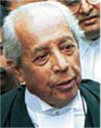
Vakil: "elephantine memory”
In his 45-year legal career Vakil’s "keen mind put the details of many complex criminal cases into perspective,” acknowledged the Mid Day (October 2, 2004) write-up recapitulating his endeavors in the last decade: He was the seniormost advocate to appear as a special public prosecutor for the state of Maharashtra. When Shiv Sena chief Bal Thackeray was arrested for his inflammatory editorials in July 2000 Vakil represented the Maharashtra state. He was involved in the Suleman Bakery case in which former police commissioner R. D. Tyagi was charged with murder for his role in the 1993 communal riots. He had also been the legal advisor to the Special Task Force that was set up to implement the Sri Krishna Commission report in 1998. The other landmark litigations to which he had contributed were the Dr B. K. Subarao espionage case, the Godrej case when a Union member had stabbed three members of the Godrej family, and the Telgi scam where he appeared as defence counsel.
Another of his famous cases was the Jeep scandal for which he was appointed public prosecutor. During the Emergency, the Congress party had allegedly sent a directive to many industrialists concerning the purchase of Mahindra jeeps which were later to be delivered at the party office in Delhi. Subsequently when Morarji Desai became Prime Minister he constituted special courts to probe such excesses. As prosecutor in the murder trial of the Communist party MLA (Member of the Legislative Assembly) Krishna Desai, Vakil had got 11 Shiv Sena members convicted despite joining the trial two months later when many witnesses had already been examined, the details were related in The Indian Express of August 17, 2004 when his name was announced as public prosecutor for the Best Bakery retrial.
Both, a prosecutor and defence counsel, a rare feat, he was a role model to many. "Even judges had been known to wait for him to address a point of law in tricky cases... His demeanor in court was usually genteel but he could drive his point home forcefully when the occasion demanded. For beneath Vakil’s disarming style lay an ethical core which he was always loathe to compromise,” summed up the TOI article.
At 81 his brain was as sharp as ever. Although his clientele included many belonging to the city’s rich and powerful elite he had never hesitated to appear for those less privileged. As reminisced eminent jurist Ram Jethmalani for the Mid Day, "The first time we faced each other was in the early 1950s...One could see that Vakil was a ruthless prosecutor... People used to be quite afraid when he was the prosecutor...He had great experience behind him. It also comes through your genes (Phiroze’s father Ratanshaw was a lawyer as was his brother Shiavax, the legal advisor to the Tatas and former trustee of the Bombay Parsi Punchayet)...He was head and shoulders above his contemporaries. He had an eye for small things in every case...We didn’t meet socially but he was quite a companionable chap — he enjoyed life. A few years back he had a fall that caused him permanent injury. But he remained an astute and industrious lawyer...” The last time they worked together was on the Tata Finance Limited case against Dilip Pendse when both Vakil and Jethmalani were on the same side. The case is still pending.
Reputed for "an elephantine memory,” he is known to have unearthed many wrongs for he was "a master in court craft and a great strategist,” as acknowledged his peers. He was chairman of the disciplinary committee of the Bar Council of India, examiner for the LLM examination of the University of Mumbai and professor at the Government Law College. His own education was at Surat. After graduating in law he served as a teacher in Africa. As recalled Surat’s Dr Ratan Marshall in the Jam-e-Jamshed of October 10, 2004, Vakil never forgot the five rupees he won as consolation prize in an elocution competition conducted by the Surat Parsi Mitra Mandal which gave him the confidence and inspiration to speak before the public in the following decades.
"What did he (Prophet Zarathushtra) expect from his followers during his lifetime and after his transition? To continue to spread his message and preachings far and wide and increase the number of Zoroastrians? Or was it his intention to establish a new religion only for a few chosen ones and their descendants for some time to come and then shut the doors to all others for all times?” Vakil had put forth his views in The Bombay Samachar of November 5, 1995, as brought to our notice by architect Khurshed Antia. "Believe me, I do not want to pose these questions to raise an unseemly controversy. My intention is to let my religious fraternity give an independent thought to these questions and give intelligible and convincing answers to them,” Vakil had added.
Religious by nature, he would spend at least an hour on prayer each day. However he was open to other faiths too and would annually visit the Ajmer Dargah, reveals his nephew Neriyosang Vakil who regarded him as a surrogate father, having spent many nights at his house as a child. Several things had Neriyosang learnt from his uncle, including driving, and he looked forward to their weekly meetings at the Ripon Club where they would discuss business and family. Impressing on his nephew the virtues of being self reliant, the bachelor taught him "to take failures in your stride and to learn from them.”
With his passion for criminal law and working late hours at his office every night, P. R. Vakil had little time for any other recreation except reading. He enjoyed his pipes, having amassed a good collection.
President of the Ripon Club at the time of his demise "he took very keen interest and was always available for advice and guidance,” remarked noted solicitor Rusi Sethna. "Extremely well versed in case law in criminal matters, he made an effort to research, understand and apply his knowledge,” observed Sethna. He further appreciated Vakil’s humility "in areas of law where he was not proficient, not hesitating to take help from the juniormost lawyer despite his being "the top lawyer in criminal law.”
The respected jurist is survived by his brother Nariman and sister Gul Vakil.