Cricket Country . The Untold History of the First All India Team by Prashant Kidambi. Published in 2019 by Penguin Random House India Private Limited, 7th Floor, Infinity Tower C, DLF Cyber City, Gurgaon 122002; website: www.penguin.co.in. Pp: xvii + 453. Price: Rs 699.
I thought I knew everything about Indian cricket till I read Prashant Kidambi’s (pictured) well researched and interestingly presented book Cricket Country. Apart from history of Indian cricket starting from 1870s, the book is illustrated with 16 pages of 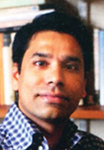 rare photographs, cartoons, press clippings and autographs. The photograph which amused and angered me at the same time was that of Bhupinder Singh, the Nawab of Patiala and captain of the first all India team to England in 1911, being padded up by his servant before going out to bat!
The chief focus of the book is on this pioneering tour. Although Parsis had earlier toured England in 1886 and 1888, the 1911 expedition was undertaken by a team which included Hindus and Muslims as also Parsis. Led by the young Maharaja of Patiala (incompetent player and captain), there were seven Parsis in the squad.
The author starts with the pioneers of cricket in India. "The passion of cricket among the Parsis of Bombay was part of a profound transformation within the community during the late 19th century… These tours (in 1886 and 1888) generated animated public debates about race, community and imperial citizenship. The attendant publicity magnified cricket’s aura and drew more Indians to the sport. The Parsi initiatives thus show how cricket’s charisma in the subcontinent was a function of the political significance that is quickly acquired within Indian society.”
Well-known Parsis like Jamsetjee Jejeebhoy played a key role in Bombay’s public life, adds Kidambi. The Parsi community loved to be called "British Indians.” The author quotes Dosabhai Karaka in 1884, "… with one consent the whole community daily prays ‘God save the Queen!’”
Parsis’ love for cricket and the Queen was matched by their love for infighting. The most prominent controversy involved journalist Kaikhosro Kabrajee and his antagonist Ardeshir Patel, secretary of the Parsi Cricket Club. This concerned the campaign waged by Parsi cricketers against the British polo players of the Bombay Gymkhana.
However, the Parsis united to form Parsi Gymkhana at a meeting held in 1885 and attended by VIPs Jejeebhoy, J. N. Tata, Dorab Tata, Dinshaw Petit, Pherozeshah Mehta, Kharshedji Seervai and S. S. Bengalee.
Thus the book involves more than just cricket. The focus however, remains India’s 1911 tour of England. As the author says, "On the morning of May 6, 1911, a large crowd gathered at Bombay’s Ballard Pier. They were there to bid farewell to a motley group of 16 Indian men who were about to undertake a historic voyage to London. The persons whom the crowd cheered that sultry Saturday morning were members of the first all-India cricket team… It took 12 years and three failed attempts before an ‘Indian’ cricket team made its debut on the playing fields of imperial Britain in the blazing coronation summer of 1911.”
Below are the players who made the cricketing pilgrimage to England: Maharaja Bhupinder Singh of Patiala (captain), Dr Homi D. Kanga, Palwankar Baloo, Maj Keki M. Mistry, Jehangir S. Warden, Rustom P. Meherhomji, Hormusji F. Mulla, Maneck Chand, Mukund D. Pai, Kilvidi Seshachari, Salamuddin Khan, Shafqat Hussain, Syed Hasan, Maniksha D. Bulsara, ‘Bangalore’ Jayaram, 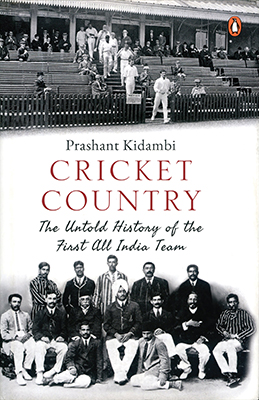 Noor Elahi and Manikji P. Bajana. Manager: Jijibhai M. Divecha.
Mistry, Meherhomji and Kanga formed a powerful batting triumvirate, states Kidambi. The oldest and the most accomplished of this trio was the 36-year-old left-handed Maj Mistry — in a class by himself.
Younger than Mistry by two-and-a-half years, the elegant Meherhomji had established his batting reputation while playing for the renowned Baronet Cricket Club. Kidambi quotes Framjee Patel, "Meherhomji possessed the ability to time his strokes to a nicety, and therefore make them look effortless… In back play Meherhomji stands alone.”
The author details Kanga’s cricketing pedigree. Two of his uncles, Pestonji and M. D. had toured England with the Parsi team in 1888 and his elder brother Dinsha had played for Parsis as a wicket keeper. Believe it or not, a team including 11 Kangas had played together in a match!
Not all attention is focused on Parsi cricketers. Baloo’s spin wizardry is detailed in the book. From a dalit (disadvantaged caste) family, Baloo became the first among India’s spinning greats and was the outstanding member of the side. Adds Kidambi, "The indefatigable Baloo consistently impressed observers. After his first appearance at Oxford, The Times noted that of all bowlers, Baloo ‘seemed to be the most difficult as he changes his pace cleverly.’”
India started the tour badly losing 10 consecutive matches to powerful county sides. But they came back bravely beating strong first-class counties at Leicester and Taunton. "The Indian cricketers have at last got into their stride, and have recently been winning matches with as much regularity as they previously lost them,” wrote Athletic News. "We rejoice in their success.”
Times of India noted that more praiseworthy was their stoicism in the face of adversity. Even during defeat they never became in the least dispirited. Legendary English cricketer Sir Jack Hobbs said that the Indian team possessed batsmen who are far above the ordinary. After watching Kanga and Meherhomji bat, a reporter wrote that both "revealed batting qualities of an exceedingly high standard. They cut, drove and hit to leg with all the skills of our greatest masters of the game.”
The absence of the iconic Ranjitsinhji (Ranji) from the team and the appointment of the incompetent Bhupinder Singh as captain contributed to the team’s earlier disappointing performances. Ranji, an Indian prince, was probably one of the finest batsmen of all time, not only in terms of runs scored but also because he brought new strokes to the game. He played 15 Tests for England at the turn of the century with flair.
Bhupinder was more interested in playing polo and partying with British royalty than doing net practice, leading and inspiring his team. Kanga was the stand-in captain.
The author, an associate professor at the University of Leicester and a Rhodes Scholar, takes us on the field and behind the scenes of India’s historic tour of 1911; both agony and ecstasy emphasized. My only criticism of the book is that the summary of the tour is not detailed; namely, a small table on how many matches were played, how many won/ lost/drawn. Also the runs scored, wickets/catches taken by each touring member could have been summed up in another table. It would have taken only one extra page in a 453-page tome.
However, it is a unique historical compilation and deserves an excellent rating. KERSI MEHER-HOMJI
A research virologist, Kersi Meher-Homji has written 16 books on cricket including The Waugh Twins, Nervous Nineties, Six Appeal, Cricket’s Great Families and his latest From Bradman to Kohli.