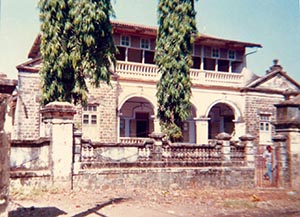
Preparations began months in advance for the navjote of my sister and myself in 1940. There were visits to Bombay to select my dagli as well as dress materials, saris and shoes for the ladies. The focus was on the fashion in vogue and the latest style. Only the best tailors were engaged for stitching the dresses. The most attractive looking invitation cards were selected. At home in Udvada, arrangements had to be made for the comfortable accommodation of about 40 guests — uncles, aunts, cousins, friends and friends of friends. The doctors’ quarters in the Damanwala Dispensary, which my father was in charge of, and our own bungalow provided a sufficient number of rooms for the guests slated to arrive four to five days ahead of the navjote. Hoteliers obliged by lending the family dozens of mattresses.
Navjote of Vispy Meher-Homji (seated front row third from l)
The Parsi chef Cooverji, known for his excellent cooking, was given charge of our kitchen for five days and had to cater for almost the entire Parsi population of the town on the day of the navjote. Cooverji had his own unique style of cooking. No need of a pan to make fried eggs. Oil was poured over the tawatha (ladle), which was held over the flame of the wood fire. The eggs were broken over the tawatha and hey presto, they were ready. But Cooverji needed a retinue of workers to help him. Whosoever ventured near the kitchen was roped in and assigned a task. Even the orderly of the dispensary or the fisherwoman who had brought the fish were not spared!
The navjote day dawned. Everyone had to wake up while it was still dark in order to be ready in time for the ceremony. My dear mother began her day singing traditional Parsi auspicious songs. The local band arrived at sunrise and as per the tradition moved from room to room playing the then popular tune It’s a long, long way to the prairie, it’s a long way to Georgia. Sev, dahi and ravo were already on the dining table early in the morning but the navjotees were not permitted to partake of any food until the ceremony was over. Our car was kept busy transporting guests and residents from the town to our bungalow, the venue of our navjote. The two high priests (vada dasturs) who were to perform the ceremony arrived garbed in their majestic official regalia.
Finally, the navjote was over and I was declared a full-fledged Zoroastrian invested with the sudreh and kusti. Ravenously hungry, I made my way straight to the dining room. The unforgettable taste of Cooverji’s cooking still lingers in my mouth and the group photo taken on the occasion keeps the memory of the day alive (see "Memoirs of a naturalist,” Parsiana, March 7-20, 2020).
Dr VISPY M. MEHER-HOMJI
vispymeherhomji@gmail.com