In Praise of Ahura Mazda – Religious Writings and Speeches of Ervad Burjor Hormusji Antia. Published in 2013 by Spenta Multimedia, Peninsula Spenta, Mathurdas Mill Compound, N. M. Joshi Marg, Lower Parel, Bombay 400013. Pp: 281. Price: Not mentioned.
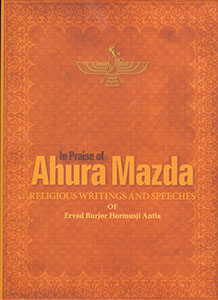
Ervad Burjor Antia is a man of many parts — a legal luminary, a qualified priest, trustee of several charitable and religious institutions, a prolific writer and speaker. This book is a compendium of some of his writings and speeches. High Priest Dastur (Dr) Kaikhusroo JamaspAsa in his Foreword calls this compilation a reflection of Antia’s "wide-ranging repertoire as well as his towering personality” while Bombay Parsi Punchayet (BPP) chairman Dinshaw Mehta in the Preface avers that Antia shares his "immense knowledge of the faith, with the precision of an experienced commercial lawyer.”
The compilation covers 12 discourses on religious topics starting with "Excellence of the Zoroastrian Religion” and proceeding logically to "Message of the Gathas,” "Power of Prayers” and eight articles previously published in newspapers. It includes "Is adult franchise appropriate for public charity trust?” and 10 public speeches covering a wide range of subjects from relations between India and Iran and tributes to community stalwarts like the late Jamshed Guzder, Eruch Desai and Lt Gen Adi Sethna.
According to Antia, Zoroastrianism existed at the earliest point of human history and has emphasized the molding of human beliefs, influencing other religious systems. He believes Zarathushtra lived around 6000 BC, though as we all know, the period when Zarathushtra was born is shrouded in mystery. The Gathas, Antia feels, are "highly abstract, ethical and philosophical texts. One has to overcome several hurdles to understand them fully and properly.”
Elucidating on the advantages of praying he feels: "Chanting the Manthravani takes the brain to the alpha state. The alpha waves make us calm. They help us in balancing the left and the right side of the brain.”
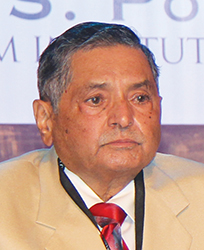
Ervad Burjor Antia: useful compilation
For the survival of the community Antia advocates the establishment of a World Central Organization, reviving the madressas, leading a Zoroastrian way of life, economic development and shifting from our highly urbanized to a rural outlook.
Antia’s views are staunchly orthodox throughout, and while the style is often pedantic he does manage to convey to readers the essence of the religion, from doctrine to rituals. At times the thoughts conveyed in his speeches are repeated in the articles, which tighter editing could have avoided.
At times his diplomacy goes overboard, for example while extoling the relationship between India and Iran. He writes: "In both countries, a messiah appeared on the scene — in India, Mahatma Gandhi and in Iran, Ayatollah Khomeini, who replaced the imperial regime with the rule of the people, by the people, for the people.”
Also, his views on Parsi girls marrying outside the community are sweeping and gender biased. He says: "In the case of civil marriages, the Parsi girls do not put on sudreh and kusti on their body or follow the Zoroastrian religion or customs and even do not give Parsi names to their children. So, Parsi girls marrying under the civil law by their action and conduct have renounced their religion.” What about Parsi boys? There is no mention that they also do likewise.
He intersperses his writings with quotes from poets and world leaders to add shades of diversity and motivation.
His view on universal adult franchise being inappropriate for charity trusts are not misplaced. He feels "democracy is a good form of governance, but not a perfect one. There are some drawbacks: money power, muscle power, religiosity used in the election process.” He is also right in noting that though the Bohra community has trusts worth crores of rupees, much larger than Parsi charitable trusts, no right is given to the members of that community to elect their representative on the board of trustees. Despite this, their trusts are well managed by the head of the community.
The quality of paper and printing is good; however the pictures are not of high quality. Overall the book is a useful compilation giving the reader glimpses of Zoroastrian history, culture and nuggets of wisdom from the Avesta.