Eminent thinkers of the 19th and 20th centuries have reasoned that the essence of orthodoxy is intrinsic truth based on tradition
Faribourz Nariman
It is imperative to try to understand the inversion of values in the modern world. To exemplify this, the concept of vocation (Pahlavi xveshkarih, Sanskrit svadharma) means next to nothing today because its place has been taken by one’s "choice.” Religion, which was regarded as a way of life, has become one’s private affair — what you do or don’t do on certain days. In other words, religion is nothing more than window-dressing and reverence for life has been replaced by the specter called "humanism.” There are few who are conscious of the distinction between trade and mercantilism or industry and industrialism (which displaces industry). Alas, men are no longer of any importance because machines have usurped their place in society.
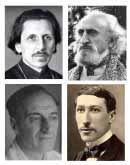
Under such circumstances, those who are dominated by watchwords like "equality,” "democracy,” "progress” and "literacy” may find it well nigh impossible to grasp the essence of terms like orthodoxy, tradition and their derivatives. However, there are a few with whom one can still hold converse. Fortunately, the 19th and 20th centuries brought to light some masters whose intellectual understanding of the universal within the framework of religion was exemplary. Excerpts from the works of Ananda Coomaraswamy, Frithjof Schuon, Marco Pallis and René Guenon will follow without change or substitution, or denuded of their actual contexts, so that ambiguity and uncertainty regarding the use of orthodoxy and tradition will all but vanish and direction and certitude be established.
"Orthodoxy,” writes Schuon, "is the principle of formal homogeneity proper to any authentically spiritual perspective, it is therefore an indispensable aspect of all genuine intellectuality; in other words, the essence of every orthodoxy is the truth, and not mere fidelity to a system that eventually turns out to be false. To be orthodox means to participate, through the medium of a doctrine that can properly be called ‘traditional,’ in the immutability of the principles which govern the universe and fashion our intelligence.” At another place Schuon adds, "Traditional orthodoxy means being in accord with a doctrinal or ritual form, and also, and indeed above all, with the truth which resides in all revealed forms; thus the essence of every orthodoxy is intrinsic truth…”
"The very idea of tradition,” says Guenon, "has been destroyed to such an extent that those who aspire to recover it no longer know which way to turn, and are only too ready to accept all the false ideas presented to them in its place and under its name.” He maintains, "Tradition… admits all aspects of the truth; it does not set itself against any legitimate adaptation; it allows those who understand its conceptions not only of an immensity which none of the dreams of the most ‘daring’ philosophers can approach, but also of a most undreamlike solidity and validity; in short, it opens up possibilities to the intelligence which, like truth itself, are unlimited.”
When we speak about Ormazd or God, a few words about Ahriman or Satan would not be out of place. Similarly, when we are discussing tradition, it would not be inappropriate to put in a word about anti-tradition. Guenon states, "Actually, religion being essentially a form of tradition, the anti-traditional outlook cannot help being anti-religious; it begins by distorting religion and, when it can, ends by suppressing it altogether.” But anti-tradition is not the end; counter-tradition is. This is what is described by the Avestan phrase astascha baodhanghascha viurvisyaat (literally, "turning apart of bones and intellect,” in a word, death).
Pallis affirms, "Tradition is a coherent whole, though never ‘systematic’ (for a ‘system’ denotes a watertight limitation of form); once torn, the seamless garment cannot be ‘patched’ simply by means of a ‘heretical’ (literally ‘arbitrary’) sewing on of elements borrowed at random — those who think of saving their tradition by compromising with modernism might well take note of the words of Christ Himself: ‘No man putteth a piece of new cloth into an old garment, for that which is put in to fill it up taketh from the garment and the rent is made worse.’ (St. Mathew, ix.16).” And the same master reminds us that "by calling a thing ‘traditional’ one thereby relates it immediately to an idea which always, and necessarily, implies the recognition of a supra-human influence.” Pallis puts us on our guard: "the higher the doctrine, the more abysmal will be the corruption if once the doctrine is rejected.”
More often than not the term "tradition” is misused, particularly by the "highly educated.” Regarding this trend Coomaraswamy says: "If it is so misused very often (pejoratively) it is because under present conditions of education, the ‘educated’ are acquainted with ‘tradition’ only in its past aspects, if at all, and not with ‘the living tradition...’ Tradition has nothing to do with any ‘ages,’ whether ‘dark,’ ‘primeval’ or otherwise. Tradition represents doctrines about first principles, which do not change, and traditional institutions represent the application of these principles in particular environments and in this way they acquire a certain contingency which does not pertain to the principles themselves.”
On one hand the moderns talk about leaving behind tradition, and on the other they parade their culture. Coomaraswamy points out: "We cannot pretend to culture unless by the phrase ‘standard of living’ we come to mean qualitative standard… Modern education is designed to fit us to take our place in the counting house and at the chain-belt: a real culture breeds a race of men able to ask, what kind of work is worth doing?”
For young aspirants there are two stumbling blocks: egocentrism and democracy. Egocentrism (or individualism) acts as a stumbling block as far as appreciation of facts concerning orthodoxy and tradition are concerned. Guenon explains: "Individualism necessarily implies the refusal to admit any authority higher than the individual, as well as any means of knowledge higher than individual reason; and these two attitudes are inseparable. Consequently the modern outlook was bound to reject all spiritual authority in the true sense of the word, authority, that is, which is based on the superhuman order, and all traditional organization, that is to say all organizations based on this authority, whatever form it may assume, for the form will naturally vary with every civilization.”
Furthermore, one who apprehends what orthodoxy is can never ever plump for democracy, particularly modern democracy, because what the Greeks had was "manly democracy” where men and women were not equal and hence the latter’s exclusion. Compared to that, what prevails today in a number of countries is, for want of a better word, "eunachization,” figuratively, if not literally. Nor did the Greeks, like the Romans after them, refrain from having slaves. The fact that this type of democracy was unacceptable to sages like Socrates, Plato and Aristotle is beside the point. Coomaraswamy says: "I could hardly think of democracy, however high its present value, as an ultimate ideal, as I crave to be governed by my superiors, not by my equals. I do not welcome increased leisure (for myself or for anyone else).” For more on the subject of governance, readers are recommended to peruse an article by Kaikhosru Shapurji Sorabji titled "The Validity of Aristocratic Principles” in Art and Thought edited by K. Bharatha Iyer (London 1947).
Ask any modern man what he understands by "democracy” and his reply would be the pedestrian definition: government of the people, by the people, for the people. And this is exactly why the man of modern ideas keeps on groping in the dark. Says Guenon, "If the word ‘democracy’ is defined as the government by the people themselves, it expresses an absolute impossibility and cannot even have a mere de facto existence, in our time any more than any other. One must guard against being misled by words: it is contradictory to say that the same persons can be at the same time rulers and ruled, because, to use the Aristotelian phraseology, the same being cannot be ‘in act’ and ‘in potency’ at the same time and in the same circle of relations. The relationship of ruler and ruled necessitates the joint presence of two terms: there could be no ruled if there were not also rulers, even though these be illegitimate and have no other title to power than their own pretensions; but the great ability of those who are in control in the modern world lies in making the people think that they are governing themselves; and the people are more inclined to believe this as they are flattered by it, and as they are in any case incapable of sufficient reflection to see its impossibility… The most decisive argument against democracy can be summed up in a few words: the higher cannot emanate from the lower, because the greater cannot come out of the less; this is an absolute mathematical certainty that nothing can gainsay.”
Coomaraswamy observes, "A democracy is a government of all by a majority of proletarians, a soviet, by (a) small group of proletarians, and a dictatorship, a government by a single proletarian. In the traditional and unanimous society there is a government by a hereditary aristocracy, the function of which is to maintain an existing order based on eternal principles, rather than to impose an arbitrary will (in the most technical sense of the words), a tyrannical will of any individual party.” Once the said stumbling blocks are transcended, then, and only then, can there be some hope for the aspirant.
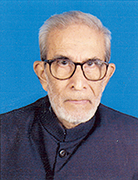
Faribourz Nariman is an Iranist and a scholar of comparative religion who has attended several international congresses and seminars on oriental studies, art and archeology, etc, and presided over the Iranian section of the All-India Oriental Conference on six occasions. He has collaborated with the German Archeological Institute in establishing a Zoroastrian Museum at Hamburg. He has delivered lectures on Zoroastrianism, Iranian and Indian art, architecture, etc under the auspices of various organizations in India and abroad.