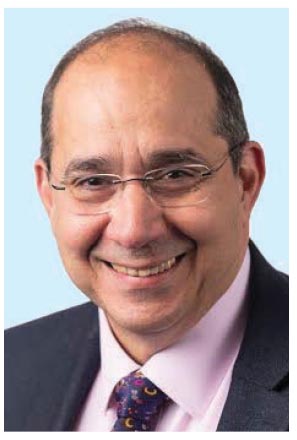
"I believe there are major advantages in being able to retire at the right time in order to do things and explore opportunities that a life doing complex liver surgery does not allow,” stated Prof (Dr) Darius Mirza. His contribution to the specialty of hepatopancreatobiliary (liver, bile duct and pancreas) surgery was recognized at a full-day conference "Darius Festschrift 2024.” Regarded as a pioneer in liver transplants for children above one year of age, during his long association with the UK’s University Hospitals Birmingham, numerous families have benefited from his expertise.
Nearly 20 months after Mirza’s retirement in September 2022 and "after much international interest we are holding the Festschrift with daytime sessions and evening dinner,” read the announcement on the website of the Women’s and Children’s NHS (National Health Service) Foundation Trust.
The objectives of the conference organized at the Hyatt Regency in Birmingham on May 24, 2024 were to "improve knowledge of hepatobiliary diseases, latest advances in surgical techniques of pediatric liver transplantation and research in biomarkers of graft tolerance,” according to the website of The European Society for Organ Transplantation, esot.org. Knowledge of current practices shared by 14 international speakers was meant to "indirectly benefit the patients under our care with up-to-date management of various fields of pediatric hepatology diseases and pediatric transplantation,” added the website.
Mirza’s speech on "40 years of Liver Transplant Cases” received a standing ovation from "about 400 liver transplant surgeons from all over the world,” noted a brief report on the event by Darius’s father, Dr Firoze Mirza credited with pioneering prosthodontics and implantology in Bombay.
At the banquet, several surgeons commended Darius’s contribution to the medical field, recalled Firoze who with his wife Elinor and other son Dr Eric were invited to attend the felicitation function. Dr John Butler of UK referred to Darius’s modesty and creativity when undertaking liver transplant surgery. Dr Peter Friend of Oxford alluded to his dedication and remarked that Darius should not have retired so early considering that his father is still working at 91 years of age! Dr Surendra Kumar Mathur of Bombay’s King Edward Memorial (KEM) Hospital spoke of Darius’s student days when he graduated from Seth G. S. Medical College and completed his masters in surgery from KEM.
University Hospitals Birmingham
Photo: Wikipedia;
top: Prof (Dr) Darius Mirza
After his studies in Bombay, Darius had undertaken a two-year transplant fellowship at the University of Vienna Hospital, and later moved to Birmingham in 1991 to train in adult and pediatric transplantation and hepatobiliary surgery. He earned his Fellowship from the Royal College of Surgeons, Edinburgh in 1993 and was appointed as a consultant transplant surgeon in 1996. While performing over 5,000 liver transplants across the globe, Darius also undertakes hepatobiliary and pancreatic surgery to treat cancer in these organs.
Thanking all those who had helped him along his journey, Darius made mention of his mentor Dr Paul McMaster, the pioneer of liver transplants who succumbed to brain cancer three days after the felicitation function. Over the years Darius has supported organizations in the fields of surgery and transplantation in Europe and India, and created time to serve as secretary of the European Liver and Intestinal Transplant Association and committee member of the British Transplantation Society. He has continued to retain his ties with India, coming down regularly to teach and perform surgeries at the Apollo group of Hospitals as also Yoginder Pal’s Liver Foundation in New Bombay.
In response to queries from Parsiana, Darius wrote, "I have been immensely fortunate to have started very young and then worked at and then led one of the largest liver units in the world. At the time my career started, hepatopancreatobiliary surgery did not exist as a specialist entity and opportunities were few. The rapid evolution of this subspecialty and being part of this growth and evolution has allowed me to work with some amazing colleagues over the years looking after patients with special needs. This and the involvement in clinical research as well as the opportunities to mentor trainees from all around the world remain the key areas of my professional life that I cherish the most.”
Since his retirement from the NHS, Darius has been able to devote more time to the causes he believes in. He is a founder trustee of India-based Transplants — Help the Poor — Foundation that financially assists patients in need of lifesaving organ transplants (if their annual family income is less than five lakh rupees) and widens awareness in India about organ transplantation. Founded by C. Y. Pal, the website transplantindia.org acknowledges, "The germination of this idea could not have been possible but for the great support and help of another founder trustee Dr Darius Mirza…” While they have the support of organizations like Dr Cyrus Poonawalla’s Serum Institute of India, HDFC Bank, ICICI Foundation, Azim Premji Foundation, knowing that transplant surgery in India could cost between Rs 13 lakh to 15 lakh for children and between Rs 18 lakh to 22 lakh upward for adults, Darius is keen to garner more support. Currently their Transplants Foundation subsidizes 25% of the cost for those in need. Since post-transplant care is so crucial for recovery, only families who understand its import are selected for assistance.
The second charity where Darius serves as trustee is SPLIT (Supporting Pediatric Liver and Intestinal Transplantation) in England. Darius also lends his expertise to the George Eliot Academy in Nuneaton, near Birmingham that accommodates students from an underprivileged background because of which there is a mix of achievers and others struggling to keep pace.
In the coming years, 61-year-old Darius and his wife Shirin Irani Mirza plan to divide their time between the UK, Austria (from where his mother hails) and India. Their son Jeremy, a genome scientist in Birmingham, is understandably not as keen to visit India, states the father. His affiliation with the Apollo group of hospitals has required Darius to make nearly 60 trips between UK and India in the last seven years. In fact he even took an 18-month sabbatical from NHS to improve knowledge and practices of transplantation in India.
While Darius has decided he will no longer be performing transplant surgeries in the UK, he is not certain whether he may still be required to share his surgical skills in Bombay. The medical systems and infrastructure in Bombay are not on par with other areas like Madras and Delhi, he has observed.
Darius has plans "to travel more leisurely and learn about people and places that was not possible during my professional life.” Among the other activities that Darius would like to pursue are cycling, walking, cricket, reading, gardening and making honey, there being three beehives under his care. While monitoring their progress every week or fortnight, a major challenge for a bee keeper is to ensure that there is only one queen in each colony, he imparted some bee lessons. His fascination with his "ecologically friendly” pastime is apparent for even his WhatsApp display profile shows a queen with worker bees!