Dusk came early in Navsari. In winter, by 5.30; in summer by 6.30. Dim yellow bulbs were lit. White fluorescent or tube lights had not yet made their appearance. There were no power outages but the supply was weak. The moholla was sandwiched between rows of houses facing each other and most shared a common wall with the neighbor. Little sunlight could filter through. Most backyards though were open to the sky and bright. Living rooms or halls, as they were called, appeared gloomy and dark by late evening. Street lighting was poor. Practicing priests, school teachers, college lecturers, even doctors returned from work very early. Those who worked in shops in the main bazaar too were home by 8 p.m. Children stopped playing and recited the mandatory prayers before supper. Fat, black-banded sparrows called devchakli returned to their nests in a final burst of cacophony. There was a strange melancholy in the air and most wanted to be ensconced in the comfort of the home, almost a Freudian desire to get back into the mother’s womb.
Spartan dinners were quickly finished in silence. To aid digestion, a few walked up and down at home. Housewives finished washing the dishes and plates. There was no culture of dumping them in the sink to be cleaned in the morning. The double doors facing the backyard were bolted and the kitchen was locked.
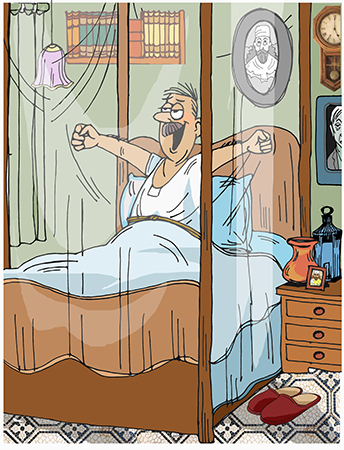
Illustration by Farzana Cooper
Occasionally, a long playing record rotated slowly on His Master’s Voice gramophone (with the ubiquitous symbol of a white dog with its head lowered). The gramophone had a huge conical mike, and a needle which had to be changed every alternate night. There were many bawdy jokes around the ghasai gayeli (worn out) needle. Gohar Jaan’s thumri was heard faintly.
Time for Burjorji and Shirinbai to lock the many wooden windows and doors and then clamber up the wooden staircase to enter their bedroom on the first storey. Huge four poster beds covered by giant white lacey mosquito nets called macchardaani awaited them. Gently parting the net, each got into a different bed. Double beds were as unknown as sliced bread. You will have to wait for a future column to learn about sex habits. There was a tiny table next to the bed upon which was placed a huge brass karasyo (utensil) filled with well water. At nine, there was pin drop silence. There were no transistors and the Murphy radio was in the living room on the ground floor. Once in a while, a child bawled.
In a drought year, robberies increased and some mohollas hired night watchmen from the same forest thicket where the robbers came. Nevertheless, the thud of the watchman’s wooden pole and his cry of "Jaagtaa réhjo (stay awake)! ”a downright silly call at night, was comforting. The pi-dogs barked in unison without provocation and an increasingly agitated Burjorji would step on the little balcony, pick up stones from a topli (basket) strategically placed, and hurl them at the offenders. Shirinbai drank water from the karasyo, and used a commode. Walking down to the washrooms in the backyard was obviously out of the question at that hour. Up to the late ’60s, there was no sewage system and night soil was picked up by service providers.
At 3.30 a.m., they could hear the rhythmic tok, tok of an approaching horse carriage to ferry Cawas to the railway station in time to catch the 5 a.m. junta (passenger train) to Bombay. After Cawas departed, silence returned. There was a faint glow in the sky. Without any alarm clock, Shirinbai knew it was 4.30 and time to rise. She recited the Ashem, Yatha and Yenghe Haatam prayers, wore her black velvet sapaats (slippers) heard her husband of 40 years snoring, and commenced her morning ablutions. A brass boiler heated by wood and coal called a bumbo provided scalding hot water for bathing in the biting Navsari cold. She had earlier warmed up her insides by drinking a jumbo cup of fresh mint and lemon grass flavored tea. She carried a small pot of well water to the front door and splashed it to settle the dust. She smiled at her neighbor Goolbai doing likewise who reminded her that it was a humkaro and therefore a no meat day.
The splashing of the water woke most in the moholla as the fragrance of sandalwood and frankincense from the German silver urn signaled a new dawn. The night was over. Navsari mornings were so robust and refreshing, not very different from the motherland they had left many centuries ago.
Berjis Desai, author of Oh! Those Parsis and The Bawaji, occasionally practices law.