Literacy champion and recipient of the Albert Schweitzer Medal from the World Literacy Foundation (WLF) Armene Modi (pictured on pg 30) says that she "never regretted the decision to retire from teaching and reinvent myself as a social activist.” From teaching English in universities in Japan in the 1990s to setting up a nongovernmental organization Ashta No Kai (ANK), Modi told Parsiana on July 16, 2020 that her journey began when she came across a statistic in India’s 1991 census. "That 61% of Indian 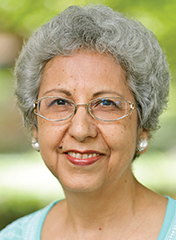 women were illiterate more than four decades after India had gained independence served as a wakeup call,” she told us. "I decided to take up the challenge of making a dent, even if a small one, in improving literacy levels for women in rural areas where the illiteracy rate was the highest,” Modi stated.
The press release for the Award ceremony that was held online on April 18 on account of the pandemic stated "Armene’s exceptional efforts towards empowering rural women in India have helped to improve the educational outcomes of hundreds of adolescent girls over the years.”
In the two decades since inception, ANK has organized women into self help groups to facilitate income generation and access to micro credit in 10 districts around Poona. Gender sensitization training, legal literacy programs and health programs are part of its activities as are creation of a "bicycle bank” for adolescent girls to commute to schools from home. The organization has supervised the building of toilets, water tanks, wells, school rooms, computer centers and play equipment for schools.
WLF strives to ensure that every young individual, regardless of geographic location, has the opportunity to acquire literacy and reading skills to reach their full potential, succeed at school and beyond, notes their website. "Today, 770 million people (globally) cannot read a single word, while another two billion people struggle to read a full sentence,” noted their press release.