A sequel to a popular entertainment show in memory of Adi Marzban
brought together veteran stage actors and new talent
Farrokh Jijina
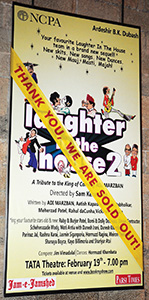
The team that delivered the sequel to the first avatar of the show staged in April and June 2012 provoked more than laughter. There were loud giggles, raucous guffaws and much glee at the opening night of Laughter in the house 2 on February 19, 2017 at the Tata Theatre of the National Centre for the Performing Arts (NCPA). The predominantly Parsi audience that packed the 1,010-seater auditorium was obviously getting what they wanted. The variety entertainment show takes its name from the 2011 coffee table book Laughter in the House: 20th Century Parsi Theatre by journalist Meher Marfatia.
Ditties about raunchy men who need help to walk but not for a quick round of fun; complaints to Ratan Tata about not being welcomed on board his aircraft with aachhu michhu, middle aged women watching cricket, skits about pickpockets at Dadar station, dances to Bollywood numbers, the decline of the community: stock vignettes, one could argue, ethos and idiom only very slightly changed since the times of Adi Marzban. But that was the very idea: the sequel was intended to further the tribute to the late dramatist by producers NCPA and Ardeshir B. K. Dubash. What if some of the jokes were vintage Marzban or based on the latest WhatsApp forwards; the audience had a great time, as evinced by the shrieks of laughter.
The various acts in the 150-minute show were strung together by compere Jim Vimadalal, who had done the same back in 2012 (see "For laughing out loud,” Events and Personalities, Parsiana, June 21, 2012). A cast of veteran octogenarians (Ruby and Burjor Patel, Bomi Dotiwala, Moti Antia and Dinyar Contractor) who have acted under Marzban’s direction or in the 2012 show; a dozen dancers who went through the paces of choreographer Hormuzd Khambata; songsters Kayo Billimoria, Hormuzd Ragina, Shanaya Boyce and Shariyar Atai, the all-Parsi cast was directed by Sam Kerawalla, a known protégé of Marzban, with over 70 plays to his credit as director. The performers included new talent discovered at Drame Bawas the all-India talent hunt held to commemorate the birth centenary of Marzban (see "Marzban magic,” Events and Personalities, Parsiana, March 7, 2016). These were Rashna Karai, Jasmin Siganporia and Meiron Damania. The cast included actors Naushad Buchia, Parinaz Jal, Danesh Irani and Danesh Khambata.
No qawwalis in this version of the show. That style of Muslim devotional music, modified for Hindi movie music, the hallmark of most Marzban’s musical revues is replaced with Antakshari, a game based on Bollywood film songs. Old-timers will snap their fingers to the last number in Gujarati Havey gupchup gher javo asking everyone to go home quietly, to the beat of "When Irish eyes are smiling,” a stock item in all Marzban’s entertainment programs. A particularly poignant moment was when Bomi Dotiwala sang old favourite "Tehmina tu paachhi aav (Tehmina, come back)” to the tune of "Come back to Sorrento.” Bomi had lost his wife and co-actor Dolly, who was to be on stage that evening, two days before the show. Behind the scenes
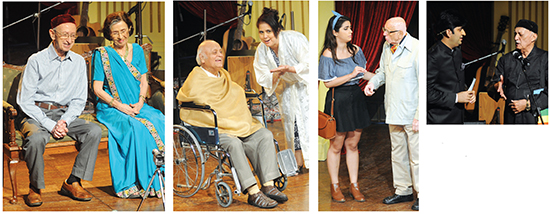
(From left) Burjor and Ruby Patel; Dinyar Contractor and Jasmin Siganporia;
Rashna Karai and Sam Kerawalla; Jim Vimadalal and Bomi Dotiwala
Antakshari with Shariyar Atai (l) and Naushad Buchia (r) at the mike
Clockwise from top left: Entertainers Kayo Billimoria, Hormuzd Ragina, Atai, Shanaya Boyce and Vimadalal
From left: Hormuzd Khambata’s Dance Company; Danesh Irani and Danesh Khambata; Parinaz Jal and Khambata
Clockwise from top: finale; Meher Marfatia; at rehearsal,
late Dolly Dotiwala seated 2nd from right Photo: Farrokh Jijina
Burjor Patel, member of the creative team behind the production, with Marfatia, Kerawalla, Vimadalal and theater personality Shernaz Patel, tells Parsiana that putting up the sequel was tough in terms of finding content. "We had already selected the best of the best of the best for the first part,” he smiles when we drop in at their rehearsal at the Sea View room at NCPA exactly a week before the opening night, at the invitation of Marfatia. "We roped in new writers — Meherzad Patel, Bharat Dabholkar, Rahul DaCunha, Aatish Kapadia and Dinyar Contractor… The content is 99% new,” he says. The sprightly Burjor was the translator of some gags from English into Gujarati.
"Kapadia, a Gujarati, wrote the Antakshari in Parsi Gujarati,” he smiles, about the sequence being rehearsed. Ruby Patel, eyes all a-twinkle, play acts the reluctant singer, goaded on by a supportive (late) Dolly Dotiwala. "Chaalni, hoo madad karru, (Come on, I’ll help),” she stage whispers to Ruby, before the latter breaks into a song about her daughter going to Parsi Dairy all dressed up, only to find everything sold out. Madad (help) seems to be a key philosophy here. The veterans assist the young ones who fumble slightly with the Gujarati words. "It’s ‘chaaloo chhèon, not chaalooch,’ (It’s ‘I am flirty, not I am walking’),” Dolly helps out Ragina, as he sings about a young at heart Parsi. Kerawalla breaks away to talk to Parsiana; the ensemble continues to practice seamlessly under Vimadalal’s stewardship.
"This is the 21st rehearsal,” Kerawalla informs us, admitting to a sense of fright at the show being sold out three weeks before opening night. "Audiences will expect nothing short of perfection,” he says. "Just look at their enthusiasm,” says Vimadalal of the veteran actors. "For them, theater is a religion to be practiced every day… nothing escapes their eye for detail… did you not see Dolly telling the pianist ‘G Minor, G Minor,’ about a chord she wanted?” The opening and closing numbers are up for rehearsal next, before the cast breaks for lunch.
Over chicken rolls and cutlet-sandwiches, the bonding is apparent again. The young ones are singing Parsi nonsense rhymes, including some bawdy ones, as Moti Antia watches with a benevolent smile. Jasmin Siganporia enthusiastically takes a request from us: "Mara bawa ni chhè motor gaari (my father has a motor car)” she bursts out, all flailing arms, flirtatious and downcast eyes, combined with the exaggerated mannerisms of a shy maiden.
"To say the show ‘is a coming together of old talent and new’” is not how writer Meherzad Patel would put it. "…as that would put us novices on par with the… experienced artistes,” he states in communication with Parsiana. He sees it as an "opportunity to share the stage with the veterans who have shaped our tiny careers… Hopefully we’ll be like them in our golden years too,” wishes the theater man whose company has 15 productions including six in Gujarati to its credit.
Remembering Aduli
"Baari naakhjé, book na banavti, [burn them (the scripts), don’t make them into a book],” is what Dolly remembered Marzban telling her, when she prompted him to compile his scripts into a book. Ruby echoes: "He’d tell me to tear up his scripts after each radio broadcast.” What did they think was behind these thoughts? He intended his plays only for Bombay audiences and was terrified that people may misuse the scripts or, "even worse, not interpret them as he would like them to be…” seems to be the unanimous opinion of these two veterans.
Bomi, who with wife Dolly has acted in 30 of Marzban’s plays and 10 revues since they started their stage career with him in the early 1960s, recalls his directorial quirks: munching on a piece of bread or twirling his handkerchief while taking the actors through their paces at rehearsals at his Chapsey Terrace flat. Silla, his wife, always had the last word during rehearsals, he adds. Burjor and Ruby have fond memories too. They were part of Marzban’s stable of actors between the mid-1950s and 1960s. "He taught me how to project my voice,” says the soft-spoken Ruby. The veteran director and editor did it in a style all his own: "He would bring his chair within inches of mine and then whisper in a voice a low as mine, "Dikra mané nathi samjhatu (I cannot hear),” she reveals. "Who knows, we may be doing a ‘best of both avatars’ for the coming Parsi New Year this year,” says Burjor.
The next shows of this version will be staged on April 2 and 16, 2017.