The fragrance of flowers and sandalwood
associated with Gatha day prayers continue to linger
Parinaz M. Gandhi
This year at Parsi Khabar we are starting a new series of posts by our readers, called the Everyday Parsi,” wrote New York based arZan Wadia, urging Parsiana to publicize the views of those who had written in on "what the muktad days meant to these individuals. Be it a certain ritual, memories, occasions or one event that has stood out in their memory.” This subject elicited eight contributions: three from USA, three from Bombay and one each from New Zealand (NZ) and Copenhagen.
The last 10 days of all three Zoroastrian calendars are observed as the muktad days in solemn remembrance of the souls of the dear departed. The word muktad is derived from the Sanskrit term muktatman which means a soul liberated from worldly existence, explains UK based scholar Farrokh Vajifdar.
From left: Mahrukh Cama, Perzen Patel, Shireen Palia, Nazneen and Shahzad Jokhi with their son,
and Kaikhosrow Oshtori
"To this date, arrival of fall reminds me of the muktad/Gatha days when I was growing up in Karachi,” commented Mahrukh Cama who has been residing in the USA for the last over four decades. "While muktad prayers took place in the two agiaries, the Parsi community met early morning for humbandagi at Jehangir Baug, a hall for navjotes, weddings and gahanbars, etc… On the stroke of seven the congregation would rise and the verses to be prayed that day (from Congregational Prayers for Farvardegan Days) would be announced in Gujarati…Upon completing the assigned verses, the congregation would be seated and Ervad Godrej Sidhwa would speak briefly on a topic of the day… At 7.30 a.m. the humbandagi would end and we would rush home and head for school.
"In the evenings I would go to the agiary with my mother and after offering the usual prayers by the atash we would proceed upstairs where the muktad prayers took place… (in) the room full of flowers. Next day at school (in Gatha days) the Parsi girls would exchange notes to see who prayed the Gathas to completion, knowing that the first Gatha is the longest. I clearly remember my mother telling me that you never flip pages to see how much more is left. You just pray devotedly.
"Now at our Darbe Mehr (for New York, New Jersey, Connecticut) the hall resonates with the mobeds praying. I’m thankful to the association and the mobeds for starting prayers at the Darbe Mehr at least one weekend day during the Gathas, and to the families who host the prayers at their house during week days so that the community living in various parts can attend the prayers closer to their homes.”
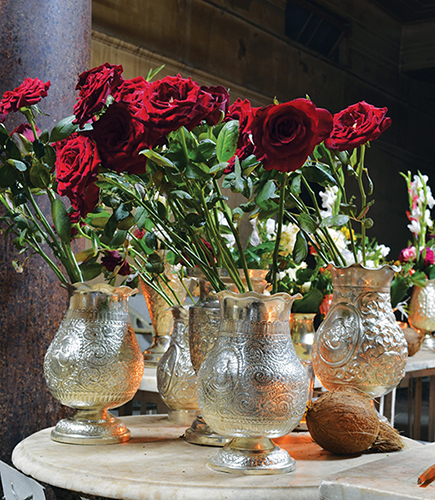
Muktad table at Kappawalla Agiary
Photo: Mahafreen H. Mistry, Homz Prints
Yet another "Everyday Parsi” Rita Jamshed Kapadia, a software engineer and a Web developer who was vice president of the Zoroastrian Association of Greater Boston Area (ZAGBA) and currently volunteers as the ZAGBA website administrator wrote: "The sweet smell of flowers, the beautiful aroma of sandalwood and loban, the well laid out tables with karasias and vases and the soothing chant of the ancient prayers recited by our (priests) are all wonderful memories of the muktad days that I remember, growing up as a young girl in Ahmedabad. Today, I am married and live with my husband and children in the US. Living far away from our families, missing their warmth and our traditional Parsi holidays, we try to create a similar Parsi culture in our American home and inculcate the importance of muktad and Gatha days into our children…
"We follow the same tradition here also, lighting the divo, offering flowers and fruits in remembrance of the departed…For us, muktad is a very special time to remember our loved ones who have departed, cherish the ideals they pursued, emulate them in all the good they did and pray for their souls. Over time the pain of losing them gives way to the joyful memories and we celebrate their lives.”
Commented Shazneen Rabadi Gandhi: "When we moved to North America, the local associations in the cities I have lived in always observe muktad prayers, for most days in the homes of local Zarathushtis and then for at least one day, at their local Darbe Mehr... Life has been too crazy for us to go to the designated location for the prayers. We tell our anjuman priests to take the names of our dear ones in prayer...
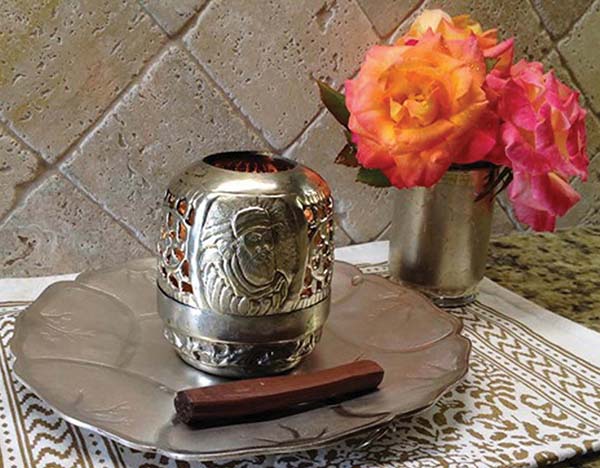
Image submitted by Shazneen Rabadi Gandhi
"Now, I have children of my own. They are too young to appreciate what muktad represents. I don’t pretend to know too much about it. But I know that during these days, the souls of our dearly departed are near and we pray for their well-being, we remember them, we welcome and honor them with our gifts of flowers and sandalwood... And we say our own prayers at home, lighting the divo, and placing some flowers in a metal vase…We may not be able to replicate the ethereal air of Bombay of years gone by. But our own personal acknowledgement of these special days creates a feeling of serenity in the house. We feel the blessings of those who went before us, and still send us their love and watch over us.”
For NZ resident Perzen Patel, communications manager at Ennovent and a marketing junkie who manages the blog BawiBride: "As a child, my earliest memories of these days were the availability of pretty sweet smelling flowers outside the agiary. I remember my mom allowing me to take some for my teachers on the day of Pateti as a small thank you gift for them. It was only after my navjote that my mom shared the significance of the Gatha days and the belief that the departed souls come to visit us on these special days. After that, each year we would visit four atash behrams and seven agiaries in Bombay on one of the Gatha days to pay our respects — not only was it some great bonding time with my mom but also a chance to learn more about our agiaries and of course have some nice Parsi Dairy Farm treats at the end of the day! As I grew up and learnt a bit more about Parsipanu, another memory that stands out is my mama (maternal uncle) telling me what to do and what not to do during these days — how things such as cutting nails and shaving is considered a naso.
"During my days in NZ, for many years we did not have a Darbe-Mehr that we could visit so mom used to put some flowers in a silver vase in our prayer room itself and pray… When the Darbe-Mehr in NZ opened, we made it a point to go each year even though it was far away to pay our respects and absorb the peaceful atmosphere…I love the idea that my departed family members come to visit me on these days and give us their blessings — a beautiful Parsi tradition that I am proud of (along with our koyla (wry) Parsi nataks (plays) and good feasting, of course.”
.JPG)
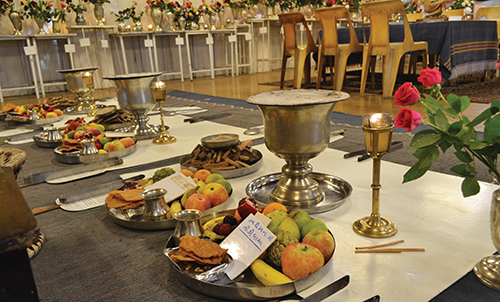
Muktad tables and offerings at Vachaghandhi Agiary Photo: Mahafreen H. Mistry, Homz Prints
Nazneen Jokhi living currently in Copenhagen with husband Shahzad and her infant son said they "are devout Parsis and love globetrotting as and when opportunity arises. For me muktad … is the only occasion in the whole year when I have experienced my grandfather’s presence time and again annually since he departed 15 years ago. It is the means of taking time out and remembering the deceased and spending time together as a family while praying and introspecting the past, present and future.”
There were three Bombay residents too who contributed to Parsi Khabar. A clinical psychologist working at a school for children with special needs in Bombay, Shireen Palia recalled that as a child she "didn’t completely understand what was so special about these days, and why all the agiaries were never so crowded during the rest of the year. As I grew older, my parents made sure I learnt to read Gujarati, and would encourage us to pray from the Gujarati Khordeh Avesta at the agiary. My brother and I would playfully compete with each other to see who would finish praying the long Faramrot no ha first…
It was only on the passing away of her grandmother that she really began "trying to understand the significance of these 10 days. I remember selecting her favorite flowers to place in her vase, and laughing over how she would relish the satum nu bhonu, on the days when one of her favorite dishes was made. In that sense, the true essence of the muktad for me is knowing that the people I love will never really go away from me, and through the muktad, I can share a loving, informal relationship with them. Now, in spite of the pressures of work and the everyday world, muktad still means getting up early in the morning and rushing to the agiary before work on most days. It never fails to start my day with a sense of calm and peace.”
For yet another Bombay resident Khushnood Viccaji, "I’ve always associated the month of August with an extra dose of religiosity, visits to the agiary or atash behram, and a generally happy feeling of anticipation for the Navroz celebrations… The muktad days assumed greater significance for our family after my father expired in the mid-1980s. Then we realized the importance of the prayers for our dear departed family members, especially during these days, when their souls come to visit us. That was also the time I saw how our priests made extra efforts during those days to say the prayers for all the families who stayed in the vicinity of the agiary. I remember at my first job, there were many Parsis at work. Some of them would plan their annual leave around this time so that they could devote time for the important prayers without being rushed through the morning routines to reach the office on time.
"Sadly, in today’s fast-paced world, with its many attractions and distractions, these rituals and prayers are not given their due importance… People consider these things as ‘unproductive activities,’ or even a ‘burden’ that they don’t wish to take upon themselves. Also, due to shortage of priests and lack of dedication from mobeds, as well as some behdins, I feel that these ceremonies are now treated as commonplace and some of the ceremonies are even skipped. However there are still a few dedicated mobeds who ensure that nothing is compromised, and all the ceremonies and rituals are conducted with full dedication.”
Kaikhosrow Oshtori admitted: "My parents never involved us with such things as death and muktad… Until my own father-in-law passed away in 1978, I never knew why sirog, the sugar crusted paratha and halwa were being made and distributed.” He attended his father-in-law’s muktad prayers at the Dadysett Agiary that "used to be full of Irani families and after the prayers, everyone used to be busy chatting. I used to quietly slip out and stroll down the road to the car-park, for a smoke, because I loved my father-in-law very much and did not appreciate the picnic atmosphere that would prevail after the prayers were over on the last day.
"But over the years and especially after my Dad passed away in 1986, I sat through all the prayers, including the vendidad prayers all night on the third day and also for my dear beloved mother who expired in 2005. Since 1986, I have organized the prayers, every year, at Tata Agiary and family lunch... At times I am told that there is no need to do this after so many years, but I will do the jashan prayers during Iranian panjag-i weh or five Gatha days for my parents’ souls, for as long as I live.”
Surprisingly none of the reminiscences referred to muktad ceremonies being performed at homes. Up to the 1960s and even later in some homes, a special room or structure was set aside for the family prayers to be recited. Photos and portraits of deceased family members graced the walls of the room. The family panthaky would arrange for the priests to perform the ceremonies and procure and prepare the fruits, malido, papri, etc to be prayed on. Flowers were purchased by the priest or the family and placed in silver vases or karasias. The devout visited the muktad rooms of other relatives and friends aside from the agiaries.
On the last day of the muktads after the prayers and before dawn, the family members would sit out on the verandah of their homes to wish the souls of their ancestors a fond farewell. A little wine would be sipped as a toast to the departed.
As the old bungalows gave way to apartment blocks and the shortage of mobeds began to be felt, the ceremonies were shifted from homes to fire temples. A handful of families however may still be continuing the practice of holding the muktads at home.