New initiatives are
being spearheaded
at Sir Ratan Tata
Institute to reach a
larger market
Farrokh Jijina
Their dar ni pori now shares shelf space with Chocolate Cherry Pudding and Crepe Suzettes. And patrel with Crab Cakes with Tamarind Mayo and Aubergine Parmigiano. Known for their delectable Parsi snacks and bhonu, and for their nod to "Western” food (think quiches, pies and the like), the Sir Ratan Tata Institute (RTI) has launched, in July 2022, Gourmet at 35, their takeaway service available at all their seven outlets at 48-hour notice. (The numeral in the name refers to the number of their building on Hughes Road.) This menu lists about 45 new items which include exotic cheeses, cold and hot dips, sandwiches and appetizers, salads, quiches, mains and desserts.
Elegant eats from Sir Ratan Tata Institute
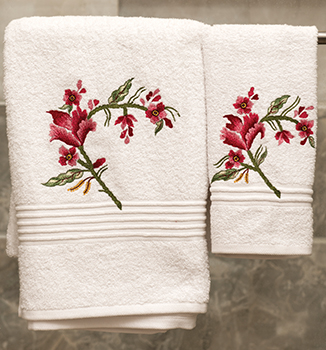
But this is not all that’s new at this 93-year-old establishment. Piccolo, the tiny outlet on Bruce Street, so popular with office-goers, reopened in July 2022 as did the Colaba Causeway outlet, both of which were closed during the pandemic. Their Dadar outlet was closed for the bulk of the pandemic but reopened in April this year. The management is set to reopen Landmark, a meeting venue at their Hughes Road premises. "We will rent it out for parties and meetings, with catering provided by us,” head of operations Shernaz Buhariwala told us on July 14, 2022, at an interview in her second floor office on Hughes Road in the building that houses the food division and their flagship retail outlet. In an earlier avatar Landmark was a fine dining venue. The Institute runs snack counters in the Cathedral and John Connon and Bombay International Schools. Their food division which comprises catering and cakes and confectionery accounts for 60% of their business, and includes corporate and retail clients, notes Buhariwala.
The garments division that includes a line of women’s wear, Hers; children’s wear, Bambino; and a range of embroidered table and bath linen operates from a newer three-storied building across the street. That building also houses the embroidery workshop and now scaled down laundry department. A Montessori school which takes in children from the age of 14 months to six years operates from the first floor; the Institute offers a diploma course in Montessori teaching methods each year, August to April.
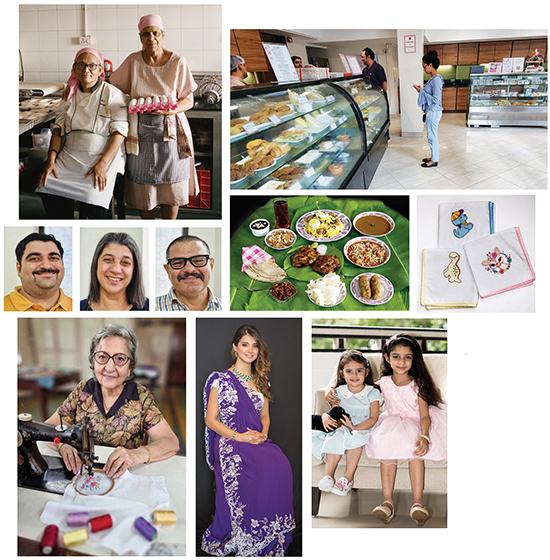
Clockwise from top l: queens of the kitchen; pondering what to buy at a retail outlet;
baby wraps; children in party wear; modelling a cutwork embroidered sari; "see my embroidery;"
Arzaan Sabawalla; Shernaz Buhariwala; Kaiyosh Keravala; a complete bhonu
"Because of our people”
So what has worked for RTI over the nine decades of its existence? Parsiana queried Buhariwala. "Our loyal customers… We have fed several generations… We have grandmothers coming to shop at Bambino for their granddaughters, who say ‘I wore this as a child,’” narrated Buhariwala. But there is a flip side to this too, for the garments division. The public perception is that their styles are somewhat old fashioned ("for older ladies”), says Buhariwala. "That is what we are trying to change,” she adds, noting that Hers and Bambino have now started selling certain products through the Tata app Cliq. Competition from online shopping that offers similar products cheaper is a challenge, says Buhariwala. As an add-on service, Bambino offers full navjote no vaago (set of clothes), for little girls and boys on order. "We want to offer this as a service to the Parsis in the diaspora,” says the head of operations. The sales staff at the clothing outlets say that they receive about five customers daily. Bambino is popular with outstation people, chimes in one of them, showing us around the array of embroidered blouses, kaftans, saris, little girl’s dresses with their famous smocking and honey combing (styles of embellishment). Buhariwala says 50% of their business comes from non-Parsis. Sales are held every quarter in Poona as well. A ramp-up of their social media presence is under way, especially on Instagram to appeal to younger customers.
Buhariwala narrates how regular customers often call them with suggestions and areas of improvement ["Aajé papéta nu gos tikkhu hatu (The meat and potatoes were spicy today.)”] I am happy to take these calls… Whether we can do something for everybody is a different story…but they feel heard,” she said. Their generally on-time deliveries come in for praise, she observed.
It is not only customers who are loyal to the brand. In the airy second floor of the new annexe where five ladies are busy embroidering bath linen, kors and saris, we meet sprightly 78-year-old Daulet Todiwalla who has been with the Institute since the 1970s. "Ahiya aavi né machine challavta sikhi, [I learnt how to use the (sewing) machine here],” she states, recalling her past tutors and beaming with an almost child-like pride while showing us the towel she was embroidering. The other ladies do not look up, engrossed as they are with multicolored kors. And in the kitchen, Manek Pithawala, who joined around the same time as Todiwalla, is in charge of food preparation (cutting, dicing, slicing). "Aapré gaam thi aavéla, ahiya sachvayi gya, (We were from the village and were taken care of here),” she tells us shyly, but not without pride in her voice. A little over 30 of the Institute’s 138 staff are Parsis.
"It was because of our people that we could function during the pandemic,” says Buhariwala. "While all other outlets were closed, as soon as we got permissions, Hughes Road functioned with about 28 people who lived in the vicinity.” They kick started the outlet at The B. D. Petit Parsee General Hospital within six weeks of the lockdown. "We started with tea and biscuits and added snacks slowly… That was the need of the hour,” noted former administrator Shernaz Acharia. She added that the younger team members are "taking more interest in the working…Suggestions come for menu ideas…Everyone’s inputs matter.” Binaifer Daruwalla, who looks after purchases for the food division, agrees. "The (managing) committee takes great interest in our working…We are growing well,” she informs us.
Notes trustee Dhanoo Khusrokhan, "As RTI approaches its centenary in a few years from now we can only admire the foresight of the founders for conceiving an Institute such as this, which is now not only a household name but a boon for so many residents of Bombay. We continue to honor their vision, to also provide employment to those who would otherwise be unemployed.” Noting their new offerings (Gourmet at 35 et al), she stated that their "newly started home-delivery was a boon to persons confined to their homes during the pandemic… We have even introduced more offerings at our annexe for ladies’ and children’s garments… We also continue to provide best in class education at the RTI Montessori Teachers Training Course and the RTI Montessori School.”
"I cannot really pin it down,” says Buhariwala, who joined RTI about 15 months ago after extended stints in the airlines and logistics industries. "The high energy has been around for a while… Everyone is making an effort…It is just more visible now…getting more recognition,” she noted. Kaiyosh Keravala, who looks after sales and marketing for the Institute nods vigorously. He was busy giving shape to the tariff for use in Landmark but took time out to tell us about how proud he was of working for RTI. "I have heard stories of how the traffic on the road outside would come to a standstill when Lady Navajbai would visit to inspect us,” says the 50ish chef-by-training. The Tata connection is strong even today. Simone Tata visits Hers and Bambino often, says Buhariwala. She gives suggestions on what will sell and what should be displayed in the store front windows. "She takes great pride in RTI… We get a lot of guidance from the House of Tatas,” says Buhariwala. Looking every inch the quintessential chef, Arzaan Sabawalla who heads the food division is proud of running the canteen at the Tata headquarters, Bombay House. "We sometimes even get orders to cater to Ratan Tata’s parties at his residence,” says Kerawala in an almost reverential whisper.
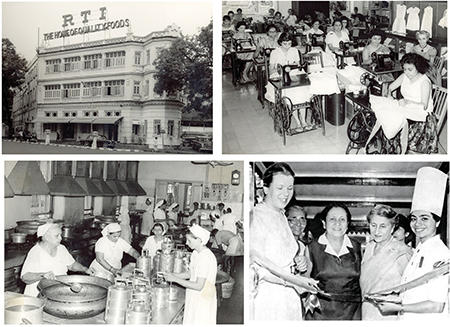
From the albums, clockwise from top l: 35, Hughes Road; industrious ladies and their machines;
Meher Medhora, Shirin Petigara, Nargesh Palkhivala, Shera Tata, Simone Tata at opening of outlet
at Bai Avabai Petit Girls’ School; packing meals Photos: Tata Central Archives
The early years
Rajendra Narla, head archivist at Tata Central Archives gives details about the early days of the Institute, culled from the Tata History project of Tata Economic and Consultancy Services. "In 1888, a Parsi couple from Bombay, Naoroji Pattuck and his wife Sirinbai started a work class for Parsi women. In 1917, this class developed into an Industrial Home for Parsi Women which taught crafts like cooking, sewing, hand embroidery, etc. Earlier, in 1903, Sirinbai had set up Stri Zarthosti Mandal, an organization to give overall help to Parsi families. This Mandal also financed the Industrial Home… Sir Ratan Tata became a donor of the Mandal in 1910.” In the late 1920s, "the management of the Mandal and the Home decided to expand the latter’s activities. A building fund was being collected for the purpose. In 1928, during the silver jubilee year of the Mandal, the Sir Ratan Tata Trust purchased a building and gave it as a donation to the Home to found an Institute for poor women. Following this, the building fund was transferred to an endowment fund and the Sir Ratan Tata Industrial Institute was inaugurated on January 20, 1929, the birthday of Sir Ratan. In 1937, Lady Navajbai donated another building to the Institute (the current annexe).” The word "Industrial” was dropped from the name of the Institute later.
As notes Buhariwala, "We have to reach a wider audience everywhere… We need to reach Parsis, no matter where they are located…and to introduce our products to everyone.”