Singapore Parsis add their own special flavor to traditional recipes
This collection is especially important as Parsi families in Singapore have shared recipes passed down from generations, notes the introduction to the recipes section in Suna Kanga and Subina Khaneja’s book The Parsis of Singapore: History, Culture, 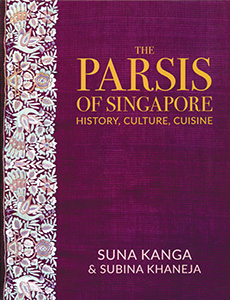 Cuisine. While explaining the intricacies of preparing Parsi dishes, the authors note: "There is a quirky saying that the Parsis eat anything, anytime. So you will find ravo as the first recipe, as it can be consumed as ‘a good start’ to the day, and at festivals, as well as a dessert at a dinner!”
Published this year by Epigram Books, The Parsis of Singapore carries over 35 vegan and non-vegetarian Parsi recipes contributed by the ladies of Singapore. Parsiana publishes five recipes with the kind permission of the publishers.
Suna Kanga, Nilufer Boocha, Daisy Driver, Zarreen Patel
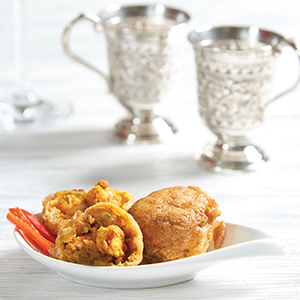
KOLMI NA KABABS (Prawn kababs)
Serves 4-6
There are many kinds of kababs and cutlets, and an equal number of variations in the recipes. This version is one of my favorites as it is loved by my family and friends. The potato gives it a soft center with the bits of prawn adding crunch.
Potatoes (3 — large)
Prawns (220g — shelled, deveined and cut coarsely)
Chilli powder (2 tsp)
Turmeric powder (1 tsp)
Cumin powder (1 tsp)
Red chilli paste (1 tsp)
Salt (to taste)
Coriander (¼ bunch — washed and finely chopped)
Semolina (220g)
Eggs (3-4)
Oil
Boil the potatoes, peel and mash them while hot. Add the prawns, chilli, turmeric and cumin powders, red chilli paste, salt and coriander and mix well.
Make little round balls with the mixture, then roll the balls in the semolina. Leave aside.
In a bowl, beat the eggs. Take a kadhai or a round-bottomed vessel and heat the oil in it. When the oil is hot, dip each ball in the eggs and deep-fry. Take care not to fry too many at one time as they tend to stick to each other and it is difficult to turn them.
Serve hot with dhansak or as a starter.
DAISY DRIVER
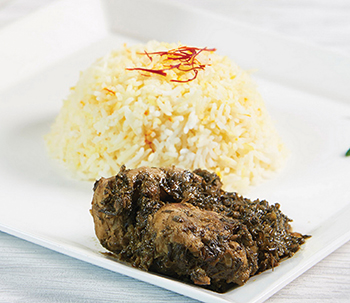
BHAJI MA MARGHI (Chicken in spinach)
Serves 4-6
My mother and grandmother used to prepare bhaji ma gosht (mutton in spinach) regularly by mixing 4-5 different types of bhajis. I have substituted gosht with chicken. My husband, son and I love this and I prepare it every week with the local spinach available in Singapore.
Chicken (8 pieces or 500-800g)
Ginger (1½ tbsp — grated)
Peppercorns (4-5 — coarsely crushed)
Oil or ghee, for frying
Onions (3 medium — chopped)
Salt (to taste)
Cumin seeds (1 tsp — coarsely crushed)
Green chillies (2 small — chopped)
Turmeric powder (½ tsp)
Tomatoes (2 medium — skinned and finely chopped)
Spinach leaves (300g or 200g cholai and 100g palak)
Fenugreek spinach leaves (50g — optional)
Coriander leaves (100g)
Marinate the chicken pieces in the grated ginger and crushed peppercorns for half an hour. Heat the oil or ghee in a pan and stir fry one chopped onion until light brown. Add the chicken pieces to the fried onions and fry until brown. Add 60ml (¼ cup) water and salt. Simmer on a low heat until the chicken is three-quarters cooked and the water has almost evaporated.
In a separate pan, fry the remaining onion in a little oil or ghee until soft and translucent. Add the cumin seeds, green chillies and turmeric powder and cook for 2 minutes. Then add the tomatoes and cook for another 2-3 minutes until they are soft. Lightly mash the mixture.
Wash and finely chop the spinach and coriander leaves. Add them in the pan and stir the mixture for 3-4 minutes, then add 100 ml (½ cup) water and cook on low heat until the leaves are cooked and form a thick mixture.
Add the spinach to the cooked chicken, cover and allow to simmer on low heat for 10 minutes. Sprinkle in the garam masala. Stir occasionally to prevent the mixture from sticking to the pan. Serve hot.
NILUFER BOOCHA
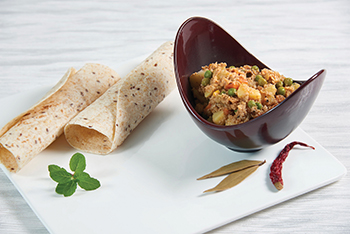
VEGAN KHEEMA BHAJI (Vegan soya mince with spinach)
Serves 6-8
Becoming a vegan is the best thing I’ve ever done. This recipe is a vegan adaptation of a traditional recipe. Soya, a good substitute for meat, has a similar texture and chewiness, and is also an excellent source of protein.
Soya granules or textured vegetable protein (225g or 1 cup)
Canola or any vegetable oil (1 tbsp)
Ginger garlic paste (1 tbsp)
Turmeric powder (¼ tsp)
Frozen mixed vegetables (peas, corn, carrots) (1 cup)
Potato (1 large — boiled and cut into cubes)
Tomato (1 — finely chopped)
Salt (to taste)
Coconut milk (240 ml or 1 cup)
Lemon juice
Mint (4-5 sprigs — stems removed and leaves chopped)
Red chillies (2 — lightly roasted. Use less or skip if you don’t want the kheema to be too spicy)
Soak the soya in a bowl of boiling water for at least 15 minutes. Drain and squeeze out the excess water. Grind in a blender until well shredded.
Heat the oil in a wide saucepan. Add the ginger garlic paste and sauté for a minute on medium heat until fragrant, being careful not to let it burn. Add the turmeric powder and toast for about a minute.
Add the mixed vegetables and potatoes and fry for about a minute. Then add the tomato and cook for a few minutes until the tomato has broken down and the juices have evaporated. Add the soya granules or textured vegetable protein and the salt. Cook for about 15 minutes more until all the flavors have blended.
Mix in the coconut milk, then remove from the heat. Squeeze lemon juice to taste over the preparation and mix well. Decorate with the mint and red chilli on top and serve hot with chapatis or rice.
ZARREEN PATEL
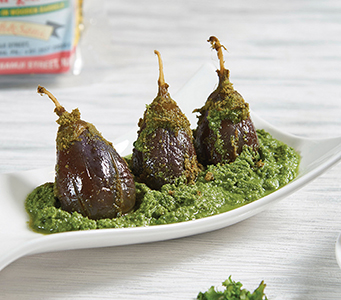
RAVAIYA (Chutney stuffed baby brinjals)
Serves 4-6
This is a recipe my mother came up with as an alternative for patra ni machi (fish in banana leaf with chutney) for vegetarians. It was created particularly for her son-in-law (my husband) when he turned vegetarian.
For the chutney
 Coconut (½ — grated)
Green chillies (8)
Garlic (3 cloves)
Cumin powder (½ tsp)
Coriander (1 big bunch)
Sugar (3 tsp)
Lemon (½ — juiced)
Salt
Baby brinjals (6-8)
Ginger garlic paste (1 tbsp)
Chilli powder (2 tsp)
Turmeric powder (1 tsp)
Parsi sambhar (1 tsp)
Oil for cooking
Malt sugarcane vinegar (2 tbsp)
Salt to taste
Coriander (for garnish)
Grind all the chutney ingredients to a fine paste and set aside.
Slit the brinjals making a crosswise pattern, from the bottom to the top, taking care to keep the brinjal whole at the stem. Make a paste of the ginger garlic and chilli, turmeric and sambhar powders and carefully stuff into the brinjals, taking care that the mixture does not ooze out.
In a large pan, heat 2-4 tablespoons of oil and add the chutney and sauté for about 3-5 minutes. Put the brinjals in the chutney, add the vinegar and salt, cover the vessel and cook on a low heat for 8-12 minutes. Turn the brinjals over so they cook evenly on both sides, being careful not to break them. If the chutney becomes too dry, add a little water while cooking.
When the brinjals are cooked they should be soft and tender and all the water should be absorbed into the masala. Garnish with coriander and serve hot.
DAISY DRIVER
GOR PAPRI (Jaggery brittle with sesame)
Serves 5-6
As kids we would enjoy having this as an after-dinner snack.
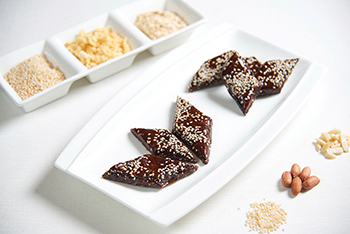
We would ask our mother to make it very sticky — a real jaw-breaker!
It is very easy to make and can stay for a long time in the refrigerator.
Ghee (1 tbsp)
Gor (unrefined sugar, found in solid or powdered form) (225g — grated)
Ginger powder (½ tbsp)
Flour (to thicken, if necessary) (1 tbsp)
Sesame seeds (or peanuts) (2 tbsp)
Melt the ghee in a pan and add the grated gor. Cook until the gor melts. Add the ginger powder. If the mixture is too watery, a tablespoon of flour can be added to thicken it.
Grease a plate-size thali or flat tray. Pour in the mixture and sprinkle sesame seeds on top. Slice into squares and leave it to cool and harden on the tray.
SUNA KANGA