Attempts at matchmaking, counseling and uplifting the priestly cadre were discussed by the Federation of the Parsi Zoroastrian Anjumans of India
Parinaz M. Gandhi
To hasten the legal formalities in obtaining a divorce, the Bombay Parsi Punchayet (BPP) will make a representation to the Chief Justice of the Bombay High Court to increase the frequency of the sittings of the Parsi Matrimonial Court. The only jury system prevailing in the country, it normally functions twice a year for two days each, leading to considerable backlog. Marital counseling by professionals will also be made mandatory prior to marriage, especially for engaged couples allotted a flat by the BPP, announced Dinshaw Mehta, president of the Federation of the Parsi Zoroastrian Anjumans of India and chairman of the BPP at the executive council meeting of the Federation at Bombay’s West End Hotel on January 26, 2013.
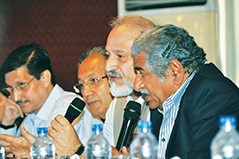
At a meeting with famous Parsi divorce lawyers, the BPP was advised to continue with the prevailing Parsi Matrimonial Court and not seek a shift of divorce cases to a Family Court where "deliberations in Marathi… could be disastrous for us,” reported Mehta. The main advice of the Parsi lawyers was "don’t allow adjournments as frustration keeps building up.”
"Before young couples get married, it was suggested that they be put through six months of counseling… by professional counselors so that confidentiality is maintained and it won’t be embarrassing for anybody,” elaborated BPP trustee Khojeste Mistree. Done primarily to "try and bring down the divorce rates,” the BPP wants to ensure that young couples don’t consider marriage as an easy recourse to "jump the queue for housing” knowing that the BPP gives priority in its allotments to couples waiting to get married.
Meanwhile three community bodies are continuing with their social interaction programs with a view to promote marriages within the community. Zoroastrian Youth for the Next Generation (ZYNG), the youth arm of the BPP planned over 55 events in the last three years since its formation and has "a little over 4,000 members in the 15-49 age group,” reported committee member Viraf Mehta. Neither a religious body, nor involved in politics, they provide "nothing but a social platform,” he stressed. Seeing youngsters "slipping away from Parsipanu,” he mentioned that participation drops when there are work events or religious events but picks up for social programs. "We have to do it their way or there is no other way.” As a result of their efforts, 20 couples are planning to get married and five couples are expecting.
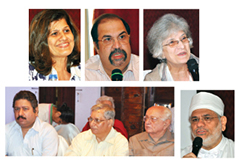
Viraf’s colleagues Murad Currawalla and Nazneen Edulkaka ran through their different subsidized social events ranging from their yacht party to paintball, rain dance and treasure hunt, speed dating with a twist, monsoon trek and their "Recycle Karo” drives at Rustom Baug, Jer Baug and Godrej Baug when they managed to collect over Rs 50,000 from each drive which they donated to different charitable causes. The third edition of the ZYNG calendar was distributed to all the anjuman representatives. The elders in the hall were subsequently requested to induce their youth members to register with ZYNG as "we would love to have an event in another city.”
The BPP Matrimonial Bureau plans monthly get-togethers and promotes "interaction in a relaxed, fun environment,” reported BPP trustee Arnavaz Mistry. Co-trustee Jimmy Mistry makes available his Della Tower premises for their regular functions, appreciated Arnavaz, and they have also organized three "immensely successful” picnics that were attended by 550 youngsters. Besides maintaining their matrimonial website and keeping in touch on Facebook, those registered are sent regular emails with an update on possible matches.
She quoted a 2009 study by Sayeeda Unisa of the International Institute for Population Sciences that showed that one in five Parsi Indian men and one in 10 women in the community were unmarried at age 50. When West Zone A vice president Mancher Mubarakai jested that Parsi men should be permitted two wives, Dinshaw Mehta responded, "When we can’t take care of one, why do we want two?” BPP trustee Muncherji Cama was apprehensive, "Why do we want two mothers-in-law?”

The annual meets organized by the Federation of Zoroastrian Youth Associations of India are meant to promote "friendship and interaction. We don’t call it a matrimonial meet,” stressed president Mabrin Nanavatti, mentioning that two couples got engaged this year. His main concern was "We don’t receive delegations from most anjumans.” Even at the last meet in Ahmedabad in November 2012, when they had made provisions for 250, only 130 attended, with just eight from Bombay. Difficulty in finding hosts for youth meets is another problem facing the association. They are planning to organize their next meet in Bordi during the Diwali holidays, possibly at the Petit Sanatorium there, and sought help from the BPP for financial commitments and for necessary contacts with the trustees of the Sanatorium. Whilst the cost per delegate works out to Rs 7,000, they only charge Rs 500, conveyed Nanavatti. The BPP in earlier times used to contribute Rs 50,000 for each meet, reminded FOZYA’s Delzin Irani. Their appeal for funds earned a prompt response from Firoz Pestonji, a former resident of Jhansi, now settled in Western Australia and his wife Mahrukh who committed Rs 30,000. North Zone vice president Tehmton Anklesaria made a donation of Rs 11,000 and Shiraz Doongaji of Nagpur announced that 15 participants would come from Nagpur and the anjuman would also sanction a donation. Rohinton Italia of Chikhli promised a sum of Rs 5,000.
Nurturing
Starting off as a career guidance facility for students who have completed schooling, today the Holiday Programme for Youth (HPY) gets registrations from 180-200 school-leaving students from Bombay, other parts of India and even Dubai and elsewhere. "It is becoming bigger and better,” summed up HPY coordinator Azmin Mistry mentioning that they even have their website hpy.co.in In addition to personality and leadership development programs they have fashion shows, talent contests, antaksharis.
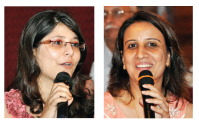
"Besides ho-ha, we also do social service,” added Azmin referring to their work at the old age homes and collection of 292 bottles of blood in six hours. Proud of BPP’s stellar event Mehta commented, "We can bask in the reflected glory of HPY.”
"It is a very sad state for the youth of today that the government has come out with policies that are ridiculous,” pointed out BPP school counselor Pareecheher Daviervala. Since the government has made it compulsory for students to be promoted each year until they complete Grade VIII, "how can you expect students to study and work hard if they have not done so in their formative years?” she enquired. Functioning as a counselor at the Cowasjee Jehangir School that has 1,500 students, many with financial and emotional problems, she observed that the "youth today are not serious about doing business or working hard. If they get a call center job they will be happy.” Parsi students need counseling to optimize their intelligence, aptitude and interests to make the right career choice, she recommended.
"How many anjumans have a count of children with special needs? Have they addressed their needs?” enquired BPP trustee Armaity Tirandaz who has been taking an interest in helping such families realizing the "distress they face for a lifetime.” In addition to monetary help they also need reassurance that these children will be looked after once the parents have passed away. "It is time that our community starts looking after such children” with special needs, remarked Mehta who was hopeful that they would get some premises at Nowroz Baug when it goes under redevelopment or through the Dossibai Trust at Masina Hospital.
Hoshang Wania, representing Nargol, pointed out to the Federation executive that the Women and Children’s Fund should use most of the income accrued each year lest "there be a problem one day.”
Promoting priests
Beginning March 21, 2013 the BPP will implement a scheme whereby fulltime mobeds will get a minimum monthly salary of Rs 25,000, announced Mehta. To ensure that the entire burden does not fall on the BPP, they have clarified that they will supplement the income presently earned by the priest such that the deficit between his current income and the minimum wage of Rs 25,000 is borne by the BPP. Conceived by Dastur (Dr) Firoze Kotwal and industrialist Nusli Wadia, with support from Khojeste Mistree, this scheme seeks to convince priests that mobedi can be a rewarding profession, explained Dastur Khurshed Dastoor of Udvada. As per reports of the Parsi Resource Group there are only 30 boys born in priests’ families who are eligible to become priests. This scheme seeks to lure them to a religious calling as versus any other career. Those on the higher echelons of the priestly hierarchy, having studied more or performing pav mahal (inner liturgical) ceremonies will get a substantially higher monetary reinforcement to match their efforts.
With limited funds at their disposal (they are hoping for a kitty of six crore rupees but are making a beginning with one crore), this scheme will initially be introduced in mofussil areas and then extended to Bombay as they don’t want panthakies in Bombay to cut down the salaries of their priests in the expectation that the BPP will bear the costs. Yezdi Panthaki of Saronda urged that even part-time priests be covered under this Scheme and provisions be made for the widows of priests. "I work at the grassroots unlike the High Priests,” he continued, making Dastoor intercept, "Even the High Priests came up from the grassroots level.”
Farroakh Gowadia representing Nargol mentioned that when he was a student at the Cama Madressa in Andheri there were 70 students; today there are barely one or two. The Dadar Athornan Institute has less than 20 students. "Why doesn’t the community realize that jaa vasti nathi, ék makaan maa bè atash padshah raakhi sakai (in areas where few community members remain two fires could be housed and venerated in separate rooms in one fire temple)” like in Lonavla? "Every individual trustee has a problem.” His statement that the fire temple in Davier was locked and there was no one in attendance to receive the kathi consignment earned a rebuke from Marazban Wadia who admitted that it was neglected in 2000 but has now been renovated. Showing photos of the agiary before and after repair he narrated that the group of volunteers from Nowroz Baug initially declined to render their services but changed their mind after one of them dreamt of a lady who claimed to have built the agiary. The beneficent forces in the agiary are such that at the time of the Gujarat riots in 2002 after their humbandagi prayers the agitation stopped from the following day! stated Wadia. In the absence of a priest, it is the behdins who look after the agiary. "The Davier Agiary will not stop for any reason,” he declared unequivocally, adding, "If anyone tries to close it,” the spiritual force in the agiary will not permit it.
Guloo Austin of Ontario who had just got her mobedyar certificate a month earlier and derived "a lot of satisfaction from our prayers,” stated that "the
time has come in North America when we are training women” to substitute as priests. "A time may come when India too will have to take this step,” she added.
Brig Jehangir Anklesaria of the Ahmedabad Parsi Panchayat felt that "Rs 25,000 is peanuts as incentive for better priests. We are starting on the wrong premise.” Instead of only raising the priest’s monetary level, his spiritual knowledge should also be improved "so that ipso facto the community will look after its priests.”
"Aaje ék mobed ni kimmat soo chhè (What is the value of a priest today)?” rhetorically asked Dastoor before stating that at the time of a wedding lakhs are spent on decorations and on caterers, Rs 10,000 is incurred for bridal make-up and draping of sari, but only Rs 1,000 given as ashirwad to the priest who officiates at the ceremony. At the Jeejeebhoy Dadabhoy Agiary, their old panthaky who was given a salary of Rs 5,000-7,000 has opted to retire because after 35-40 years of service he was reportedly asked to make a handsome donation towards the renovation of the Agiary, related Dastoor. "The baug (being a popular venue for celebrations) is looked after but the agiary is neglected,” maintained Dastoor referring to rat holes on the agiary premises.
"What happens to mobeds when they become immobile?” enquired Arnavaz Mistry referring to a priest spending his last days at the Parsi Ward at J. J. Hospital. She also knew of three chasniwallas who are on the footpath because they are no longer able to work.
Impressive icons
The contribution of six "low profile Parsi men and women who have shed luster on our soil but have been overshadowed by well-known compatriots,” was recalled by guest speaker Prof Aban Sethna in her talk on "Illustrious Parsis of the Past.” Professor at the Sir J. J. College of Architecture for over 30 years with a keen interest in the history of Bombay, she shared the findings of her study with the anjuman representatives.
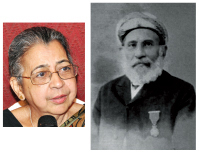
Describing Dastur Camaji Homaji as a "martyr,” she referred to his pious life and the unjust accusation leveled on the weaver by his Muslim partner. Beheaded in 1703, "he had spurned the offer to turn Muslim to escape death sentence.” Venerated in Bharuch to this day, his name is mentioned in every Zoroastrian ritual, she added.
"The Zoroastrian population in Iran had dwindled to 7,000” when Manekji Limji Hataria landed there, stated Sethna to stress that had he not succeeded in halting the persecution faced by the community at the hands of the Muslims in the early 19th century there might have been no trace of Zoroastrianism in the country of its origin. Seeing the hardships faced by members of the community who were compelled to move around in tattered clothes, travel on donkeys because horseback was prohibited, live in dilapidated dwellings because they could neither repair their house nor build a new one, had no freedom to practice their religion and were weighed down by the 992 toman jezia tax they had to pay the Muslim rulers, Hataria succeeded in improving their conditions during the 40 years he toiled there, establishing the Society for the Amelioration of the Parsis in Iran. 2013 marks his 200th birth anniversary, she reminded the gathering.
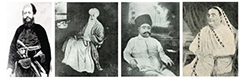
The Rustompura locality in Surat was named after the doughty broker Rustom Maneck, mentioned Sethna. The philanthropist who became a navar at the age of 40, presented himself in the court of King Aurangzeb and in lieu of the jezia tax imposed by the King on non-Muslims, contributed Rs 5,000 to the royal treasury for 10 years until 1664 when Surat was overrun by the Marathas. Besides building tanks and dharamshalas he even built bridges at the request of Shivaji Maharaj.
"Our native architect Khanbahadur Mancherji Marzban has been allowed to sink into oblivion,” regretted Sethna who pointed out that he was the first Parsi and second Indian to be appointed assistant engineer of the Bombay Presidency. Between 1872-93 he had designed heritage properties like the St Francis Xavier Church at Dabul, the Alexandra Girls’ English Institution and the Byramjee Jeejeebhoy Parsee Charitable Institution, the Parsi Lying-in Hospital and the Cama Hospital. She also gave him credit for hauling up the clock to a height of 175 feet at Bombay’s landmark Rajabai Tower. As executive engineer to the Bombay Municipal Corporation, he initiated the Kachra (garbage) Removal Scheme. His efforts to promote affordable housing for poor Parsis led to 34 blocks being constructed at Gilder Lane in 1889 where 123 families were housed, their rents ranging from half a rupee to eight rupees. In addition to this Colony being named after him, there is also a road in the Fort area bearing his name.
The foundation of financial enterprise in India was laid by Jeejeebhoy Dadabhoy who started life as a godown keeper and then progressed to becoming an agent, starting his own trading firms and eventually establishing three banks — Bank of Bombay, Commercial Bank of Bombay and Bank of Western India. One of the trustees of the Grand Indian Peninsular Railway, his name appears as Jeejeebhoy Dadabhoy Moghana, but the surname that suggested he was expensive, was later dropped. He had even established the Bombay Steam Navigation Company in 1814. His son-in-law Manekji Petit established the Oriental Spinning and Weaving Company. In 1836 when the fire temple at Colaba that bears his name was inaugurated with a jashan, firms in the city reportedly gave special dispensation to their Parsi employees to attend the event.
It was thanks to Jerbai Nowrosjee Wadia’s magnanimity that the community in Bombay has five housing colonies that have helped "Parsis to forge ahead in life and maintain their community identity,” remarked Sethna, appreciating that Jerbai donated the Rs 3,51,000 that was left to her in her husband’s will for the cause of the poor and the needy. Realizing that mortality amongst women was high due to consumption and childbirth, she contributed sums for medical facilities like the hostel for nurses at the J. J. Hospital, the Bahadurji Sanatorium in Deolali and the TB Sanatorium in Panchgani.
Jerbai was also supposed to be very knowledge about the pearls of Basra and so too the construction industry and could advise on the proportion of mortar and brick that ensured the firm foundation of many a building, supplemented Khojeste Mistree, urging Sethna to ready a visual presentation of her research instead of only compiling it into a book as members of the community "love talking; we don’t like reading.”
For nearly an hour after the presentation anjuman representatives deliberated on whether baugs have proved to be a boon or bane for the community in Bombay following a query from Cdre Medioma Bhada of Belgaum, "Had there been no housing provided to the community, would our attitude to life been different?” Would we have been more illustrious? Have our youth sunk into a ghetto mentality because of that?
According to Mistree, "Every society that achieves economic well-being is not motivated to do better. Let us not run away from the fact that our youth are becoming lazy…” Alluding to the "heroes” in the information technology sector and "our modern icons” in the House of Tatas and Godrej, he lamented that within the community "the heart to give is not as strong as it was in our forebears… The concept of charity has ebbed away.”
Was charity the "biggest damage done by our forefathers?” enquired Brig Anklesaria who believed "it has killed the initiative of young people.” He mentioned that when youngsters in Ahmedabad come to him with a request for a house he advises, "We will give you a chhapru (roof) but at the end of 15-20 years you should move out and build your own home.” Reinforced Tehmton Anklesaria, "Anything given free has no value.”
The housing portfolio is "giving the Punchayet a bad name… Let there be transparency in allotment (of flats),” observed Tannaz Parakh representing Khergam, thankful that Mistree, who was officiating as chairman in the absence of Mehta who had left early to attend funeral prayers, had allowed her to express her views. That morning, she had been denied permission to speak by Mehta on the grounds that when the Khergam resident is present at the meeting, there was no need for a proxy to participate in the deliberations. Countering Parakh’s insinuation that the Punchayet housing allotments were not fair, Cama asked her to cite instances. "You want to know that now?” asked Parakh. "Yes,” insisted Cama but a resounding "No,” from the others in the hall made sure that there was no faceoff between the two. The waiting list for housing has been brought down to half in the last year, said Cama.
"If housing is removed from our agenda, our meetings on Tuesdays would end in one-and-a-half hours” instead of stretching on for five or more, added Mistree. Contrary to his belief five years afore that "Parsis don’t lie,” he has now learnt to "go on the assumption that what a person is saying is not true.” Insisting that the current board is "more aggressive” in its efforts to reduce the housing backlog, he hoped a time would come, similar to the scenario years ago, when a baug manager would invite members of the community to take a look at vacant flats in a colony and welcome them with flowers if they agreed to reside therein.
When Doongaji asked, "Would the BPP consider building houses in Nagpur? We have land to accommodate 100 families,” Mistree responded that "Bombay is the be-all and end-all of the Parsi world. They don’t even want to move to the suburbs. Virar is another country for them. This is the price we have to pay for being a well-to-do community. We don’t want to be adventurous.”
Maintained Dastoor, "We would have withered without Parsi neighbors. As it is, we are most secular… Adoption of other religions would have been very easy.” He felt it was imperative to introduce a day care facility in every Parsi colony making Cama clarify that their attempt to get the "matrons of Nirlon Colony at Goregaon” to start such an initiative was not successful as trying to make it a commercial proposition, "the rates quoted by them were inordinately higher.”
Those attending the meeting were: Brig Jehangir Anklesaria from Ahmedabad; Meher Panthaki from Badnera-Amravati; Homi Pithawalla and Kersi Sanjana from Bardoli; Cdre Medioma Bhada from Belgaum; Sarosh Ginwalla and Pilloo Ginwalla from Bharuch; Dinshaw Mehta, Arnavaz Mistry, Khojeste Mistree, Yazdi Desai, Jimmy Mistry, Armaity Tirandaz, Muncherji Cama, Mehli Colah, Cawas Panthaki and Godrej Dotivala from Bombay; Minoo Khan, Marzban Mehta and Khurshed Pastakia from Borivli; Cdre Jal Postwalla from Calcutta; Thrity Wadia from Chattisgarh; Rohinton Italia and Parvez Italia from Chikhli; Mancher Mubarakai from Dahanu; Marazban Wadia from Davier; Farrokh Rustomji from Delhi; Phiroze Gandevia from Gandevi; Bomi Heerjee from Indore; Pervez Irani and Khodadad Irani from Iranian Zoroastrian Anjuman; Anahita Desai from Jabalpur; Ronny Dick from Jhansi; Pervez Khergamwalla and Tannaz Parakh from Khergam; Cyrus Mancherji and Zal Cowasji from Mhow; Shiraz Doongaji from Nagpur; Hoshang Wania, Farroakh Govadia and Parhad Postwala from Nargol; Noshir Jal, Niloufer Jal, Rohinton Karanjia and Shirin Karanjia from Neemuch; H. S. Pardiwala from Pardi; Farokh Irani, R. Kushesh and Tehmasp Bharucha from Poona; Khurshid Buhariwala from Raipur; Khushman Tamboli from Rajkot; Tehmton Anklesaria and Rustam Patel from Ratlam; Ervad Yezdi Panthaki, Dinshaw Patel and Sarosh Poonawala from Saronda; Darayas Master from Surat; Yasmine Sanjana from Tavdi; Pervez Bhesania and Kaizab Billimoria from Thana; Dastur Khurshed Dastoor and Pirojshah Sidhwa from Udvada; Baman Cama from Vadodara; Sam Chothia from Valsad; Soonu Vesuna and Keki Lakdavala from Vesu; Dinyar Nakra from Visakhapatnam; Persi Buhariwala and Sarosh Buhariwala from Vyara.
The office bearers who were not representing their anjumans were joint honorary secretary Pervez Mehta and joint honorary treasurer Mehrwan Irani. The guest speakers were Prof Aban Sethna, Sorab Katpitia, Pareecheher Daviervala, Viraf Mehta, Murad Currawalla, Nazneen Edulkaka, Azmin Mistry Mabrin Nanavatti, Shovir Irani and Delzin Irani. The Press was represented by Jam-e-Jamshed Weekly, The BPP Review and Parsiana.