The Haryana forest department is planning to release eight vultures bred in captivity as part of its conservation program into the wild after attaching tracking devices to them, according to a report dated March 27, 2017 in the Daily News and Analysis (DNA). This is the "first ever release” into the wild of three species of endangered winged scavengers — the white-backed, long-billed (pictured) and slender-billed. The report notes that the central government has given permission for attaching satellite transmitters 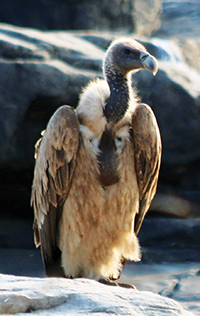 to the birds to track them after their release.
Previously, "only wing-tags could be put on the birds for identification” and one bird could be followed for 45 days only, according to the report. The tracking devices known as platform transmitter terminals will soon be operational when frequencies on which the satellites will operate are issued.
Set up in 2001, the Jatayu Conservation Breeding Center was established in Pinjore in Haryana by the forest department in collaboration with the Bombay Natural History Society to save the three critically endangered species from possible extinction. The report notes that "this is the first-of-its-kind center in Asia” and houses 226 birds of the three species of vultures.
Vultures have disappeared from Maharashtra, Gujarat and many other states in the country due to the consumption of the drug diclofenac. The drug is administered as a painkiller to cattle and when the vultures feed on the carcass, they suffer renal failure if the drug is still present in the corpse. The government has banned the sale of diclofenac for veterinary purposes but it is still allegedly used.