Jurist Nani Palkhivala was determined to protect liberty and freedom
Fali S. Nariman
I started my professional life in 1951 — in Sir Jamshedji Kanga’s Chambers. It was a crowded Chamber with seven tables for seven of Kanga’s "juniors” — most of them "seniors” in their own right and all in good practice. At that time Nani Palkhivala (pictured) was only nine years at the Bar, but already a "boy-wonder.” He had earned a table for himself but with space just enough to hold conferences with one client.
When more clients were present, Nani would confer with them in his 1948 Hillman Minx parked outside. He could work anywhere, always brilliant but always unpretentious. And he could impress people around him with a happy turn of phrase: he would console us brief-less, young newcomers with a memorable oneliner: "Remember, God pays, but not every weekend.”
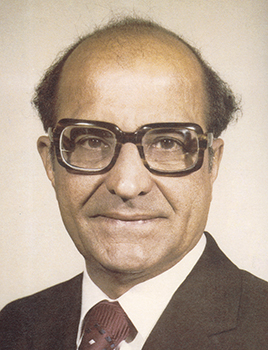 When Nani wrote his truly monumental work, the book on income-tax (now in its ninth edition) he put Kanga’s name as the first co-author. But Kanga, with characteristic greatness, acknowledged that the entire work was Nani’s, taking solace in the reflection of St Paul (as recorded in the Bible): "I have fought a good fight. I have finished the course. I have kept the faith.” Looking back over time, each of these three attributes describe Nani’s own achievements.
He fought a good fight: for liberty and freedom when those concepts needed fighting for. And he finished the course: when, almost single-handedly, he prevented a major political party with a two-thirds majority in Parliament from changing the Constitution "to suit the times,” as was then professed; more appropriately, as it appeared to him, to suit the politicians of the times!
The "basic structure theory” (which meant Parliament could not change by amendment principal features of the Constitution) first evolved in his fertile mind during the landmark case of Golaknath (in 1967, which he argued before a Bench of 11 judges); it acquired distinct shape and form a few years later in Keshavananda’s case (1973) in which also he was lead counsel, before a still larger bench, of 13 justices. It was Palkhivala’s persuasive arguments that convinced seven of the justices to accept as law that there were certain "unamendable” features of the Indian Constitution. By doing so he kept the faith — the faith of the spirit of our written document of governance.
Three days after the Supreme Court reaffirmed the basic structure theory on November 7, 1975 — in Indira Gandhi’s election case (a decision of a five-judge bench) — Chief Justice Ray, on his own, convened a special bench of 13 justices to overturn the decision in Keshavananda. The special bench was constituted to hear "Whether the power of amendment of the Constitution was restricted by the theory of basic structure and framework as propounded in the Keshavananda case.”
The hearing in that case lasted over two days and we witnessed the finest solo performance ever seen in a court in India. After Palkhivala presented his argument, all the judges were convinced (all, except the chief justice) that the basic structure theory propounded in Keshavananda was constitutionally correct and sound and could not be overruled. But before they could say so in a speaking order, the chief justice rose saying that the special bench "stands dissolved” and with this the proceeding came to an ignominous end! There is no record of this hearing in the annals of the court. But in India’s constitutional history this incident has proved to be the real turning point for the apex court because by not overruling the majority decision in the Keshavananda case, the court retained to itself the custody and control of the Constitution — which in the 1970s was in grave danger of being "taken over” by a Parliament dominated by a single political party.
Nani worked, as he walked – always at breakneck speed. I remember on one occasion when he was rushing from one court to another, navigating right angle turnings in the corridors of the Bombay High Court (where you cannot see who is round the corner), he collided with C. K. Daphtary, then advocate general. Never at a loss for words, CK smiled at Nani, and raising his arm said: "Get your Palkhi (palanquin) out of the way.” Oblivious of the humorous pun, Nani muttered a few apologies and rushed on, fast-forward!
If Nani had a fault it was that he was far too preoccupied with the concerns and chores of the moment. "What is this life if full of care, we have no time to stand and stare?” asked the poet. Nani had "no time to stand and stare.” In fact, when he was young and burdened with briefs, he literally "filled the unforgiving minute with 60 seconds worth of distance run” — always in high gear, always at top speed.
He was just in time for a court hearing, just in time for a board meeting, just in time to catch a plane. In fact, not infrequently, one would hear at Bombay airport the announcement: "Last call for Mr Palkhivala for Flight 182 to Delhi!” And there he was — striding, his curly hair flowing in the wind. And once he boarded, the plane door would close quickly behind him. Nani then had a large crop of curly hair of which he was justly proud, but it vanished with advancing years. Time was his greatest competitor – he would, if he could, outwit time. But alas he lost the battle. The devoring hand of time slowed him down, and in the end outwitted him — as it will outwit each one of us. But even time cannot rob us of our fond memories of him.
Excerpts from Before Memory Fades: An Autobiography.