The community should consider one common facility
where all the elders can be cared for
Dr Vispi Jokhi
As per the 2011 census there were 57,264 Parsis in India. With our declining fertility rate of 0.8, which is way below the 2.3 required to stabilize population, in all probability 100 years later we may be staring at extinction.
We are looking at a tragic scenario where many will be completely disabled, unable to perform even the basic activities of daily living, beset with loneliness, dementia and ill treatment by caregivers, leading to a slow, suffering death.
As practiced today, Medicine 2.0, as I refer to allopathy, is reactive. We are reacting to diseases as they occur and treating the symptoms after they manifest. Because of education, relative prosperity and better hygiene, Parsis are less affected by infectious diseases and more by lifestyle related ones, known in medical parlance as non-communicable diseases. The four most prevalent ones affecting the community are cardiovascular conditions, cancer, neurodegenerative disorders, including dementia and Alzheimer’s disease, Type 2 diabetes and metabolic alcoholic and non-alcoholic fatty liver disease. While most Parsis have access to healthcare, they often seek treatment guided by factors like choice of favorite doctors and hospitals based on past reputation. The old go-to destination, The B. D. Petit Parsee General Hospital, is no longer their first choice as it lacks super specialty units. Besides, Parsis living in the suburbs have access to competent options closer to where they live, with modern facilities for the same price as resource rich corporate or even trust hospitals.
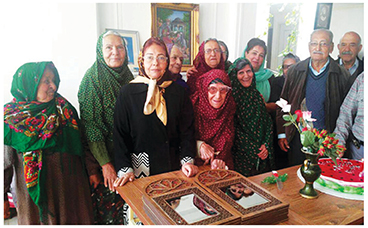
Above: bonding at a day care facility for seniors in Yazd
The median age of the community is high, with life expectancy around 85 years, at least a decade more than that of other communities in India. In such a situation, I feel that Medicine 3.0, which is built on a predictive model, needs to be adopted. The younger generation should be genetically tested. During my research on longevity and lifespan I felt that even though the science of using supplements to prevent aging and prolong a healthy lifespan is nascent, and the supplements have not been fully researched for their effectiveness and side effects, can the Parsis afford to wait?
My blog written in 2023 (https://vhjokhi.blogspot.com/2023/08/lifespan-why-we-age-and-why-we-dont.html) describes the possibility of increased lifespan with good health by judicious genetic modification and use of supplements. The latter act as antioxidants and stimulate the body to create an environment conducive to increased lifespan. Today, those in their 50s can look forward to doubling their lifespan without too much degenerative deterioration. It would be unethical and dangerous on my part to recommend the supplements advocated in two books, Lifespan. Why we Age — and Why we Don’t Have to by David A. Sinclair with Matthew D. LePlante and Outlive: The Science and Art of Longevity by Dr Pater Attia with Bill Gifford. But their advice on healthy diets, exercise and reduction of mental stress and fatigue can without controversy give a glimmer of hope to our community and prolong the inevitable end.
What is staring us in the face today is that the aged suffer from loneliness, as well as poor health of mind and body. The migration of the young members of the community to foreign lands and their inability or unwillingness to come back to look after their parents is a problem that needs immediate attention. The community should create a single unified space and facility, preferably in Bombay, of partially assisted or complete assisted living with quality caregivers trained in providing comfortable, humane and affordable care in a congenial atmosphere.
Such a place must not be labeled as a mere age care center. Along with the elderly there should be a mixture of young adults who are differently abled both physically and mentally. This will enable the physically challenged to provide intellectual stimulation to the old and mentally challenged. The most important aspect is to keep each and every member busy by providing work ranging from the simple tasks of sorting nuts and bolts, to packing and weighing materials, rolling bandages, packing gauze pieces, making origami, engaging in block and screen printing, candle and agarbatti making, doing crochet, kusti weaving, knitting, bag making, sewing, painting, cooking, etc. If we share the resources and locate people in one place it could become an experimental ground and offer therapies of dance, aroma, music and animal assisted therapy. And though it would be a community initiative, for a few non-residents, this center could be made secular.
Regular physical activities like yoga, safe sports and walking tracks should be made available. Goals that are measurable to show progressive improvement could be set. This center can have pets and natural garden spaces to create better results. It must also provide fun and games with celebrations, not indulgences, so the health of the inmates improves. For example, some kind souls want to feed the inmates lagan nu bhonu which is detrimental to their health and digestion. Residents should be afforded flexibility and permitted to visit their family homes. Counseling, treatment of neuro psychiatric illnesses and the availability of hospital and palliative care can be offered at this center. There must also be a training center for caregivers and for elderly people who do not seek admission but wish to live at home.
I would go to the extent of saying that all Parsi old age homes or facilities should wind up their facilities and pool their resources to create a unique center which becomes the benchmark for a happy assisted living and working facility.
To sum up:
Increase health span more than lifespan.
Pursue genome mapping and work on preventive measures so physiological aging is less than chronological age.
Lifestyle modifications and exercise are very important.
Aggregate resources to make assisted living viable.
Focus deliberation on bringing all stakeholders on a common platform to bring about solutions.
All Parsi hospitals and homes must meet to deliberate and stay the course if the community is to survive.

Dr Vispi Jokhi is chief cultural officer and erstwhile chief executive officer of Masina Hospital. Besides being an orthopedic surgeon involved in the wellness and modernization programs at Masina, he is chairman of Ahura Support, a nongovernmental organization which provides residential care and support for differently abled members.