After making a fortune in trade and
shipping, Framji Cowasji Banaji became a pioneering scientific agriculturist
Farrokh Jijina
Shipowner and active participant in the China trade, Framji Cowasji Banaji "was able to build roads, a house for himself, 23 wells and had started his first experimentation with the plantation of Mauritian sugarcane, within nine months of acquiring seven villages on Salsette Island, north of Bombay,” according to Prof Mariam Dossal, ex head of the department of history, Bombay University. The terms of the 1829 lease required this pioneering agriculturist to "erect buildings, embankments and extend cultivation,” and included a clause that if the land was not developed to the satisfaction of the British administration within 10 years, the rights of usage would revert to the British. "I trust it is apparent how anxious I am to develop my estate… what was required to be done in 10 years, I have completed in nine months… I will go on sinking wells… go on making changes as far as lies in my power,” the agriculturist is said to have written in a report to the government less than a year into acquisition of the lease. Dossal was speaking at The K. R. Cama Oriental Institute (KRCOI) on "Framji Cowasji Banaji: Scientist And Visionary” on July 28, 2017.
Banaji had applied for grant of land "for sericulture (the production of raw silk by raising silkworms) and growing sugarcane, oranges and mangosteen, nutmeg from Malacca, fruit trees from China and cardamom and black pepper from the Malabar coast.” The visionary Banaji had to work out innovative schemes to get the local Kunbi (castes of traditional tillers in western India) population to work on his estates — he offered them a portion of land with wells, with the condition that all the cane they grew had to be sold to him. He was able to set up a sugar mill on the estate and start the cultivation of indigo within a year of acquiring the lease, she said. The agriculturist used his mercantile and family contacts to obtain indigo seeds and water tanks from Calcutta and engaged two Persian experts in sericulture. He was able to "obtain a prisoner with relevant experience from Poona jail to work on his sericulture project,” with the help of a sessions judge from that city, who when reprimanded for his support to Banaji, was reported to have said "every assistance should be given to persons of respectability.” When the prisoner was released to freedom at the end of his term, two more were transferred from the jail, Dossal quipped.
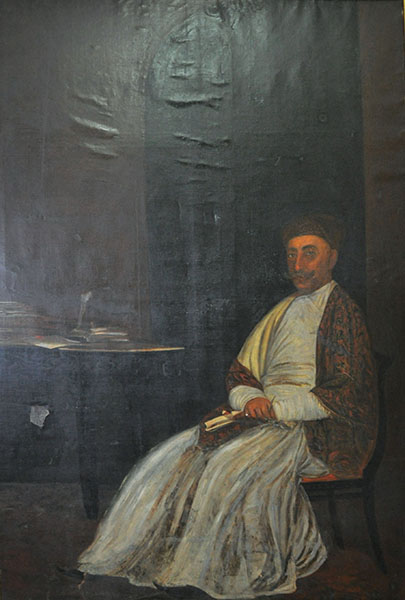
Portrait of Framji Cowasji Banaji at People’s Free Reading Room
and Library at Framjee Cawasjee Institute
A couple of years into the lease, Banaji was informed that the documents had to be approved by the Court of Directors (of the East India Company) in London. Not having been informed of this at the time of the signing of the lease, Banaji "repented over the uncertainty,” but derived support from the collector of Thana town who forwarded his appeal to the Court which ruled "no further validation was required… the lease was not to be disturbed and every support was to be given to the enterprising native gentleman.” The produce from his estates — opium, pineapples, coffee, apples, Nilgiri potatoes, and white pumpkins among others, won prizes at exhibitions organized by the Agricultural and Horticultural Society of Bombay. By January 1834, Banaji’s properties were yielding 56,000 kg of produce annually, said Dossal. In the same year, the innovative agriculturist purchased the leased land for 10 times the annual rent or Rs 47,470.
Banaji, however, rued that he "could not convert the venture to large scale production.” Despite having sunk Rs 1,50,000 into the estate, the agriculturist saw meager returns, " with no hope of recovering his capital.” His salt pans in Bhandup brought in more money than his agricultural ventures, according to the historian. He however continued to supply water from his estates via pipelines built by him to two public reservoirs in Duncan Road on Bombay Island. "Endeavors to export the items produced were undertaken, but they proved failures,” Dossal said.
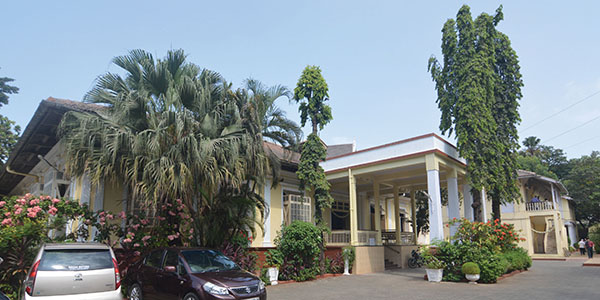
Seth Cowasji Behramji Banaji Atash Behram
Fountain with plaque memorializing Banaji
Clockwise from top: Hall of the Institute in memory of Banaji; Reading Room and Library;
Banaji’s bust at the Reading Room and Library
Clockwise from above left, sketch of Banaji from Parsi Lustre on Indian Soil; Dr Nawaz Mody,
Dr Mariam Dossal, portrait of Banaji, Burjor Antia; Remnants of a house built by Banaji at
Powai Lake Photo: powai.info
Map of Salsette with Banaji’s villages highlighted
Writing in 1892 in Memoirs of Framji Cowasji Banaji, his great-grandson Khoshru Navrosji Banaji stated: "Indeed, splendid was the Poway (Powai) Estate, and would no doubt have continued the same, if proper care and attention were paid to it, but alas! for the discord and disunion going on among the several of the leading descendants (of Framji), the estate has been in litigation for upwards of 20 years, and Poway is now but a shadow of its past greatness and splendor.”
Framji’s parents "were not in very affluent circumstances,” writes Khoshru. A great grandson of Banaji Limji, who gives his name to the oldest agiary in Bombay, Framji first started in life as a dubash (agent) under his maternal uncle Dady Sett, who traded with England and China. Two trips to China followed, after which he took up being an agent for the East India Company. At 38, Framji started in business "at his own risk and responsibility.” The owner of six sea-going vessels, he had business interests on both the western and eastern coasts of India.
"Mostly wastelands”
The lands leased to Framji spanned seven of the original 66 villages on Salsette Island (the name is derived from ‘Sasashti,’ the Marathi word for 66) and included Powai, Saki and Vikhroli, which are now part of Greater Bombay. "Major settlements existed only in Thana town and Bandora (Bandra).” The historian said that Salsette Island was parceled into eight estates, of which another Parsi lessor was Ardeshir Dadysett. Quoting the then surveying engineer William Tate, the historian said that "it was all open land, with perhaps some paddy cultivation, but mostly wastelands.”
Dossal stated that the British administration of the time was a proponent of laissez faire (policies of minimal governmental interference in dealings). This was the underlying philosophy of many of the reforms of the day: it was spelt out in the government’s Select Committee Report of 1812 and was incorporated in the revised charter of the East India Company in the following year. In the spirit of social reformer and missionary Rev Dr William Carey’s message of "there is nothing that did not need improvement,” the administration set up the Agricultural and Horticultural Society of India (now called Agri-Horticulture Society of India) in the 1820s, first in Calcutta and then in Bombay and Madras. The Society was to collect information on agricultural methods, new cropping patterns, and stage exhibitions of agricultural implements and medicinal plants. The main focus was to be on propagating the plantation of cotton, sugarcane and silk as these were products "which would benefit all.” Framji was one of the first members of the Society.
Initiatives into scientific agriculture were only one facet of this "extraordinary, most enlightened and energetic of merchants,” according to Dossal. A self confessed admirer of Banaji’s life and works, Dossal mentioned that Framji was dubbed Lord Leicester of Western India after the British agriculture reformer Thomas Coke, 1st Earl of Leicester (1754-1842). H. D. Darukhanawala’s compendium Parsi Lustre on Indian Soil adds: "He was one of the most zealous and indefatigable promoters of moral and physical improvements and advocated a system of instruction which enabled the pupil to earn his bread.”
"The history of a city can be read through the lives of its key individuals,” according to the historian. Dossal listed Framji’s other achievements: the first to introduce gas lighting at his residence in Mazagaon; member of the Students’ Literary and Scientific Society; the first Indian to subscribe to the share capital of the Great Indian Peninsular Railway a decade before the first train steamed out of what was to become Victoria Terminus ("200 shares at a cost of Rs 100,000,” notes his biography); a co-founder of the Bank of Bombay and the Bombay Times that later evolved into The Times of India; member of The Elphinstone Institution and donor to the Grant Medical College. The women of his family were among the first to be educated, said Dossal.
Khoshru added that Framji was instrumental in founding the Native Public Dispensary. Appointed to the Native School Book and School Society, he opened the first Anglo-Gujarati School in the city under the name of the Native Education Society and served as director for 28 years. In 1836, he endowed a school for religious training called the Zand School. The 1839 cleaning, deepening and rebuilding of Dhobi Talao outside the Fort walls was just one example of his largesse. The tank was subsequently known as Framji Cowasji Tank. One of the first 12 Indian Justices of Peace for the city (of the dozen, eight were Parsis), he also served as a trustee of the Bombay Parsi Punchayet from 1821 to 1836 when he "resigned in disgust” at their "abuse of power” and "passed a very strong censure on the mismanagement of that body.”
Khoshru recalls in his book the 1831 construction of a dakhma by the philanthropically-minded Framji in memory of his daughter Dinbai, and the inauguration in 1845 of the Banaji Atash Behram at Charni Road built in memory of Framji’s parents Cowasji and Jaiji, funded jointly with his brothers Curshedji and Rustomji and his nephew Dadabhai. "He set aside the two villages Kanjur and Yikhrote (on his Salsette lands), yielding an income of Rs 2,500 per annum for its daily maintenance,” notes Khoshru.
"He did not die a very rich man… he died a great man,” according to Dossal. At a cosmopolitan public gathering to mourn his passing away, it was decided to memorialize his life with public subscription, "for a useful objective that he would have approved.” Politician and thinker Dadabhai Naoroji spoke of building an institution whose alumni "would touch the very stars of heaven.” It was intended to build an "institute housing a library, laboratory, museums of arts and industry, to promote research” to honor his memory. The Framji Cowasji Hall built 10 years later at the edge of the Esplanade (now in the area of Dhobi Talao opposite the current Metro cinema) is today "no tribute to the man who wanted the very best,” said Dossal, referring to the Hall’s usage for discount sales. A public reading room and library functions from the Hall. "Probably the Indian Institute of Technology (IIT), Powai, which stands on land once owned by Framji "would have made him proud,” concluded the historian.
Earlier, Dr Nawaz Mody, joint honorary secretary of the KRCOI welcomed the audience. Introducing Burjor Antia, senior trustee of Seth Cowasji Behramji Banaji Atash Behram, who presided over the lecture, Mody informed the audience that Antia was a trustee of at least 20 Parsi charitable trusts. The senior partner of legal firm Mulla and Mulla and Cragie Blunt and Caroe narrated Dossal’s key academic achievements.
Summarizing the proceedings, Antia quoted from Sir John Malcolm, governor of Bombay Presidency from 1827 to 1831, who after a visit to Framji’s estates in December 1830, a year after cultivation was started, exulted over the state of affairs there, but most importantly added: "what I was most delighted with was the passionate fondness Framji appeared to have for his estate.”
A portrait of Framji gifted to the Institute by Navaz Patuck was unveiled before Dossal’s lecture. Patuck’s father Boman was a descendant of Banaji, Mody stated. "It was fortuitous that Prof Dossal agreed to speak on this great figure around the same time that the portrait was gifted to the KRCOI,” she noted. She informed the gathering that the trustees of KRCOI are contemplating displaying for public viewing the approximately 20 portraits in their collection.
What’s in a name?
Prior to the establishment of the Banaji family in Bombay under their ancestor Limji, they had resided in Bhagwa, a small village in the vicinity of Surat. This family had also briefly assumed Goga as their surname, the origin of which is a very late one, and at the same time a very curious one. Framji Cowasji Banaji’s father who was familiarly called Cowasji Bawa was carrying on an extensive trade with Goga, the chief mart in Gujarat, from which he could have derived the surname Goga. There are others who attribute it to the hoarse voice of Cowasji. On one occasion a dispute arose between Cowasji and an Englishman, when Cowasji in a rage, with a hoarse tone, said "Go, go” and hence his friends nicknamed him Goga. Neither Framji nor his brothers liked to be called by that surname and generally assumed for themselves the ancient family surname of Banaji, which the deceased (Framji) also used in his signature.
Excerpted from Memoirs of Framji Cowasji Banaji.
Royal botanical connection
To Her Most Gracious Majesty The Queen of England [Queen Victoria (pictured), Photo: Wikipedia]. May it please your Majesty, 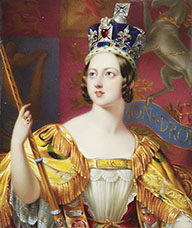 The improvement and extension of steam navigation have now happily brought your Majesty’s dominions at home and your dominions in the Eastern world so closely together, that I venture most humbly and most respectfully to lay at your Majesty’s feet some specimens of the celebrated Bombay mangoes, in the earnest hope that this delicious fruit, which has never been transmitted to Europe may reach your Majesty in a state of preservation and prove acceptable. Such precautions have been adopted to preserve the fruit as appear most efficacious, but if the botanists of your Majesty’s dominions at home can prescribe a preferable method, it shall be adopted in the transmission of further supplies of this or any other kind of fruit peculiar to the country which has not hitherto been seen in Great Britain. Your Majesty’s most obedient and faithful, Eastern Subject, Bombay, 18th May 1838 (Sd) Framji Cowasji.
Letter from Framji Cowasji Banaji to Queen Victoria, excerpted from Memoirs of Framji Cowasji Banaji.