Overruling traditionalists’ objections, the Navsari Parsis
favored creating an aramgah on a portion of the Doongerwadi lands
"I celebrate with Navsari.” — Roda Hakim
"How can God-fearing Parsis go against five of the vada dasturjis? Does the religion count for nothing nowadays?” — Porus Havewala
The two views cited above are from the Parsiana Facebook page pertaining to the post on the historic 156 to six votes of the Navsari Samast Parsi Zarthoshti General Fund (NSPZGF) members favoring the use of a portion of the land adjacent to Doongerwadi lands for an aramgah (burial ground). The Facebook post reached over 5,800 people and elicited 573 shares, reactions and comments for and against the decision taken on January 8, 2017 at Khurshedwadi in Navsari. The original venue of the momentous meet was Jamshed Baug but, permission to use the Baug was withdrawn at the last moment.
On the day of the meet the Jam-e-Jamshed weekly carried a front page article headlined "All Vada Dasturjis Condemn Proposed ‘Burial Site’ at Navsari Doongerwadi” along with pictures of the five high priests Dasturs (Dr) Kaikhusroo JamaspAsa, (Dr) Firoze Kotwal, Kaikhushru Dastur Meherjirana, Khurshed Dastoor and Cyrus Dastur.
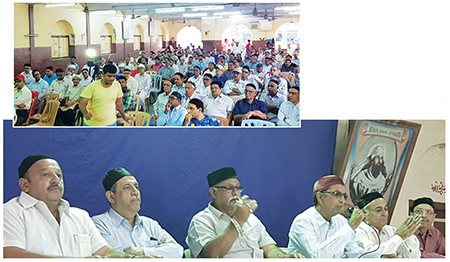
(Top): a section of the audience; (Above from left): Keki Vandriwala, Dara Deboo,
Yazdi Kasad, Jemi Bacha, Noshir Sabawalla and Kersi Deboo
Meherjirana signed the requisition for the meeting and later in a handwritten letter opposed the creation of an aramgah. He had been reportedly present at the uthamna ceremony of Ervad Homi Bapuji Kotwal, a boiwalla at the Navsari Atash Behram, who opted to be buried in Vansda rather than be consigned to the Navsari dakhma.
In his letter dated January 3, addressed to Meherjirana, Firoze Kotwal stated, "As a person born in Navsari itself and as an elected trustee of the Bhagarsath Anjuman, I would like to inform the anjuman of Navsari that the 163 signatories who have signed the concerned appeal have been misguided about the desired change they have asked for in the long cherished system of dakhmenashini and they have instead chosen to opt for the system of aramgah or burial…
"Dakhmenashini in its pristine glory must be preserved at all cost and no concession or relaxation of our practices should be allowed, as any such attempt is irreligious and against our long held and cherished practices.”
JamaspAsa’s signature has been appended after Kotwal’s and Khurshed Dastoor has stated he endorses the views. Cyrus Dastur of Surat, in a handwritten letter in Gujarati, stated: "Nature has not made us paigambar (prophet) or soashyant (savior) to change our religious customs as per our whims.”
While the outlook of JamaspAsa, Firoze Kotwal and Cyrus Dastur on the subject are well-known, Meherjirana and Khurshed Dastoor are known to hold more moderate views.
Writing on January 5, in his capacity as chairman of the World Alliance of Parsi Irani Zarthoshtis (WAPIZ) Yazdi Desai stated, "No Parsi Irani Zarthoshti has the absolute and unfettered right to change the religious rituals and practices of the faith… Encouraging or promoting the alien practices of burial or cremation where a working dakhma exists, is against the long cherished laws of Zoroastrianism.”
Other priests and lay people also joined in the chorus against the creation of an aramgah. H. M. Mistry and R. F. Doctor on behalf of The Parsee Voice wrote on January 4 to the secretary of NSPZGF, "If a body is directly buried in the earth, it will take at least 50 years for that earth to be purified.”
The subject of creating aramgahs on Doongerwadi lands has been raised in several West Zone B meets of the Federation of the Parsi Zoroastrian Anjumans of India (FPZAI). At the meet in Bilimora on October 19, 2014 (see "Dogma, dakhmas, defunct anjumans,” Parsiana, October 21, 2014) trustee and honorary secretary of the Fund Yazdi Kasad had explained the case to his co-delegates, Desai and then Bombay Parsi Punchayet (BPP) trustee Khojeste Mistree. He explained that the Gujarat Parsis believe in following the tradition but that the city had grown next to the dakhmas and people complained about the stench emanating from the Towers of Silence. He noted that people would still have the option to be consigned to the Towers. Both systems could co-exist. But his averments fell on deaf ears.
At the August 2, 2015 meet in Surat, Mahernosh Devgadhwala of Mandvi had stated, "We are not only discussing the issue (of disposal) but are on the point of making a decision. We are not willing to wait for anyone” (see "Deliberating on disposal,” Parsiana, August 21, 2015).
At the zonal meet held in Valsad on July 24, 2016 Khurshed Dastoor told the gathering that as long as dakhmenashini could continue there was no need to opt for burial. "Dakhmenashini is our system. Why not make the best use of it?” (see "The sun is there,” Parsiana, August 7, 2016).
Writing as president of the FPZAI, Desai’s letter of January 7 claimed, "At the end of the (July 24) meeting each and every anjuman was convinced that they cannot follow any other mode of disposal of the dead except dakhmensahini. No burial. No cremation. Full stop.”
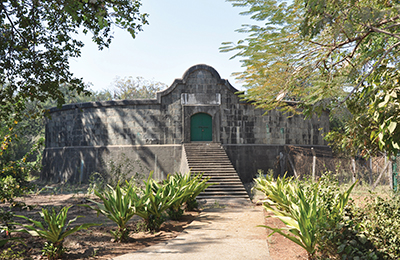
N R D Tata dakhma at Navsari Doongerwadi
In most cities in Gujarat, unlike in Bombay, the local residents and family members of the deceased carry the body into the dakhmas. They see for themselves the state of the corpses on the pavis. In 1974 the well-known surgeon Dr Kersi Dastur removed his father’s body from the Towers of Silence in Rajkot and instead opted for burial. "I was horrified to see four dead bodies consigned several months ago inside the dakhma lying untouched in identifiable form” (see "The Rajkot incident,” Parsiana, March 1974).
In 1972 and 1973 when BPP trustees Dr Aspi Golwalla and Shiavax Vakil entered the Towers of Silence at Malabar Hill they were shocked to see the state of affairs (see "The living and the dead,” Parsiana, October 1973). Vakil noted: "The bodies are lowered into the well, they are consigned one over the other like dead carcasses of animals and remain so in that state for months, rotting and stinking in the process of decomposition.”
Being aware of the shortcomings of dakhmenashini, the residents of Navsari voted overwhelmingly to create an aramgah on a portion of the Doongerwadi land. The meeting was peaceful, according to Kasad, but some reports on the social media referred to heated exchanges between those opposing the resolution and those favoring it.
Many doongerwadi lands in Gujarat lie idle as the dakhmas are not in a functioning condition and the bodies are carried to the towers of silence in either Navsari or Surat. Several anjumans may now take courage and follow Navsari’s example, interring the bodies of their loved ones in their own home towns.