Simin Patel’s blog Bombaywalla draws attention to the city’s architectural abundance
Parinaz M. Gandhi
Step in through the portals of the recently launched blog Bombaywalla.org and one is greeted with sights of columns and cornices one may not associate with the city. Tarry there a little longer to be treated to rare introductions to the architectural highlights staring out. The blog that has received two lakh hits in its first three months is the initiative of Simin Patel, a final year PhD candidate at the University of Oxford who was inspired by the "wonderful architectural richness” in the city of Bombay. "The blog encourages Bombaywallas to pause and appreciate the forms and details of the structures around them,” says Patel, adding, "I felt they weren’t noticing or valuing the built environment in which they live.”
Simin Patel and the home page of her blog updated twice a week
Whether it is the facades of the David Sassoon Reading Room and Library or the Elphinstone Circle, the majestic stairway and skylight at the Victoria Terminus, the signage at Yazdani Bakery, the doors at Meher Cold Drink House, the flooring at Pradeep Gomantak Bhojnalaya, the portico of the BB&CI (Western Railway) administrative offices, the intricacies of the visuals leave one thirsting for more. "There are many popular blogs on Bombay but none that have our focus on understanding structures, street names and the changes” that have altered the face of the city, points out Patel who decided to launch the site on March 21 this year. The eye-catching, red logo for the blog is based on a motif from the gates of the Arthur Crawford Municipal Market.
"I think the name Bombaywalla encompasses the cosmopolitanism for which the city is famed. It is a wonderful mix of native Portuguese, British and Hindustani words, corruption, mispronunciations and suffixes,” says Patel who although being committed to her PhD dissertation on, "Cultural Intermediaries in a Colonial City: The Parsis of Bombay, Circa 1860-1921” daily devotes about three hours to the blog. Her colleague Sitanshu Shukla sets aside an hour and photographers Dhananjay Murty and Hersh Acharya have variable schedules. Shaun Coutinho’s firm Innate Designs manages the programing.
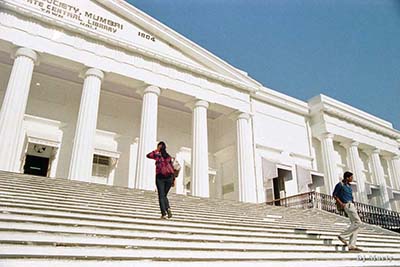
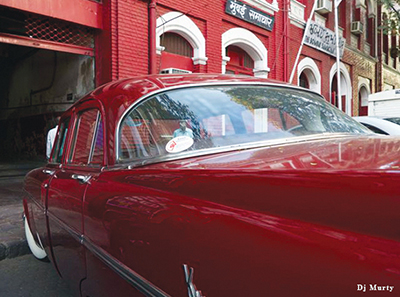
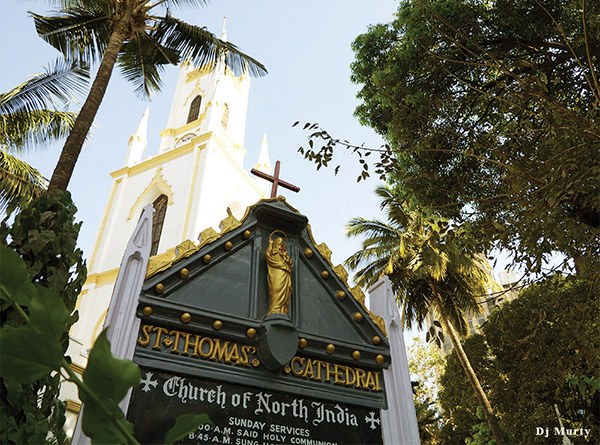
Staircase of Town Hall (present Asiatic Society of Mumbai); The Red Building houses the offices
of The Bombay Samachar; St Thomas’ Cathedral
Structures, Sources, Media and Watch are the principal heads under which visuals and information are on offer. The Structures section has an exhaustive alphabetic listing starting with Balconies and ending with Windows. Not every subgroup has an entry yet so a browser may get disappointed on reading "Apologies, but no results were found.” But this is more than compensated with glimpses of certain structures with corresponding explanations like the "Red Building at Fort that houses the offices of The Bombay Samachar (1822), Asia’s oldest newspaper. Formerly the premises were also used by the Bombay Chronicle (1913-1949) after whose editors Benjamin Guy Horniman and Syed Abdullah Brelvi, the Circle and Street, have been renamed.”
Yet another community institution whose photograph would interest Parsis is Meher Cold Drink House, located at Mackawee Mansion, at the corner of Gunbow Street and Parsi Bazaar Street (presently Rustom Sidhwa Marg) at Fort: "Well into the late 1800s, strict caste and purity codes prevented the experience of inter-dining amongst the native populations of Bombay. Pan-supari, rosewater and nosegays were distributed at the end of public/semi-public gatherings, but no food. As the benefits of inter-dining were felt, cold drinks were first introduced for consumption, gradually making way for solid foods. Meher Cold Drink House, although a sprightly 74, is an example of the early establishments that facilitated the experience of cosmopolitan drinking and eventually dining. Young Bombaywalla was introduced to the delights of Meher Cold Drink House by her mother Veera, a regular at the unassuming eateries in the Fort.”
The section on Sources reflects Patel’s academic training, meticulously listing titles and authors under several headings like urban biographies, history, city guides, mapping and planning, novels, books for children, poetry, films… Anyone wishing to study Bombay could get a ready bibliography here.
Boman, Afshin and Merwan Kohinoor at Britannia and Company Restaurant; doors of Meher Cold Drink House;
flooring at Pradeep Gomantak Bhojnalaya
Local, national and international links are offered in the section on Media. Her blog having generated considerable interest, her efforts have been profiled in print and online media like Mumbai Boss, Mid-Day, Rediff.com, Platform Magazine, Kyoorius Magazine, India Abroad and Mumbai Mag. Patel is enthused with the positive response stating, "There has been a good amount of press coverage, encouraging feedback, with photographers keen to contribute their work.” The Watch section brings to the fore the indifference of city planners and carries visuals like the one titled "Left to lie” showing corroded lampposts lying at Apollo Bunder, and "Dented and Painted” displaying a garish fountain at Crawford Market that is now put to alternate use.
When asked whether the Parsis in Bombay are more respectful of the city’s landscape Patel candidly declares, "I don’t think so. For instance, notice the buildings in the various Parsi baugs. Often balconies have been blocked off with sliding tinted glass, the finer details have been plastered over. Lately, the heritage of Bombay’s fire temples has been violated through careless renovations.” She cites the instance of the "lovely Boyce Agiary on Tardeo Road” and is disappointed that "the marbled area where worshippers wash their hands has been replaced with unflattering new tiling... The most unfortunate case is the Iranshah at Udvada. The original tiling of the second structure with the fire has been replaced with large slabs that have a colored floral pattern. Such violations disrupt the architectural and spiritual sanctity of the concerned spaces.”
In contrast, "Sethna Agiary on Tardeo Road has been wonderfully preserved. Do notice the lovely wooden ceiling in the central hall,” she urges. Her favourite Parsi structure though is "a building called Dhun Lodge, a few blocks away from my home on Tardeo Road. It is not a colonial landmark, but rather a quintessential Bombay structure, built in 1906. The name of the building is typical – a cosmopolitan mix of a native proper name (Dhun) with a word in English that suggests a type of structure (lodge).” Her mother’s favourite is Eddie House on Pedder Road, relates Patel, acknowledging the contribution of her parents Veera and Jehangir who would routinely point out interesting buildings to her during her growing years.
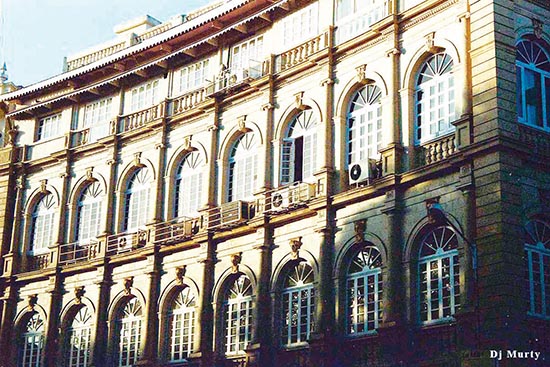
Elphinstone Circle (present Horniman Circle)
Parsis of yore "had a keen and adaptive eye,” observes the blogger, adding, "They fashioned their aesthetics, both personal and public, in keeping with the styles and designs promoted by the colonial state and European population of Bombay. They funded both an early landscape of traditional wells and tanks in the city as well as the landscape of fountains in neo-classical styles that replaced them. The colonial government effectively erased the earlier landscape by sealing the wells and tanks to make more urban space available and profitable.” She referred to architect-engineer Khan Bahadur Muncherji Cowasji Murzban (1839-1917) who for nearly half a century was involved in the construction of colonial Bombay’s public buildings and infrastructure.
Unlike such stalwarts, "the extended Parsis I am surrounded by only seem sensitized to wealth,” laments Patel. On her blog, in her subsection on Proprietors, she makes a concerted attempt to bring to light "local celebrities who have preserved the character of the structures they own.” Included here are the proprietors Boman, Afshin and Merwan Kohinoor of the 90-year-old establishment Britannia and Company Restaurant.
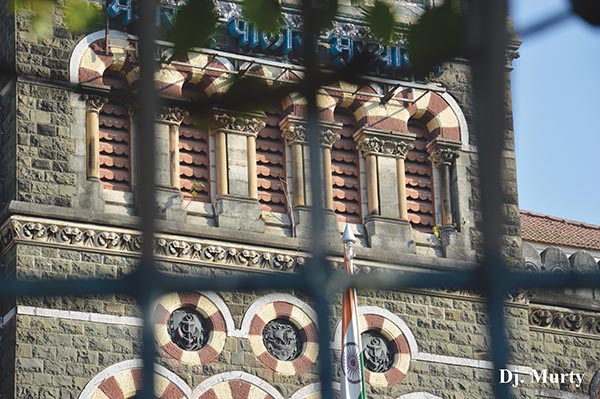
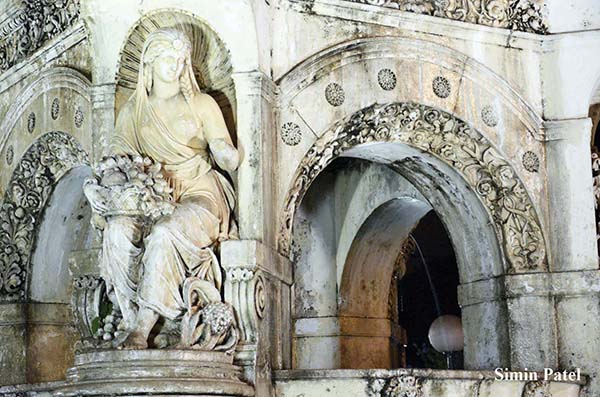
Royal Alfred Sailors’ Home (present Maharashtra Police Headquarters); and (right) Flora Fountain (present Hutatma Chowk)
Hoping to rouse others too, Patel notes, "I am sure that if Parsis and other Bombaywallas are more aware and informed of the violations to their architectural heritage they would participate keenly in conserving city structures.” She reinforces that "blogs and social media are powerful tools for creating consciousness. The crackdown on bloggers in the Middle East where social media served as a catalyst for the Arab Spring and most recently in the protests in Turkey in June 2013 all indicate that digital media is a force to be reckoned with.”
Viewing her role as a blogger seriously, Patel mentions, "The costs of running a blog can be relatively low and if the blogger feels passionately about a cause and has a dedicated viewership, the life span of a blog can well be that of the blogger!” Bombaywalla can be followed via the website, Facebook and Twitter.
In language befitting the period and cause she is espousing Patel notes on her blog, "The Editor assures her constituents that her traveling between Balliol and Bombay will not disrupt the updating of the Blog on Mondays and Fridays of every week. Nor will DPhil research divert her attention from the new commitment. She trusts that the Blog will be honored with the visits of the distinguished gentry of Bombay, the outstations and beyond. If patrons would oblige by clicking ‘Like’ on Bombaywalla’s Facebook page, updates would be regularly delivered to their News Feed.”