Is there a transition of celebratory
venues from baugs to banquet halls?
Jerusha Patel
"What is the best part about being a Parsi? You are my first Parsi friend. Tell me more about your community.”
Each time I befriend someone new, this is the most frequently asked question and my answer always remains the same: "You have to attend a Parsi wedding or navjote to know who the Parsis really are.”
Our lagans and navjotes have been a quintessential part of our community. It has never been about the ritual alone. It is about the drunk bawa uncle dancing near the disc jockey (DJ) even when the music has stopped, young bawas and bawis having their first sips of alcohol, the DJ playing Congratulations as soon as the lagan or navjote is completed, the call of "jamva chalo ji (come for the meal),” the "jamjo ji” as the hosts greet the panghat (rows of guests enjoying their meal) the photographer zooming into your patru while you eat, the intellectual conversations at the bar, the announcement of "gaari (car) number MH 02 LA 3457 please move your car from the gate,” and so much more.
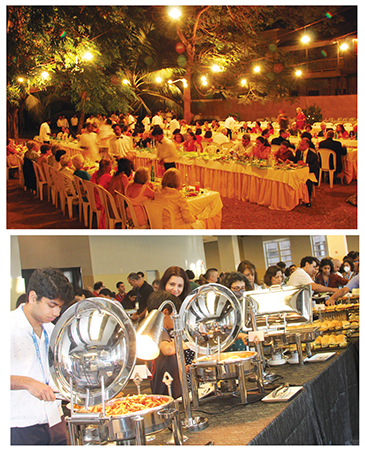
Top: a traditional meal at a baug;
above: buffet at a banquet hall Photo: Jasmine D. Driver
These distinctive features make a Parsi lagan and navjote what it is today. However, with the pandemic and resultant lockdown, I am sure I am not the only Parsi who deeply misses all this. It has been two years since most of us have attended a wedding in a baug and danced with our loved ones. So much has changed in this time. There has been a slow but gradual transition in venue from baugs to banquet halls, clubs and other spaces. Previously, the main motivation for such a change was a limited crowd. Today, however, the reasons are different.
Although most Parsis prefer the traditional baug celebrations, some realize the practicality behind the change in venue. As an old-fashioned bawa, I have always appreciated the ambience that baugs have to offer. While it is more convenient to host functions in banquet halls and enclosed spaces due to the fewer restrictions on time, etc, baugs are an essential part of our culture. Why not make the best use of the property that we have even in a heavily populated city like Bombay?
Husrav Sukhia, a 23-year-old lawyer, believes that such occasions bring family and friends closer. In baugs there is more space to circulate. Besides, the lagan nu patru is a tradition and the flavor of the food differs when served on plates. "Baugs give us a sense of belonging and connect us to our previous generations. This practice should continue to remain,” says Sukhia.
Another factor for the change of venue is cost. Danesh Gandhi, a 24-year-old doctor firmly believes if the baug charges were nominal, the tradition would surely continue. "Hotels offer different packages that mostly include all overhead charges making it affordable for the hosts,” says Gandhi. Besides, due to community numbers reducing, many prefer to book banquet halls that are economical for a limited crowd.
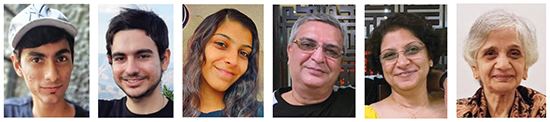
L-r: Husrav Sukhia, Danesh Gandhi, Freya, Khushroo and Khushnuma Patel, Roshan Shroff
However, Freya Patel, a 19-year-old student, is of the opinion that banquet halls "kill the vibe” of a lagan or navjote. "Dancing in an enclosed space makes it seem to be just a normal party,” she says. To enjoy the best of both the worlds, she suggests a few modifications. If enclosed spaces can be made available within the baugs, the music and dancing can continue for longer rather than being switched off by 9.30 or 10 p.m. She feels that venues like Allbess Baug, Cama Baug, Jeejeebhoy Dadabhoy Agiary which already have partly enclosed halls, could bend their rules so celebrations can be enjoyed for a longer duration.
"Going on stage and giving the peheramni (gift), photographs clicked with loved ones on stage is more elaborate in a baug,” says Khushnuma Patel, in her 50s. She finds that the charm of Parsi occasions is missing in enclosed venues and she would much rather opt for baugs over halls or clubs.
Khushroo Patel, speaking from the perspective of a parent, says he prefers baugs for their open environment, space and the intimacy: "These occasions are once in a lifetime events, so we would like to keep things the traditional way for sure. Baugs over banquet halls definitely!” However, he understands that financial constraints are making more Parsis opt for banquet halls. He suggests that the baugs’ administration should be more flexible; adapt to the reality of a dwindling Parsi population. He believes it is rude to pick up chairs, switch off lights while guests are still present in the baug.
Roshan Shroff, in her 70s, believes that outdoor venues are more lively. "Indoors feels as though one is inside a house,” she says. In the open air one enjoys oneself much more and feels free. The custom of hosting events in banquet halls, clubs and other venues is not part of the community’s ethos as we are privileged to have spacious grounds. "Our baugs were specially made for lagans and navjotes so why should we choose to go to any other place?”