Manager of the first Indian contingent that participated in the Summer Olympics in 1920, Sohrab Bhoot continued to play an active role in sports administration until the mid 20th century
The most important thing in the Olympic Games is not winning but taking part; the essential thing in life is not conquering but fighting well.” The founder of the Olympic Games, Baron Pierre de Coubertin’s words were prominently displayed in the brochures of the sports meets that Sohrab Bhoot attended and memories of which he preserved till the end of his life in 1984 at the age of 92. It is this same message that he sought to impress on the members of the Indian contingent whom he had accompanied as
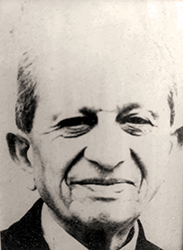
manager at different Olympic Games and international events until the middle of the last century.
While for the Tokyo Olympics in 2021, the 228 strong Indian delegation comprising sportspersons, coaches and officials boarded flights in July, nearly a hundred years ago when India sent her first contingent for the Olympic Games in Antwerp in 1920, there were only four athletes and two wrestlers accompanied by Bhoot as manager and Dr A. H. A. Fyzee as medical officer and adviser. Funding for this Olympic team had come from Sir Dorabji Tata (Rs 6,000 + Rs 2,000); the Government of India (Rs 6,000); and donations from sports-minded residents of Bombay (Rs 7,000), as gleaned from the Wikipedia page, "India at the 1920 Summer Olympics.” The team that set sail from Bombay trained in London for six weeks at the Stamford Bridge stadium and later proceeded to Antwerp.
After the Games, Bhoot submitted a report indicating that India could have future Olympic success in hockey and wrestling, and made recommendations concerning technical, organizational and training issues for future Olympic teams.
At four other Olympics, Bhoot had served as selector and administrator for the Indian team. As prophesied by him, the Indian hockey team showed their unsurpassed supremacy at the Olympics between 1928 and 1948. When the Indian Olympic Association (IOA) was officially constituted in 1927, Tata served as the first president. As treasurer and managing committee member of the IOA, Bhoot continued to interact with Tata who had impressed him with his humility and patient disposition.
General secretary of the Bombay Provincial Olympic Association, Bhoot was concurrently organizing secretary for the 1950 Indian National Games (the 14th such games) in Bombay. Known to be frank and forthright, he had expressed in the National Games brochure in 1950, "Sports and sportsmen have not made much advance and that is due to the reason that the organizers all over the country have put themselves first, and sportsmen and sports after. With our government taking interest in this nation building activity there is great hope for our country to be in line with the other countries of the world in sports. With proper training and coaching facilities we can produce world-beaters but athletes and competitors must observe strict discipline and sportsmanship.”
Whether in the company of political leaders like then chief minister of Bombay B. G. Kher, home minister Morarji Desai, the governor of Bombay Raja Maharaja Singh or sports officials like S. M. Moinul Haq, the chef de mission of the 1948 Indian Olympic team, Bhoot featured frequently in historical references to the growth of sports in India from the early 20th century.
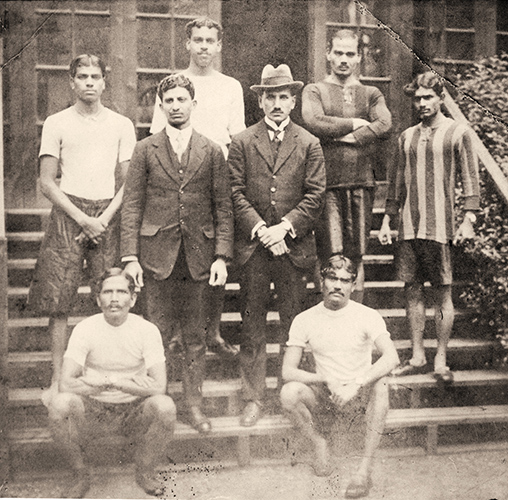
Top: Sohrab Bhoot; above (in suit, l) with 1920 Indian Olympic contingent Photo: Wikipedia
Clockwise from top: Indian Olympic Association Committee, 1942 with
Bhoot (in striped blazer behind Maharaja of Patiala (seated in center);
Indian cyclists at the 1948 Olympics with Bhoot (wearing hat Photos: Wikipedia);
Bhoot: mentor for cyclists
At the 1950 Indian National Games (above l): Bhoot, B. G. Kher,
Morarji Desai (front row, 3rd, 4th, 5th from l); at the prize distribution,
Bhoot (in striped blazer) Photos: Wikipedia
Under Bhoot’s management, the Indian cycling team too with some Parsi cyclists like Adi Havewala and Malcolm Malcolm made its Olympic debut at the 1948 Olympics in London. Having co-founded the National Cycling Federation of India, Bhoot served as its president as also the president of the Asian Cycling Federation. He took the Indian cycling contingent to several international events and world cycling championships from the late 1940s until the early 1960s. For the cyclists, the regular races on the Bombay Poona terrain were ideal to improve their performance and stamina.
A mentor to several Parsi cyclists like Malcolm, Pervez Sarkari, Keki Mistry, Jimmy Malbarwalla, Douglas Faramji, Bhoot’s advice was eagerly sought. Bhoot’s memorabilia preserved by the family includes a letter from Malbarwalla dated June 3, 1959 valuing his "fatherly advice that I should better take care of my job first rather than pay more attention towards the sport of cycling which in the longer run may not help me in any way… I am feeling extremely sorry that nobody has appreciated the most valuable services rendered by you for the betterment of our Indian sports since 1920 to this date… You have sacrificed your whole life for the same…”
On the Athletics Federation of India too, Bhoot had left an imprint, serving as secretary of the Technical Committee. A respected sports official, he was one of the approximately 20 members of the Jury of Honour and Appeal at the Indian National Games in different cities during the 1940s. In 1951 he helped organize the first Asian Games in New Delhi. When India hosted the Asian Games in 1982 in the capital, then Prime Minister Indira Gandhi enquired of the sports officials whether any organizer from the 1951 Games was alive. From media reports, a disillusioned Bhoot who was then 90 years old learnt that no one could give her a cogent reply.
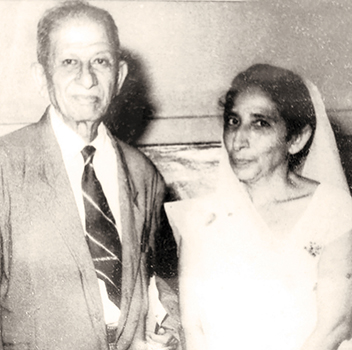
Although Bhoot played football and cricket as a student at St Helena School in Poona, he never participated in any major tournaments. When seeing people playing in fields and maidans, he came forward to proficiently organize them into teams. As his expertise was sought by gymkhanas and sports associations, his reputation spread and so did criticisms from certain disgruntled sportsmen. His wife Frenny too assisted him with his sports workload. For nearly a decade he was the editor of Sports Herald.
His day would invariably start and end with prayers. After a full day’s work, running his retail shop at Fort as also his insurance agency, besides undertaking his sports responsibilities from the office at Brabourne Stadium, he would return home only after visiting the Vachaghandhy Agiary at Hughes Road. Evening prayers were included in his daily routine even on his official sports trips abroad. That was the hour eagerly awaited by some in the sports contingent who sought an escape from his vigilant eye!
To aspiring sportspersons, Sohrab always advised: "Play your part well, be good losers and modest winners.”