Adequately supported, Zoroastrian seniors
in the diaspora look forward to interacting
with community members
Parinaz Gandhi
Two sessions at the 12th World Zoroastrian Congress in New York last July were devoted to "How to become a Joyful Centenarian.” A panel discussion on "Reinventing Oneself” under this series familiarized the audience with individuals who had expanded the scope of retirement to lead a productive life of purpose. The second session on "Aging across the Zoroastrian World” dwelt on the conditions and opportunities for seniors in different geographical pockets. "A culmination of the work and research” that went into this project resulted in a comprehensive document by Dr Dolly Dastoor and Nawaz Merchant where they have analyzed the data and suggested possible solutions. After 40 years of association with the Douglas Hospital, Dastoor retired as clinical administrative chief of the Program in Dementia with Psychiatric Comorbidity. Merchant, who holds a Master’s degree in Health Policy, led the needs assessment survey of senior Zarathushtis in North America in 2016. Their findings concerning elders in India, Pakistan and Iran were carried in the May 7-May 20, 2023 issue of Parsiana (see "Advancing with age”) while further information on Zoroastrians in the diaspora is carried in this issue.
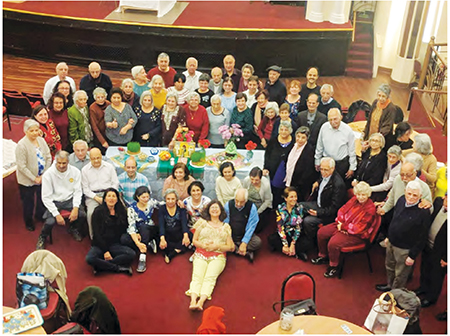
Fall 2016 issue of FEZANA Journal dedicated to seniors
Dr Dolly Dastoor (l) and Nawaz Merchant
While most Zoroastrians prefer aging in their own homes, some specified they would like to be around other Zoroastrians as they get older. For the over 80% (15,706) of the Zoroastrian seniors who continue to reside in India, Pakistan and Iran, many of them in community baugs, growing old in the proximity of other Zoroastrians may not be a challenge. But for the nearly 3,800 Zoroastrian elders scattered across North America, UK, Australia, New Zealand and Oman, alternative accommodation may need to be considered, recommended the report.
Even though there may not be community run institutions, Zoroastrian seniors in the diaspora appear to be "well supported.” They are looked after by their children, community and secular groups as also government agencies, according to Dastoor and Merchant.
North America
Nearly 2,751 Zoroastrian seniors (1,901 in the USA and 850 in Canada) reside in North America, according to the 2016 survey. A range of senior housing exists, from independent accommodation to assisted living to nursing home care, to specialized memory care for seniors suffering from dementia or Alzheimer’s. There are other options including aging in one’s home with visits by health professionals.
In the US, about 80% of the medical needs of seniors are covered by the government national health insurance program. (In response to a subsequent clarification sought by Parsiana, Merchant wrote, "Seniors who have worked in the US are covered by Medicare national insurance. However, they must pay about 20% of their medical costs as their own share. The Medicare premium comes from their monthly social security payments. Many people take supplemental insurance to cover the remaining 20% and pay premiums privately.”) For their non-medical needs, almost two-thirds of seniors rely exclusively on family members and/or friends.
Canada has provisions for housing allowance for lower income seniors. Eighty percent of their medical care too is covered through the national health plan. The Zoroastrian Society of British Columbia has submitted their building plan to the city of Burnaby to build 16 luxury condos and four affordable rental units in the complex of their proposed Vancouver Darbe Mehr.
United Kingdom
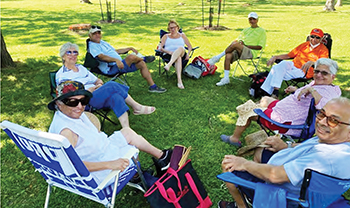
Of the nearly 5,000 Zoroastrians in the UK, 650 (13%) are aged over 65. They are well placed and comfortable with health benefits taken care of by the National Health Service. Under the UK pension benefits they can enjoy free local travel and several concessions. For those availing of retirement or care homes, the maximum that would be expended by the government during the lifetime of an individual is £ 86,000 (Rs 87,69,163). Since they may then lose out on Zoroastrian community life, a senior citizens home for the community is being deliberated by the Zoroastrian Trust Funds of Europe (ZTFE). They have yet to work out the logistics. In the meanwhile, companionship and special events for seniors are organized at the Zoroastrian Centre. To provide the elders a sense of security, a specially created "telephone tree” assigns some members the responsibility of telephonically keeping in touch with select seniors at regular intervals.
Australia
According to data submitted by different activists in Australia in 2022, there are nearly 315 Zoroastrian seniors in Australia. Sydney has around 100. They hold "meet and greet” sessions on the third Sunday of every month. The programs start with music and singing in the morning, bingo, religious talks, prayers, games, lunch and end with afternoon tea. Financial contributions from members of the Australian Zoroastrian Association (AZA) and support from volunteers ensure this activity continues regularly. These interactive events were first started in 2007 by matriarch Akhtar Ostowari, founder member and trustee of the AZA, in memory of her husband Nawzar. Twice a year, picnics organized by then AZA secretary Mithi Daver have also been popular among the seniors.
Families who are unable to care for their seniors at home can avail of government funded aged care services. These include in-home care, care at nursing homes and short-term respite care. Additionally, privately funded facilities charge different rates. In some cases it is limited to the pension received by the seniors. In others, people pay depending on their financial position.
Around 60 seniors reside in the Melbourne area. The majority live comfortably in their own homes and have their own means of transport. A few live with family and a couple of them in aged care. Pensioners are provided health and social benefits by the government. The multicultural Seniors Support Programme of the Victoria government sanctioned funds for the wellbeing of the Zoroastrian seniors group formed in 2012. The group meets on the second Sunday of every month, sharing news, views and culinary skills. Adelaide has only eight Zoroastrians who are over 65 years of age, with two of them being over 90. These seniors are "self-sufficient, independent and surrounded by families and loved ones.”
Of the nearly 380 Zoroastrians in Perth, around 25% would be seniors and another 25% in the 50-65 age bracket. Since private transport is more convenient, fortunately most seniors have retained their driving licences and enjoy driving down to their local cafes for coffee or gupshup with their neighborhood Parsis. Most seniors enjoy good health, have mortgage-free homes and are financially secure. Those in need are supported by the welfare-state government.
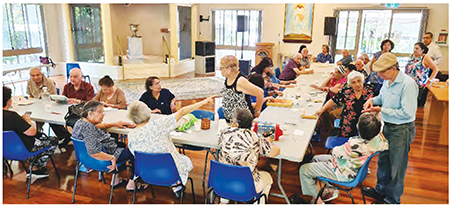
Seniors in Sydney
New Zealand
Ranked among the top 10 countries in the world for seniors, the New Zealand government offers free medical service, financial and other support to help the aged reside in their own homes or with family while participating in community activities. Besides availing of free public bus service, free taxi vouchers to visit doctors and community activities and subsidized private transport, they can avail of a community services card and a seniors gold card that gives discounts at some retailers, activities, utilities, accommodation, restaurants, etc, plus trained personnel to assist with personal care and requisite equipment, house maintenance, as also special facilities accorded to caregivers.
Around 50-70 seniors in a population of nearly 1,500 Zoroastrians lead comfortable lives in New Zealand, according to Tehmus Mistry. Approximately 60% of the seniors live with their families, 25% in their independent residence and the remaining 15% in assisted living facilities. Though public transport is adequate in Auckland it’s hard to live without your own car. In 2009 the Zarathushtrian Association of New Zealand initiated a seniors monthly coffee group with a longer lunch session three or four times a year.
Oman
"All the senior Zoroastrians in Muscat are very well settled, living in spacious, comfortable houses, mostly rented, have their own cars, are financially sound, happily married, enjoying good health,” reported Dr Cashmera Bhaya referring to the 17 seniors, 13 males and four females, in Oman. Barring one couple who was living with their son, in the case of others, their children had moved out but remained in regular touch.
Impacted by isolation
There is an epidemic of loneliness in the United States, according to an advisory from the US surgeon general issued in the first week of May 2023 and reported on the website of National Public Radio. Even prior to the pandemic, about half of US adults reported experiencing measurable levels of loneliness. The medical consequences of limited interactions can be devastating, including a 29% increased risk of heart disease; a 32% increased risk of stroke; and a 50% increased risk of developing dementia for older adults, according to the advisory. Yet another survey reported in The Financial Express of May 5, revealed that most Americans don’t have the financial resources to cover a surprise expense of $ 400 (Rs 32,631) without taking on debt. While care of the elderly may not be a "surprise expense,” are adequate provisions being made?
Among Zoroastrian seniors too, loneliness is a major issue, reported the white paper. While community members in North America and the UK have yet to finalize a model where senior citizens can live in communes in their sunset years, Bomi Parakh and Linda Blanchard, who had participated in the "Joyful Centenarian” sessions at the Congress recommended, "Senior housing is an excellent opportunity for any Zoroastrian entrepreneur with an interest in helping seniors (for) it affords… an excellent way to earn an income, build wealth, and employ family and friends. The senior housing industry is dominated by mom-and-pop operations with low barriers to entry in the USA.”
Parakh has over three decades of work experience in the healthcare continuum. Blanchard has been a social worker with Adult Protective Services in the state of New Mexico. They recommend that along the lines of a retirement financial plan, seniors need to plan on how they will meet their medical, non-medical and psychosocial needs as they advance in age.
While the goal of social service agencies is to support elders "in the least restrictive setting and with the least outside intrusion/interference,” knowing the extreme burden of caring for patients with dementia, it is expected that there will soon be an acute need for a specialized memory-care facility for Parsis. As states the white paper, having grown from "saplings to plants to old trees, full of love, wisdom and stories, they need to be cared for.”