Dr Zareer Masani emphasizes both the Islamist and the expansionist sides of the ruler of Mysore
Farokh Jijina
Contrary to popular perception of Tipu Sultan being anti-Hindu, the Tiger of Mysore "entrusted the finance portfolio (of the state) largely to Brahmins.” This and several other nuggets of information were provided by author and historian Dr Zareer Masani in his lecture "Tipu Sultan: National Hero or Islamist Tyrant?” at The K. R. Cama Oriental Institute (KRCOI) on August 29, 2016. Masani has a doctorate in history from Oxford and is the author of four historical books.
Explaining the raison d’être of the lecture, the historian pointed out that in today’s cultural scenario, medieval heroes like Shivaji, the Maratha warrior and Tipu were being used to justify the resurgence of Hindu nationalism. Political parties are keen to project Tipu as a hero with nationalistic goals, he said, referring to the debate in Karnataka state (where Mysore is situated) in late 2015 on celebrations for the ruler’s birth anniversary. He pointed out that so strong were the reactions against the pro-Tipu lobby last year that his proponents like Girish Karnad (the playwright who wrote the successful 1997 play Tippuvina Kanasugalu or The Dreams of Tipu Sultan) received death threats over social media for his views.
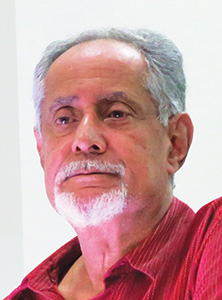
Dr Zareer Masani Photo: Farrokh Jijina
The last effort and fall of Tipu Sultan by Henry Singleton Photos: Wikipedia
Tiger of Mysore, Tipu Sultan
Tipu was strongly ensconced as a leader of the southern kingdom after his victory in the second Anglo-Mysore War in 1784, said Masani. He "consolidated the territorial gains made by his father” Hyder Ali after the Treaty of Mangalore signed with the British. "Seven years of peace followed,” said Masani; the third war between the British and the Kingdom broke out in late 1790 over Tipu’s ambitious expansion plans to include more southern territories, to the chagrin of Lord Cornwallis, governor general and commander in chief of the British East India Company (EIC). At the end of the skirmish in 1792, which resulted in defeat for the Sultan, he sent two of his youngest sons as hostage to Madras, when Cornwallis had requested his two eldest! The historian narrated that the two boys were accorded the utmost courtesy in British circles, and became the toast of high society in the presidency.
The Sultan assumed the title of Padshah, hitherto reserved only for the Mughal ruler of Delhi; khutbahs (sermons) were read in his name in mosques, instead of the Mughal emperor; he sent embassies to Afghanistan, Iran and the Ottoman Empire, seeking to expand trade with these countries. "Embracing the newly formed French republic, he called it ‘my sister,’” revealed the author. In communication with Napoleon, the ambitious ruler drew up plans to divide the country between them. The French would march into the northern areas via an overland route, while Tipu’s armies would advance from the south. The plan was met with courteous responses from the French. Masani revealed that earlier, with the support of French Republican officers, Tipu founded the Jacobin Club of Mysore for "framing laws comfortable with the laws of the Republic and declared himself Citizen Tipu.”
The last war fought by Tipu was the fourth Anglo-Mysore War, over Lord Wellesley the new governor general’s insistence that the kingdom sever its equation with the French. Things came to a head when Tipu welcomed a French force from Mauritius to Mysore. Revealing that though the warrior "turned out to be a paper tiger, as a lot of his supporters in the civil service and the defense forces defected to the EIC,” Masani stated that he died fighting, in 1799. The British gave him an honorable funeral, and took his large household ("12 sons, eight daughters and hundreds of relatives”) to Vellore. A descendant was accused of supporting the mutineers in the Mutiny that followed there in 1803. A grandson of Tipu’s is believed to have become an honored guest of Queen Victoria.
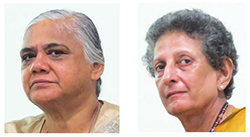
Dr Sr Anila Verghese (left) and Dr Nawaz Mody
Photos: Farrokh Jijina
While Tipu and his father did pioneer the use of elementary rocket technology to fight their enemies, it would be incorrect, as is propagated in certain quarters, to recognize the Mysoreans as pioneers of India’s space program, he cautioned.
The generally held view of Tipu, as documented in over 2,000 manuscripts, largely British-written, was that he was a cruel ruler, a torturer of captives and prone to ethnic cleansing. His own letters, Masani said, revealed that "he had put to death, or circumcised or imprisoned thousands of unbelievers, deported over 60,000 Christians (during his attacks on Mangalore) and held captive the same number of Coorgis” when he attacked the Kodava kingdom. The commonest punishments for his opponents were to have the tip of their nose and upper lip cut off, or to have them boiled in oil or burnt at the stake.
Referred to as the Tiger of Mysore, Tipu "invented the imagery for himself,” often borrowing from Hindu iconography. His opulent throne was embellished with replicas of the heads of the animal and "half a dozen tigers would roam on the verandahs of his palace.” He was even known to have killed a tiger with his bare hands.
Presenting a different side of the ruler, Masani said that the Mysorean commanded the fierce loyalty of his soldiers who at their peak numbered 100,000 (as against the British EIC forces that numbered about 32,000) and were "superior to those of the British.” He supported Hindu temples within his own lands, was a lover of astronomy, and prone to using charms and amulets to protect himself. He was a teetotaler, maintained a library of 2,000 books and "often had an obsessive need to micromanage affairs.” He introduced several reforms, sometimes pointless, in the calendar and in the weights and measures used. For instance, he changed the length of the "traditional kos from 2.5 miles to 2.7 miles and any of his officials who could not walk this in 33 minutes was flogged.” He was known to be shocked by the polyandry system (having more than one husband) among the Travancore Nairs when he invaded that kingdom; the historian pointed out his memoirs mistakenly ascribe polyandry to the Coorgis, and not the Nairs.
"Tipu is now revered by Islamists and taken up by Indian secularists who want to propagate him as a freedom fighter,” summed up Masani. The ruler was not motivated by nationalist sentiments, simply because the concept of India as a nation did not exist then, he emphasized. "Even his own biography, written by a courtier and thought to be dictated in parts by the Sultan himself,” does not have references to his alleged nationalism. The historian recommended a reading of History of Tipu Sultan by Mohibbul Hasan.
Earlier, the audience was welcomed by Dr Nawaz Mody, honorary secretary of the KRCOI. The session was chaired by Dr Sr Anila Verghese, director of Sophia Shree B. K. Somani Polytechnic, and principal of Sophia – Smt Manorama Devi Somani College, a noted historian, with a special interest in the history of art and religion.