In its anxiety to be melodramatic, the movie Rustom, based
on the Nanavati murder case, sacrifices authenticity
Berjis Desai
It is strange that it took Bollywood 57 years to make a movie about this crime passionnel, even though it had every possible ingredient for success. Cdr Kawas Nanavati, a highly decorated officer of the Indian Navy, confessed that he had killed his beautiful English wife’s playboy lover, but was pardoned after barely three years in prison. His dramatic courtroom trial pitted the Parsi and Sindhi communities against each other; resulted in the abolition of the jury system in India; launched the career of several bigwig criminal lawyers; made the tabloid Blitz a national newspaper; and effectively took away the power of state 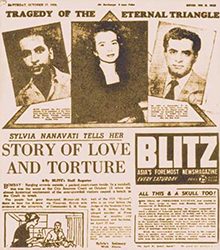 governors to pardon convicts. Half a century later, it still remains the unparalleled crime of passion in India, highlighting the pioneering role of the Parsis in every aspect of life. However, there is nothing particularly Parsi about Rustom, the movie.
While the film is loyal to some of the facts, it is forced to make too many concessions to its Bollywood viewership. It succeeds somewhat in enacting a period drama without any noticeable howlers. However, in its anxiety to be melodramatic, it sacrifices authenticity. An accused or his wife cannot be compelled to give evidence against themselves. Rustom Pavri and his wife are extensively examined by the public prosecutor. The tabloid editor is shown to be a buffoon, unlike Russi Karanjia of Blitz, an aggressive crusading journalist, who exploited the huge wave of sympathy for Nanavati. Attempts to provide comic relief are contrived, like the ridiculous theatrics of the Pavris’ domestic servant whose testimony is crucial to establish the defence of grave provocation but manages instead to provoke the judge into sending her to prison for contempt, where she shares the cell with the buffoonish editor, also in for contempt. The public prosecutor emerges as an immature lawyer who is constantly outwitted by Rustom who fights his own case and displays court craft which would make Perry Mason blush. (In real life Karl Khandalavala appeared for Nanavati and the solicitor was Shiavax Vakil.) This is in contrast to a recent Bollywood thriller called Pink where the courtroom trial is most realistic and sensitively portrayed. In all these courtroom theatrics, the pathos underlying the unravelling of a happy family is forgotten.
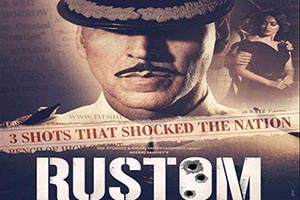
Akshay Kumar, as Rustom, is understated and impressive. This could have been a performance to remember in the hands of a more sensitive director and screenplay writer. In his mannerisms and body language, the actor hardly looks Parsi. As a matter of fact, apart from showing some Parsis in court, and the name Rustom Pavri, there is nothing Parsi about the film. Naseeruddin Shah, in Pestonjee, was so unbelievably Parsi. And someone should have told the director that in 1957 it was simply not possible to have a traditional Parsi marriage at Allbless Baug if your wife was a non-Parsi.
 The film does not make any reference to the perverse verdict of the jury being overridden by an enraged Sessions Court judge, the subsequent conviction in the1 High Court, rejection of appeal by the Supreme Court and the interesting circumstances in which pardon was granted. This is all stuff of great drama, which is completely ignored. The film has a fictional twist as to the real motive for the murder, which strangely enough is what was widely rumored to have happened in the Nanavati case. (For a detailed analysis, see "Even in murder, class matters,” Bawa Musings, Parsiana, February 21, 2016).
The editing is decently tight and the film does not drag. The opening is crisp and no nonsense. However, a great opportunity to produce a real life thriller has been botched. Apart from Akshay Kumar in the lead and Pawan Malhotra as the police officer, the performances are mediocre, particularly that of Ileana D’Cruz as the reluctant adulteress who emotes as if she has painfully twisted her dainty ankle. The Nanavatis provided far more drama and entertainment in real life than the Pavris in Rustom, the movie.
Tailpiece: Someone quipped in the theater that Nanavati was not a Parsi, as Parsis never resort to violence!