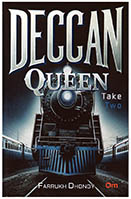
Deccan Queen: Take Two by Farrukh Dhondy. First published in 2024 by Om Books International, A-12, Sector 64, Noida, Uttar Pradesh 201 301. Pp: 265. Price: Rs 295.
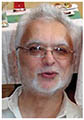
Farrukh Dhondy’s (pictured) Deccan Queen: Take Two is a conundrum for readers. There is no "Deccan Queen: Take One” as one would assume. Several of the characters who appeared in the "supposedly” earlier collection were based on people whom the author knew; in fact, the book is dedicated to his cousins with whom he has lived "through the years on which this fiction is based.”
Though the characters were represented "dramatically” and Dhondy had taken great care to camouflage their characters and change their names, great umbrage was taken at their portrayal; they wrote back "some in unpleasant terms, others furiously.” As a result, Dhondy was compelled to write Deccan Queen: Take Two which contains not only the original stories but also all the reactions and complaints made by these characters and often Dhondy’s replies as well. Dhondy is the master of the short story and though all the stories are fascinating, it is in the back and forth that the enjoyment lies.
The Deccan Queen is a leitmotif, a recurring theme which runs through all the stories. Over the years, Dhondy frequently travels up and down from Poona to Bombay. He describes the journey in such eloquent terms that the reader feels he is himself "chugging through tunnels of highland, down from the plateau.” For him, it is the connection between two worlds: the quiet and sleepy town of Poona and the vibrant busy city of Bombay, the innocence of one and the experience of the other.
In "A Maharaja’s Ransom,” Dhondy writes with great affection about Khurshedji, his grandfather, who ran a successful building business but on account of a foolish decision, faced bankruptcy. Khurshedji was a broken man and spent his time attending the funerals of friends and strangers. He carried with him "a book of Persian verse in which he took notes as he studied it.” After reading this story, a cousin wrote to Dhondy alleging that he was mixing up his grandfather with her grandfather "who was also his father’s mother’s father.” Her grandfather was a scholar; his, a drunken polo player. But in spite of this criticism, she has no qualms in asking his assistance in selling a painting which was supposed to be the work of Titian, the famed Italian Renaissance painter.
In "An Indian Passage,” loosely based on E. M. Forster’s A Passage to India, the heroine, Miss Corinthia Greenwood, travels to Poona to meet for the purpose of matrimony the odious Mr Foggerty who, it is later revealed, exports corpses to Rotterdam for medical dissection. Corinthia, in the meanwhile, falls in love with Eric Cumberbatch, who is not the director general of the Indian Railways but merely "one of the engine drivers of the West Coast and Southern Maratha Railways” — the engine driver of the Deccan Queen. Once again this story creates a storm in a teacup when Prof Gangadhar B. M. Deshmukh of Pune University accuses Dhondy of stating that the Deccan Queen had a steam engine which was not true. He also feels that Dhondy is being unpatriotic by suggesting that Indians "are selling our human flesh as if our glorious country has nothing else to trade.” To this comment, K. J. Ramamurthi of the Atomic Research Commission added that "the villain of the piece” was Foggerty who was an Englishman; hence, there was no slur on India.
In "The Fall,” Dhondy’s mother travels from Poona to Bombay on the Deccan Queen on some hush-hush business. It is only in the comments that the author confesses that his mother had gone to collect an inheritance which was supposed to be secret until the verification was complete.
In "Deccan Queen Installed,” Dhondy reveals that the man behind the train was Stuart McKay who treated his Indian subordinates very roughly and who was later superseded by one of them when India got her independence. McKay lost his job and subsequently became a drunk. His children were in school with Dhondy and one of them reveals to him that his father had re-married, an Indian this time, whom he called his Deccan Queen.
In "Asperogers,” when his uncle Khurshed found a girl in Bombay whom he wanted to marry, Dhondy’s mother and her sister travel to Bombay by the Deccan Queen to see the prospective bride who lived in Khetwadi in a flat with her mother, her brother and his wife. The bride’s family, to impress the visitors, not only brought out their new crockery ("the paper label with the price was still stuck on the bottom of the plate”) but the brother flaunted a tin of asparagus which he proudly called "asperogers.” After reading this story, the gentleman’s granddaughter objects to Dhondy’s portrayal of her grandfather, complaining that the attitude of his family towards this kind and gentle man was downright "snobbish and callous.” She mentions in her letter that she has been taking a course in creative writing to which Dhondy retorts that she should not waste her time doing creative writing when she does not have the "insensitivity” for the task.
In "The Poona Intercollegiate Zoroastrian Association,” Dhondy’s father and his best friend, Jingo, were both soldiers during World War II. Jingo joined Subash Chandra Bose’s Indian National Army and was presumed dead. In reality, Jingo was very badly wounded and after spending many years in Japan decided to become a monk. Dhondy’s parents were overjoyed when Jingo visited them along with a young acolyte. After several years, the junior monk came across Dhondy’s short story and commented on it. He was so impressed by Dhondy’s father and his military garb that he decided to give up his monastic life and join the Indian Army.
However, the most tragic story in the collection is probably that of Pervez, a schoolboy who develops an overwhelming love for a priest. His jealousy for a new boy, Vasco, who is also favored by the priest, is sensitively portrayed. The priest’s life is cut short by cancer and Pervez, having no friends and being an outcast to his family, kills himself. His body was "chopped in two after the wheels of the Deccan Queen had gone over it.” Pervez’s mother writes to Dhondy and accuses him of misusing her son’s papers which she had given him. However, Dhondy writes back saying he has carefully edited the more salacious parts of the confession and draws the mother’s attention to the fact that the papers were not addressed only to her.
In Deccan Queen: Take Two, Dhondy not only writes with great affection and sensitivity about the characters he portrays but also creates added dimension with the entertaining reactions and interesting replies from his readers. More importantly, after reading the criticism, Dhondy insists the stories are fiction; "How true is a story?” he asks. "What the hell is fiction?” FIRDAUS GANDAVIA
Gandavia holds a doctorate in English literature and is a retired chartered accountant. He is a compulsive reader of fiction.