Died: Astad Aderbad Deboo, 73, respected as the father of contemporary dance in India; in Bombay on December 10, 2020 within a month of being diagnosed with cancer.
The world was literally a stage for Deboo who did not restrict his mesmerizing movements to auditoriums but left his dance footprints in over 70 countries on any space that appealed to him. From Victoria Terminus in Bombay to the Champaner Fort in Rajasthan to the Great Wall of China, Deboo dared to be different.
His demise made front page news in the leading city dailies and it is to his credit that not a single photograph was a repeat. During his dance career of 50 plus years he had built a colossal repertoire of programs he had conceived, dignitaries he had impressed and students he had mentored. Even during the lockdown he had choreographed three online programs and was busy raising funds for his prospective shows, mentioned his younger sister Gulshan Deboo who resided with him.
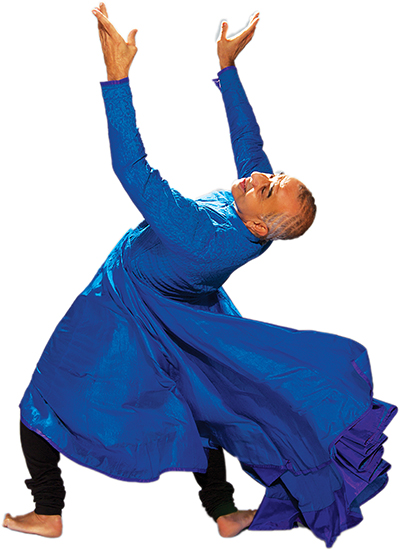
The purists may have viewed him as an "enfant terrible” who turned away from his roots in classical Indian styles like Kathak and Kathakali to find a haven in contemporary dance. To Astad, however, his chosen medium was "a carrier of my thoughts… communicating my innermost self,” as he had conveyed on a program "Why I dance” on YouTube.
Themes like drug addiction, water pollution, effects of the nuclear bomb and in recent times, the untold suffering of migrant laborers during the pandemic were tackled by him. Drawing his inspiration from contemporary subjects, he believed that his audience too should be shaken out of their reverie. More important than the applause or appreciation from the audience, what mattered to Deboo was "Did you go back with any thought?”
His work with The Oral School for Deaf Children in Calcutta, The Clarke School for the Deaf in Madras and the street children of Salaam Baalak Trust Delhi was an indicator that the contemporary dancer wanted to create meaningful and relevant work. He considered himself "a catalyst to bring forth the talent of these performers on stage.” Ever the perfectionist, he demanded the same flawless performance from these students too and at some point would switch off the sound while they continued the dance movements on stage to help the audience better appreciate their talent despite operating in a void of silence.
"Mentor, co-conspirator and comrade, his art and approach has left an indelible impact on our lives,” noted a tribute from the G5A Foundation that organized a meet, "Remembering Astad Deboo — celebrating the life and journey of the man we loved.” Aired live on YouTube a month after he passed on, friends, colleagues and admirers from different parts of India, Italy, Germany, France, London, USA and Canada attended the two-hour meet on January 10, 2021 when Gulshan and other close associates shared their reminiscences. In her opening remarks, founder of G5A Anuradha Parikh referred to Astad’s journey "that symbolizes a single-minded, relentless pursuit of forms.” Having conjointly planned many events for the future, she regretted "our calendar will remain bereft” following Astad’s sudden demise.
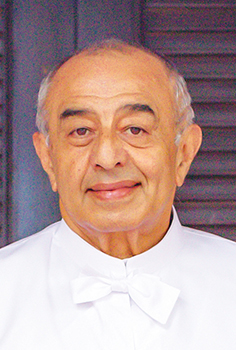
Astad’s technical director, architect Ratan Batliboi who had designed the sets and costumes for the dancer since 1978 revealed that originally he was Astad’s Man Friday who overnight evolved into technical director! He referred to the "immense understanding and bond that they shared” with each knowing what the other was expected to do from the front and backstage to perfectly synchronize a show without a cue sheet! While Astad could be "exacting and short-tempered,” like a true artiste he was "completely immersed in his work and very nervous before a show but would give an incredible performance each time,” said Batliboi. In keeping with the lingo they shared, before every performance Batliboi would tell him in Gujarati "Fori naakjé (break all boundaries)!”
In addition to English, Gujarati, Hindi, Marathi, Bengali, Astad could speak French, Spanish and Japanese, having studied the dance and culture of these regions. Realizing the importance of maintaining social contacts, he retained a massive telephone book on which one of Batliboi’s assistants labored for six months to create a mastercopy! Describing him as "kind, generous, selfless, humane, unwavering, persistent, forgiving,” Batliboi stated that they never squabbled although Batliboi would frequently receive lectures for not exercising!
Yet another long-standing collaborator, Sunil Shanbag, theater director, screenwriter and documentary filmmaker who is a trustee of The Astad Deboo Dance Foundation referred to Astad initially feeling isolated during the lockdown and then "generously reaching out to innumerable dancers through the Foundation.” Intrigued by the digital medium, with the cooperation of dancers from Delhi he made yet another transition and directed three short compositions: Boundaries, Boundaries 1.1 and Boundaries 1.2, the last of which was shared with an audience for the first time on January 10.
One of the dancers, Shamshul, who had collaborated with Astad during the pandemic was also present to pay his tributes in Hindi to "Astad Sir” who had taken him under his wings 15 years ago when working with the children of Salaam Baalak Trust Delhi. The young dancer who has trained under other gurus too equated Astad to a university who molded him as a dancer and inspired him to become a better human being. When working long distance during the lockdown, they would hold two or three Zoom meetings a day and send 20 videos of their practice sessions to Astad who would give feedback on what he liked and what could be improved upon before accepting a final clip.
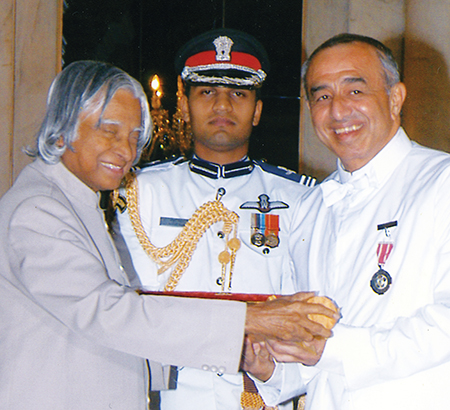
Top and above: Astad Deboo (r) receiving Padma Shri from Dr A. P. J. Abdul Kalam
"Professionally I learnt a lot from Astadji. How you approach your work, what you do with your work,” stated the reputed rudra veena player Bahauddin Dagar who created music that Astad used for his dance compositions. His direct, interpersonal relations made everyone feel special, observed Dagar valuing the dancer’s "short but permanent imprint on my mind.”
Focussing on dance compositions until his last days, he never had the time to collate his works and leave an art legacy for posterity. "The Foundation should create a memorial of his art,” urged Gautam Mukhopadhaya, erstwhile Ambassador of India to Afghanistan, Syria and Myanmar who appreciated that Astad’s Foundation was a sign of the care he bestowed on his dancers. From Astad he learnt "never to be too busy for others.” He remembered first interacting with him 30 years ago when he was but a junior diplomat in Paris. Over the years he was able to arrange performances for him with his other diplomatic contacts knowing that "travel fed his love for dance and dance fed his love for travel.” Viewing Astad’s dance as "a still point in a moving world, a breath of fresh air with his very minimal movements,” the diplomat recalled Astad’s beginnings in "muted tones that later became more sumptuous… He was an artiste who believed in himself and could overcome obstacles and rejection but never compromised on his integrity. He had no predecessor, it will be difficult to find a successor.”
Dr Anjali Raina of Delhi whom the dancer considered his third sister referred to Astad weaving in razzmatazz items with his serious, hard-hitting themes to ensure that he continued to draw audiences. At one of his performances, a photographer’s insistence on using a flash, despite being twice requested not to do so, so enraged the dancer that he effortlessly did a pirouette in front of him and kicked the camera out of the shutterbug’s hands, she recalled. On another occasion when she awkwardly accompanyed him to a disco in a sari he convinced her that one’s sartorial preference should be worn with confidence to any venue. His moves on the dance floor at the disco had so impressed the youngsters that they stood back in awe while he and another Italian dancer grooved to the music. A liberal in his political leanings, he would make time to express his solidarity with the Delhi based organization Sahmat, supported by artistes against communalism.
Growing up in Jamshedpur, Gulshan recalled the cosmopolitan environment in which her parents Roda and Aderbad brought up the three children with Bengalis, Biharis and South Indians as neighbors and all festivals celebrated with equal gusto. As the non-conformist Astad had conveyed in an interview with Parsiana when he was conferred the Padma Shri (see "Acknowledging Astad,” August 7, 2007) "I’m not a Bombay Parsi… (but) brought up with Parsi values in Jamshedpur.” Outsmarting the golden rule at home to eat everything served on the table, Astad would conveniently go to his neighbors if he knew food at home was not to his liking. During his school days at St Loyola he would participate in elocution and debates and enjoyed going on Scouts camps. On summer holidays the children had to learn to read and write Gujarati. Although the parents were very religious, they were not bigoted or narrow-minded. They never felt that Astad, being a boy, should not learn dance during his school days. But when he was considering taking dance as a career, Aderbad was insistent that the son complete his graduation. Astad graduated in commerce from Podar College in Bombay before he was permitted to pursue his dreams.
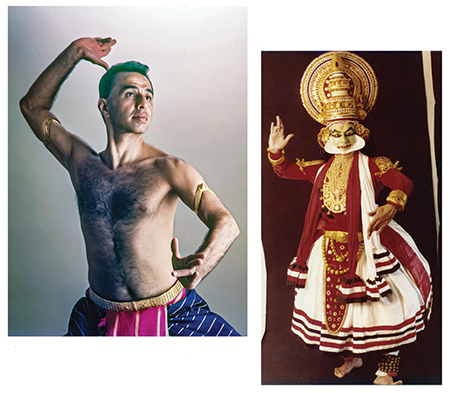
Deboo’s roots in Indian classical dance
Top (from l): Roda, Kamal, Astad, Gulshan and Aderbad Deboo;
above: family at Astad and Gulshan’s navjote
Astad Deboo: myriad moves
When he was preparing to sail overseas in 1969, even strangers in Jamshedpur were invited to a party organized by Roda. When the children questioned their mother, Roda insisted this is how things were done in Navsari from where she hailed! During the nine years he was abroad on a shoestring budget, he soaked in the culture of all the five continents before he returned to India in 1978. After their father’s retirement from Tata Steel. They relocated to Bombay where the family ran the laundry business, Leach and Weborny. While elder daughter Kamal resided with her husband Jamshed Antia in Jamshedpur, the two unmarried siblings, Astad and Gulshan stayed with their parents. Describing Astad as a "creative genius,” his sister candidly added, "There is a thin line between madness and genius and some of his performances were sheer madness.” Gulshan lovingly recalled how he called her "a nag,” while she considered him "a pain; he used to stress me out.”
Impressed with his "concentration and control of the body,” when she had first seen him perform in 2018, Franciska Decuypere, head of India operations at BNP Paribas, in her video message shared at the commemoration meeting alluded to him as a "warm and unique human being …with a depth of passion for his art… We remain committed to supporting art and culture in India.”
The many moods and moves of Astad as distilled from his compositions, Interpreting Tagore, Contraposition, Celebration, Every Fragment, Interconnect, Rhythm Divine were finally woven into a brief, befitting tribute to be enjoyed by the viewers. As expressed in yet another eulogy, "Your giant leaps will live on in the small steps we take.”
The dedicated dancer is survived by his sisters Kamal Antia and Gulshan Deboo.