"Among the first reactions I got when I was contemplating (political thinker Dadabhai) Naoroji’s biography were, ‘Are you crazy!’” historian Dinyar Patel told Parsiana on May 14, 2020. His tome Naoroji: Pioneer of Indian Nationalism (pictured) was released in the US on May 12. A version is available on Kindle in India. The former assistant professor of history at the University of South 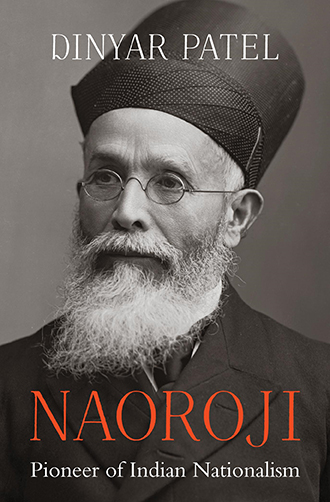 Carolina who, in August this year joins the S. P. Jain Institute of Management and Research as assistant professor of humanities, said the "release date in India, by HarperCollins, is July 1.” The Covid-19 pandemic and the ensuing lockdown pushed the release date ahead.
Naoroji’s brand of early nationalism (self-governance within the British Empire) is increasingly seen as a failure, stated Patel. It started to be "written off” as early as the 1940s, the historian said. Naoroji and his contemporaries "came from an elite background… very Anglicized… they had very limited engagement with those we call Dalits now,” the assistant professor explained.
The historian believes that Naoroji’s legacy is as important as that of freedom fighter Bal Gangadhar Tilak who was "not averse to attacking other moderates like Dinshaw Vacha and Gopal Krishna Gokhale,” but considered Naoroji his "nationalist guru.”
"Perhaps he is forgotten because he is a Parsi… not a large constituency to be associated with… but people like (Mohandas Karamchand) Gandhi and Tilak built their nationalism on Naoroji’s philosophy,” mused Patel. Pubic memories are notoriously short, he explained. There is very little focus in India on biographical writing, bemoaned the historian. Patel had earlier collaborated with historian S. R. Mehrotra on an edition of select papers from Naoroji’s correspondence (see "Dadabhai’s dossier,” Parsiana, June 21, 2017). "That was meant as a resource for scholarly research,” he ended.