This extract from Homi J. Bhabha: A life by Bakhtiar K. Dadabhoy (Rupa Publications, 2023) has been reprinted in Parsiana with permission from the author and the publishers.
"Physics is my line … I am burning with a desire to do physics… I have no desire to be a ‘successful’ man or the head of a big firm,” read a letter dated August 8, 1928, from Dr Homi Bhabha to his father, Jehangir.
Gonville and Caius, the Cambridge University college to which Homi was admitted, not only has a double name but was also founded twice: first in 1384 by Edmund Gonville, a parson from Norfolk and then in 1557 by John Keys, a wealthy doctor from
Norwich who was physician to Edward VI and Mary Tudor. Keys, who Latinized his name to Caius (also pronounced "keys”), had studied at Gonville Hall and used his wealth to revitalize his old college.
Homi’s choice of college was no doubt influenced by the fact that his uncle, Sir Dorabji Tata, was an alumnus of Gonville and Caius, and later a generous patron who donated £ 25,000 to the college in 1920. Tata, however, did not complete his graduation because he was recalled to India in 1879 after just two years of commencing his studies because his grandfather, Nusserwanji Tata, could not bear to be separated from him any longer. When Homi arrived at Cambridge in 1927, he enrolled for a bachelor’s degree in mechanical engineering. Both his father and his uncle hoped that he would return to India after completing his degree and join the House of Tatas.
It was by no means an unrealistic expectation since a career in the pure sciences held little promise, at least in the colonies. Engineering was the more pragmatic choice and the steel works at Jamshedpur beckoned; but Homi had other plans. Even though he had a talent for mechanical drawing and had little trouble in understanding his subject, engineering did not inspire him. If his correspondence with his namesake Homi Seervai is any indication, there were times when the dislike verged on contempt, even hatred. Seervai courted fame later in life as a noted constitutional jurist and as the advocate general of Maharashtra. He is best remembered for his monumental multivolume Constitutional Law of India and for his role in India’s most famous constitutional case, Kesavananda Bharti vs State of Kerala, popularly known as the Fundamental Rights case.
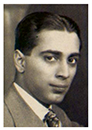
Top: Dr Homi Bhabha; alongside: Gonville and Caius college at Cambridge University;
inset: arms of the college Photos: Wikipedia
In the letter Homi expressed his dislike for his current syllabus and stated with some vehemence that eventually he would like to pursue physics and astrophysics and nothing could stop him from doing so.
"I am doing engineering now, but it is not very interesting… However, I am determined to do physics and astrophysics eventually. Nothing will stop me … The mere circumstance that there is an opening in steel or hydro will not change my course… I do not care two hoots for anybody. I am going to go my own way against the world if it is in my way… How can a person like me be ever expected to work harmoniously in a steel works when at any instant I might explode against it?”
After these strong words, he asked his friend to intervene with his father on his behalf. "If you see my father, I earnestly ask you to impress this view upon him and convince him that scientific research is my only line. Leave no stone unturned. By the way, could you find out and let me know what openings there are in India for the same?” Another scientist, arguably the greatest of all time, had expressed similar sentiments to a friend about how he had rejected the idea of pursuing engineering in the mid-1890s. Albert Einstein’s father, Hermann, owned an electrical business and hoped that his son would join his business one day. "I was originally supposed to become an engineer,” Albert later wrote to a friend, "but the thought of having to expend my creative energy on things that make practical everyday life even more refined, with a bleak capital gain as the goal, was unbearable to me.” Homi seems to have similar feelings.
Communal dining at Gonville and Caius Photo: Wikipedia
Homi and Seervai shared a love of philosophy and their letters reflect this interest. They also discussed books, logic, forms of government and historical figures. In a letter written on January 2, 1929 Homi observed: "I do not think it worth writing to you unless I can write an intelligent letter, because I don’t think it can be of great interest to you that I had Christmas cake on Christmas unless it causes some reflections. Anybody can eat Christmas cake. After all, we are what we think.”
In the same letter, he put forth his views on democracy: "I agree that for a really good and efficient democracy there ought to be a widely diffused culture throughout the masses. You will be surprised how uncultured the average Englishman is… He has only acquired a certain sense of responsibility and a certain sense and forbearance in political matters through long experience in this form of government, which makes the government more or less stable. This sense can only be formed by experience and therefore it is unreasonable to expect a democracy in India which shall not make some blunders in the beginning, some even of a serious nature.”
Homi continued with his prescription for India: "Unity of all mankind cannot be achieved by blotting out one civilization and implanting another. As a preliminary step, a new and unbiased history of India ought to be written which ought to be taught in schools.
To be continued