I sit writing this just before I sleep at my Grandpa’s house, the last time I’ll stay the night there. And I remember fondly the first time I ever did — as a five-year-old who was so traumatized by the mosquito nets hanging over my grandparents’ four-poster bed, that my dad had to come pick me up from across town in the middle of the night and take me back home.
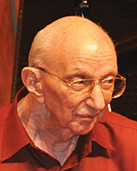 After that blip, however, it was a lovely journey. My granddad, Homi Dastoor (pictured), was, as so many of his old friends, family, and more recent admirers of his book Musical Journeys will attest, a simply wonderful man. It was he who taught me that an honest, simple life holds more weight than a successful one brought about by dishonesty. It was he who showed me the true meaning of love, as I saw him dote on his beloved wife, both during their time together and even after she died. It was also he who passed on his gift for writing and a fondness for the English language, through the talented conduit that is my mother.
Granddad was a man of impeccable manners, a proper gent, a vestige of the British Raj. He could not fathom lies, underhand behavior or greed, a message embodied by both his children, two of the finest humans I’ve known. A simple man, he dedicated his entire savings (which weren’t much) to the well-being of his family, which included taking care of his unmarried sisters, with whom he graciously shared his modest home.
His only indulgence was music. A lot of my friends scoff at my "ancient" music preferences. They do not have grandfathers who worshipped classical composers so much that my grandmum made special celebratory desserts on the birthdays of Beethoven, Heifetz and Mozart. Most people lose their passions, drowned beneath obligations of work and other mundane tasks. Not granddad — he kept the fire burning, learnt to play the violin at the age of 75 from a 25-year-old tutor and finally wrote his own book at 90 (the pinnacle of his life).
Gramps taught me too many things to list, so I’ve picked my top four: First, manners. There is no social cost to being a gentleman. Years of working as Darab Tata’s secretary formed the bedrock for his social skills — displayed till the end when, just before passing away, he opened his eyes after his seizure for a few seconds only to thank the doctor for administering to him.
Second, to not take life too seriously. Why get bogged down when there is a world full of music and laughter to be explored? Everyone knew him for his jokes (some of which would definitely raise eyebrows in today’s day and age, but were told with such passion and good nature that they even drew grudging smiles from my very politically correct, feminist sister).
Thirdly, what true, dedicated love means. Love in health, but more so in sickness. He married my grandmother despite being warned by her own father that she was epileptic and would be very difficult to manage. It was the best decision he ever made.
And lastly, but perhaps most importantly — something every person who reads this must take spirit from — let life run its course. Don’t compare yourself to other people and never think it’s too late to achieve anything you really want to. He managed to do what he loved at 90. If we are lucky to discover that feeling a few years before him, he’d have a smile on his face. The same smile worn by anyone who had the pleasure of his company.
ZARIR MARFATIA