On the first day of the Kadmi calendrical year, a trip to the
Doongerwadi is deemed mandatory by many Iranis
Parinaz Gandhi
Some candles placed near the outer gate leading to the dakhma were valiantly flickering despite the incessant drizzle. In their proximity, some slit cucumbers served as holders for incense sticks. Alongside were laid select fruits, vegetables, flowers and small plastic bottles bearing milk, rose water and alcohol. Such offerings, predominantly by Iranis, are faithfully brought to the Doongerwadi every Kadmi New Year. Remembering with affection, gratitude and nostalgia the dear departed members of their family, it is their way of starting the year by visiting the final resting place of their loved ones.
"It is a very touching sight to see the lovingly offered gifts, food and articles, and remembering with tearful eyes the memories of one who has passed on,” noted honorary administrator Darayush Zainabadi in the newsletter of the Bombay based Sazeman-E-Jawanan-E-Zartoshty-E-Irani (The Iranian Zoroastrian Youths Organisation), announcing July 18, 2017 as the date of the Kadmi New Year that is observed 30 days prior to the Shahenshahi New Year on August 17. He further added that "some of the members of the Ladies Wing of Sazeman prepare the special dish of Seer-O-Sedob in memory of the departed and distribute the same to the gathering… On this sacred day we humbly pay our respect to all the departed souls and may they all rest in peace in the abode of Ahura Mazda. May they bless the living with good thoughts, words and deeds.”
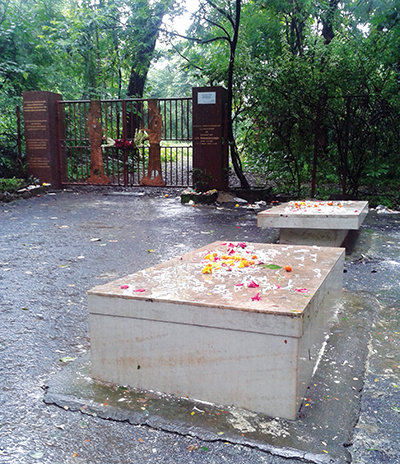
On Kadmi New Year at Doongerwadi
Family of Dastur Darab Kumana, leader of the Kadmi sect in Surat in 1901 Photo: Parsi Lustre on Indian Soil
From sunrise to sunset, a steady stream of Iranis come to Doongerwadi, some by cars or cabs, and others on foot. "This feels so good,” we overhear Zeba Namdarian comment to her mother as they walk up the incline on July 18. Used to accompanying her ailing father in a car, it is only since his passing away that she has been able to appreciate the Doongerwadi environs in their entirety. A couple of senior Iranis exchange news of each other’s ailing parent and then proceed with a discussion on how to find partners for their unmarried progeny, within earshot of all souls!
Believing it is "our duty to remember the departed members of our family on New Year,” despite her advancing age Dhun Fitter continues to visit the Doongerwadi. She regrets though that the current younger generation is not interested in joining them in prayer. Having arrived from Iran to Bombay as a teenager, 75-year-old Farkhonda Mondegar too has been a regular at Doongerwadi for several decades. Since she had lost her mother when she was two years old, "we were nine brothers and sisters from two mothers, four of whom are surviving,” she lets us know.
At the Farvardian, Ervad Farokh Mobedji and half a dozen other priests recite prayers at the behests of their Irani clientele. Due to the acute shortage of Kadmi mobeds, some Shahenshahi priests like Mobedji have additionally undergone a Kadmi nahan to be able to cater to a Kadmi clientele. "You have to change with the times,” Ervad Marzban Pavri who prays for both Shahenshahis and Kadmis impresses upon us. Ervad Adi Gowadia, former Bombay Parsi Punchayet trusteeship candidate, who also recites prayers at the Doongerwadi, said a few devotees had come to Doongerwadi even prior to his arrival at 7 a.m.
Members of the Cama family who are Kadmis, though not Iranis, used to visit the Doongerwadi too in earlier times but have discontinued the practice, preferring to feed the poor at the F. S. Parukh Dharamshalla on one of the Gatha days, we are informed by Muncherji Cama. In fact they used to observe 18-day muktads which have now been truncated to 10 days. "This is not a period of celebration or revelry” but to remember the deceased "with gratitude and pray for the redemption of their souls,” he believes and chooses not to go out to parties or dinners during this period. When prayers for the dead are recited, a Kadmi woman’s name is linked with her father’s name and not with her husband’s, he points out one of the practices that is different from the Shahenshahis’. Additionally, the Kadmi funerals are shorter and weddings longer than the Shahenshahi rituals. A Shahenshahi girl becomes a Kadmi on marriage but a Kadmi girl continues to remain a Kadmi even after she marries a Shahenshahi.
There are variations in prayers between the two sects starting with Ashem Vohu among the Shahenshahis being recited as Ashem Vohi among the Kadmis and Yatha Ahu Vairyo being said as Yatha Ahi Vairyo. The prayers accompanying the tying and untying of the kusti as also the Tandorasti are recited differently. "The alleged discrepancy between their prayers arises from the difference in the Parsi and Iranian modes of pronunciation,” observes independent researcher Farrokh Vajifdar.
At Parsiana’s behest he further expounded that in 1720 when the Kermani Dastur Jamasp visited Surat, he realized the priesthood in Surat was not familiar with Pahlavi and "taught the Middle Persian scripts and literary contents” to three priests and also "corrected crucial points of certain ritual practices… Jamasp, called Vilayati (provincial; foreigner) is unfortunately best remembered for indicating the month’s difference” between the calendars followed by the Iranians and Parsis in India. To ensure that the calendars remain seasonal, in earlier times a 30-day month was intercalated every 120 years since the extra day was not added every leap year among Zoroastrians of yore. Apparently the Iranians had last observed the intercalation in 1006, and the Parsis in 1126, leading to their 30-day difference. The Iranians thereupon called themselves Kadmi/Qadimi (Persian pronunciation is Ghademi) to denote they were "ancient; olden” and Parsis settled for Shahenshahi "royalists” or Rasmi "traditionalists.”
"In 1736, another Iranian, Jamshid, reputed as an astrologer, came to Surat and confirmed Jamasp’s intercalation. On June 6, 1745 a relatively small faction formally established their Kadmi calendar. Disrupting the majority Shahenshahis through frictional encounters, it led to trading insults, threats, violence and even murder. A particularly gruesome incident occurred when the Shahenshahi Homaji kicked a pregnant Kadmi woman to death for which he was duly hanged.”
The oldest among the fire temples in Bombay is the Kadmi Dadibhai Dadysett Atash Behram that was consecrated in 1783. In 1823 the Pestonji Vakil Kadmi Atash Behram was consecrated in Surat after Vakil won a court case against the Wadias and Modis who tried to restrain him. Cowasji Banaji Atash Behram was inaugurated in Bombay in 1845. The other Kadmi agiaries in India, as per Marzban Giara’s Global Directory of Zoroastrian Fire Temples giving details of their consecration are Dadysett Agiary (1803), Merwanji Patel (or Mehlla Patel) Agiary (1808), Cawasji Ashburner Agiary (1832), Framji Patel Agiary (1845), Hormusji Saher Agiary (1846), Vachagandhy Agiary (1858), Sorabji Thoothina Agiary (1859), Kadmi and Shehenshai Anjuman Dar-e-Meher (Komra ni Agiary) in Poona (1893), Cawashah Irani Agiary in Dahanu (1940).
Among the fire temples in Bombay well patronized by the Iranis and Kadmis is the Dadysett Agiary. The number of vases during the Kadmi muktads are around 90, with the number doubling for the Shahenshahi muktads, says the panthaky at the Dadysett Agiary, Ervad Darayus Nalladaru. Due to inflation, some families genuinely cannot afford to continue with the vase practice after the first year. "But there are some billionaires who choose to pray only for one year because they do not have faith,” he regrets.
Prior to Darayus, his father Parvez was the longest practising Kadmi priest with more than 55 years of service. "I am the fourth or fifth generation in the line of Kadmi priests,” declares Darayus who has already decided that his 16-year-old son should join him at the Agiary rather than pursue higher education because he fears that later he may not want to pursue mobedi. The father takes pride that his son is a sampoorna mobed who as per Kadmi practice has taken three nahans when becoming a navar. Darayus does not have the same expectation though from his two younger twin sons who are in the ninth grade.
There are 18 boi deva bells sounded in Kadmi fire temples. The kebla at the Dadysett Agiary has four bells of which two bells are struck nine times each at the change of each gah as against the common practice in most fire temples of striking one bell nine times. At the Vachaghandhy Agiary too, 18 boi bells are sounded, mentions the panthaky of the Agiary Ervad Asphandiar Dadachanji. Even though he is a Shahenshahi priest, the fire is Kadmi. They have around 20 tables with nearly 100 vases during the Kadmi muktads.
"The Zoroastrians of Iran have changed over, almost en masse, to the Fasli calendar since the early 1950s,” wrote Mobed Mehraban Firouzgary of Iran in response to Parsiana’s queries. Following the leap year logic, Faslis add a sixth Gatha day, Roz-e Wahizag, every four years to ensure that their New Year or Jamshedi Navroz is permanently celebrated on March 21. There are no Kadmi calendars available and a handful of Zoroastrians in remote villages who refused to change keep track by themselves of the days and months. As Firouzgary further explained, "Our Iranian ancestors had a common practice of declaring a portion of their material property or agricultural land products towards a gahanbar. For some who felt their property/wealth could be stolen or confiscated, they would dedicate the property in entirety to establishing a gahanbar in their names. Some traditionalists insist on celebrating their ancestral gahanbars according to the Kadmi calendar as had been declared originally.”
Thus for Iranis and Iranians, the Kadmi New Year is essentially an obligatory "turning the page of a calendar.” As Dadachanji reminded, during the four years 1992 to 1995 when the Hormazd roz for all three calendars coincided on Jamshedi Navroz, we had an opportunity to synchronize our three calendars. "Pan aaproo kaun mané? Koi fareshto aavé tau koi maansé (Who listens to us? Only the advent of a saint can bring about a change).”