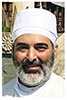
It was courageous of Parsiana to ask questions to the High Priest of the Udvada Iranshah Atash Behram Dastur Tehemton Mirza (pictured) to promote thinking and discussions with other high priests in order to guide and inspire the community towards a brighter future and to stop its downward spiral towards extinction ("To ask or not to ask,” Editorial Viewpoint, Parsiana, March 21-April 6, 2024).
The questions may be difficult to answer without putting in sufficient thought and discussion, but the status quo has gone on for far too long with no end in sight except going downwards.
The position of high priest carries great responsibility and requires integrity and courage to think and answer independently of vocal groups who prefer a death wish and instead choose to pass the buck to a future messiah. If the matter is treated with benign neglect, both priests and the community should be held accountable for the continued decline.
Our wise ancestors took bold steps to introduce changes as and when required which contributed to our survival and growth in India. Let our priests and other leaders follow their example at this crucial time and make us proud.
MANECK BHUJWALA
California, USA
mbhujwala@social.rr.com
I have read the editorial "To ask or not to ask,” (Parsiana, March 21-April 6, 2024) and feel Parsiana has done no wrong in seeking an interview with Dastur Tehemton Mirza. What is wrong in a community publication seeking an interview with a newly installed high priest? From the type and tenor of the proposed questions it is apparent that the intention was merely to understand the views and position held by the new incumbent on community issues.
Parsiana does not need to defend its action. These days, it is sad to see a growing number in the community becoming increasingly intolerant of any non-conformist views. Parsiana’s request for the interview and the questions asked were harmless. Had the interview been granted or the questions responded to, it would have provided an invaluable insight into the position held by the new high priest on various community issues.
However, the high priest is within his rights to either respond or not. He has exercised this right, as did Parsiana in reporting his decision. End of story. So, why the backlash? It is certainly not justified. The utterly irrational, anonymous reference to Parsiana being led by a dubra (dark skinned half caste), just goes to show the extent of intellectual bankruptcy in the people making such statements.
What we need to understand is the reason for the high priest’s refusal to participate in the interview for a community publication after granting one to a mainstream media outlet. Is it just for now or are the doors shut for Parsiana permanently? Was it a question of timing? If the priest does not wish to expound on issues facing the community, how does he intend to connect with it and how is the community to know what his views are and how he plans to lead?
This is a peculiar problem that we as a community face. Is there a formal mechanism or forum for the laity to connect with the high priests for any sort of spiritual, religious or community issue related guidance?
Parsiana, in my opinion, is doing a good job. Is there any other community publication that exercises the same level of independence that Parsiana exhibits in its reporting? Sometimes it may be perceived as promoting a particular view by the stance it may take on certain issues or the questions it might raise. But that is expected of an intellectual publication. It’s a part of good journalism. Perhaps the community is not yet ready to face such questions?
We need to introspect and curb this increasing tendency to shoot the messenger without full understanding of the context or the consequences of so doing.
Maybe, in the refusal to give the interview lies an answer to Parsiana’s questions?
KAYOMARZ PATEL
kayomarz.patel@gmail.com
You have hit the nail on the head with this editorial viewpoint ("To ask or not to ask,” Parsiana, March 21-April 6, 2024) about the questions asked of the new High Priest of Udvada, Dastur Tehemton Mirza.
If not the high priest, who can one ask?
HOMI IRANI
hjirani@gmail.com
I firmly believe that your questions to Dastur Tehemton Mirza were fair. As a high priest, he ought to address the issues at hand instead of shying away from them. If he is going to be an ostrich, then why take on the mantle of a high priest? NESS PESIKAKA
Madras
periness@gmail.com