Died: Kekoo Minocher Gandhy, 92, art impresario and founder of Gallery Chemould (now Chemould Prescott Road), of pancreatic cancer on November 10, 2012, in Bombay.
"One of the most respected figures in the field of art in Mumbai… Gandhy had an eye to spot talent and was a pillar of strength to generations of young and upcoming artists," noted a condolence letter from the governor of Maharashtra K. Sankaranarayanan who further described him as "an endearing and lovable personality."
An institution-builder, Gandhy’s contribution is known to have strengthened the Bombay Arts Society where he had served as its honorary secretary, the Progressive Artists’ Group, the Jehangir Art Gallery, the National Gallery of Modern Art’s Bombay branch, the Lalit Kala Akademi, Triennale India… "Gandhy will always remain a beacon for generations to come and his legacy will continue to inspire many of us," wrote A. S. Manekar, director of the National Gallery of Modern Art, Bombay to whom Gandhy was "an unswerving stalwart and a visionary (whose) contribution in the field of modern art, art gallery practices… and his long standing association with artists and art fraternity was most distinguished." Among the artists he nurtured were M. F. Husain, Tyeb Mehta, Ram Kumar, S. H. Raza, Bhupen Kakar, Nalini Malani, Atul Dodiya.
"Gandhy lived in an interesting time for Indian art, and played a major role in bringing international recognition for artists here. He was also recognized by the Indian government for his contribution to the art world and was given the Padma Shri award," said fellow gallerist Pheroza Godrej, owner of Cymroza Art Gallery at a memorial meeting at the Jehangir Art Gallery attended by prominent members of the city’s art and cultural scene.
Artists from across India and overseas too shared their reminiscences in their condolence messages to the family. "He must have had a spine of steel to handle so many of the characters who crossed his path and chose careers he nurtured," commented London based Yamini Mehta, Sotheby’s international head of Indian and Southeast Asian Antiquities/Modern and Contemporary South Asian Art. "Always full of wonderful and innovative ideas to promote art and artists," Katayun Saklat, of Calcutta’s Gallery Saklat commented that "his vibrancy and radiance always had a way of filling every conversation, and his great warmth and sincerity were truly infectious."
Puppeteer Dadi Pudumjee, a cousin of Kekoo’s wife Khorshed called him "one of our greats… and part of a very important modern art movement. With him passes away a great legacy." Art historian Aman Nath from New Delhi described the doyen as "a canvas with indelible paint, now on permanent loan to the largest Indian wall in posterity."
Along with Khorshed, Kekoo "ran Gallery Chemould. Or rather, Khorshed ran it while Kekoo dreamt, talked, shared his infectious enthusiasms… (Daughter Shireen has helmed the Gallery for the past 25 years.) Married for nearly seven decades, they were the archetypal portrait of beautifully wedded opposites," noted art historian Ranjit Hoskote in his detailed tribute published in Times Crest on November 17, 2012. "Khorshed’s practicality and eye for detail provided a bracing, productive counterpoint to her husband’s preference for high altitude navigation in the realms of vision and policy," added Hoskote.
"Ever since we can recall, there’s been Kekoo Gandhy in our lives, shuffling through the Jehangir Art Gallery trying to interest anyone he could in high-minded causes and human rights issues; encouraging young people and art lovers to not only buy art but feel it deeply in their bones; taking up cudgels for the underdog; tilting swords at holy cows and challenging the establishment. He was not modern art’s biggest champion, he was Mr Modern Art in India," wrote Malavika Sangghavi in her column "Malavika’s Mumbai" in Mid Day on November 12, 2012. Her mother runs the popular Samovar café in the premises of the Jehangir Art Gallery where Gallery Chemould was earlier situated.
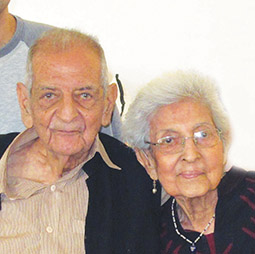 The legendary hospitality of the Gandhys at Kekee Manzil (their palatial bungalow at Bandra’s Land’s End) is borne out by the hundreds of emails, posts on Facebook, letters and cards of sympathy from friends and associates that the family received from all over the world. "Kekee Manzil was the base for our work for a long time," commented R. D. Mathur of the Moral Rearmament movement (MRA) describing Kekoo and his cousin Dara Gandhy as "pillars of our work… in the early years… (who) laid the foundations of our growth in this country." He did his best to practice the Four Absolutes of the MRA: honesty, purity, unselfishness and love.
Filmmaker Shama Habibullah mentioned in her email that Kekoo and Khorshed "created a space in this city which was so unique in its civilized warmth, its inclusiveness of all who came as questers and creators, regardless of age and place." He was also a friend of the Safdar Hashmi Memorial Trust which upholds cultural and artistic freedoms, always willing to "put his money, energy, time and considerable network of contacts where his mouth was," Hoskote reveals.
A champion of freedom of speech, Gandhy vehemently opposed the Emergency of 1975. As appreciated poet Adil Jussawalla, Kekoo’s "thinking encompassed all of culture, politics and society… Few people thought so consistently and constantly about this country and what it needed to move it forward as Kekoo did." Actress and activist Shabana Azmi’s tribute read, "Kekoo has been a valiant soldier in the fight against communalism and we were fellow travelers. It was his perseverance and ability to follow up with painstaking dedication till he brought a matter to closure, that was a huge source of inspiration to people like us who tend to be impatient."
Born to Roshan and Minocher Gandhy on February 20, 1920, Kekoo began his schooling at the Dorabji and Hirabai Vacha primary school on Bandra’s tony Pali Hill, proceeding to the Cathedral and John Connon School from which he passed out at the age of 17. The family toured Europe during the following year, leaving Kekoo at Cambridge to pursue his degree. His college career ended abruptly in 1939 with the outbreak of World War II when he was unable to return to the university, mentions Karen Zitwewitz, assistant professor of Art History and Visual Culture at Michigan State University who had collaborated with Kekoo on a memoir, The Prefect Frame: Presenting Modern Indian Art, published in 2003. Brought out by Chemould Publications and Arts, Asian Book Trust, it contains stories and photographs from Kekoo’s collection tracing the growth of Bombay’s art world into a national art movement and placing it firmly on the international stage.
Kekoo’s tryst with art began when he established Chemould Frames in 1941 (coined from chemical mouldings, and now run by his son Adil) through which he started his association with Bombay’s first group of post-modern painters, reports The Indian Express of November 11, 2012. At a time when there were practically no venues in the city for showing modern art, he would use his showroom window as an informal exhibiting space for artists and seek prospective clients for them. He credited his friends, émigré Austrian artist Walter Langhammer and German cartoonist Rudy von Leyden with inspiring him to have faith in the new painters. It was in 1963 that he set up Gallery Chemould in a small space on the first floor of Jehangir Art Gallery. The Gallery moved in 2007, metamorphosing into Chemould Prescott Road (see "Accepting the challenge of change," Parsiana, January 7, 2008). Though conscious of their duty as community members (they voted at Bombay Parsi Punchayet elections), as Parsiana had noted the family’s "extremely cosmopolitan existence has endowed them with a liberal frame of reference." Kekoo was cremated at the Shivaji Park crematorium.
Artist couple Atul and Anju Dodiya who enjoyed a fond rapport with Kekoo spoke to Mid Day (November 11, 2012). Atul recalled that when he told Kekoo that his father had backed his decision to pursue art, Kekoo "called him up and expressed his delight. Whenever he spotted a beautiful looking lady at a show, he would look at me and give me a wink. ‘I’ll go and attend to her,’ he’d tell me and walk off." Anju shared: "Often, Kekoo spoke engagingly on serious issues, and then, suddenly, there would be a twinkle in his eye and he would get playful." Regarding work, he "never interfered with an artist’s work. According to him, the artist could not be wrong and he imposed no rules on their art at his gallery."
The grand old man of modern Indian art is survived by his wife Khorshed, son Adil and daughters Rashna Bernard Imhasly, Behroze Jim Moody and Shireen Kurush Jungalwala.