The Grey Traffic: Rise of Anti-Grey Revolution by Kaizan Vandrevala. Published in 2022 by the author, 102-202, Anand Kiran Apt, Manisha Circle, opp Apollo Pharmacy, Old Padra Road, Baroda 390007; email: vkaizan92@gmail.com. Pp: 308. Price: Not mentioned.
The initial introduction does not give a clear idea about the essence and purpose of this book written by Kaizan Vandrevala (pictured). The clarification dawns when one reads about the author’s disillusionment in real life, as compared with the beliefs he was brought up with, primarily by his parents during his childhood and growing years. The language, however, is lacking in clarity, making comprehension difficult.
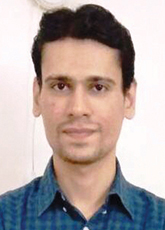 According to the author, who assists his father in "running the operations of a family owned business” and is a "passionate flautist,” the values with which we are brought up, do not always lead to success in life, especially monetarily. Often, in order to survive, one has to step into what he terms as a "grey area” where self-consideration comes first and trust in others fades. Helping others in need, he learns, does not necessarily mean they would do likewise.
Vandrevala wants to draw people away from the "grey” zones to a better life. He harps on their conscience, so people are aware of the harm they are causing and hence atone for it. However, there is too much detail totally irrelevant to the essence of the story.
The author attempts to illustrate his point by narrating a love affair between a woman from Pakistan, Samiha, and an SSI (the acronym is not spelt out) agent Prabhat Singh Vardhan, and the problems they are drawn into by trying to clear the "grey area” in which many unsuspecting people, both youngsters and the elderly. have fallen.
The story is based on the friendship between two families living in Khamirpur in pre-independence India. One family is headed by Bikram Vardhan, a local landowner and farmer and the other by Yusuf Shaikh, a professor of theology teaching at Madurai, and his daughter Samiha. The tie is further strengthened during partition. When Khamirpur goes to Pakistan, Bikram hands over his titles and jewelry to his friend Yusuf and leaves for Amritsar.
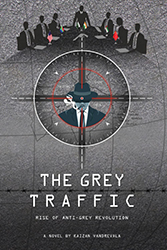 Vandrevala dwells on the communal disharmony following independence, which draws youngsters into its fold. Thus they find themselves in the "grey area.” Proper guidance is needed to prevent them from falling under the spell of this ancient and religious fanaticism, thereby controlling the horror of terrorism in the world today. Vandrevala portrays Bikram’s young son Prabhat as an intelligence agent whose aim is to trap those involved in illegal activities.
The story expounds on the fact that "brain-washed” youngsters can be saved from taking the wrong path if guided in time and in the right manner. It stresses the role of the media in reducing the religious divide not only between India and Pakistan but worldwide. The wide extent of terrorist organizations like Moulana’s and the vast network they control is portrayed. Also, the high risks taken by the police and detectives to break such networks before they destroy nations.
The author’s message of the success of good over evil comes through the character of Prabhat who, in conjunction with Zulfikar, head of the political party in Pakistan, succeeds in exposing corruption in the ruling party. The author uncovers the worldwide trade in human trafficking. The book also tells of families who die due to poverty or from need or greed sell their dear ones, whether their children or the elderly, to traffickers who con them into believing they will educate the young and place the elderly in old-age homes.
The gangsters in the story are Moulana Sahib and his agent Zohraver. Later, trafficking kingpin Gonzales is brought into the picture to nab Prabhat. Too many characters are introduced, which causes some confusion and makes for repetition. Retribution by the youngsters is shown when Zohraver realizes his folly and assists Prabhat in catching the traffickers red-handed.
The last few chapters explain the essence of the book. Witnessing violence and injustice in childhood warps the mind and creates a motive for revenge rather than seeking a solution. It stresses the importance of forgiveness and understanding to create a safer and more peaceful world.
Dr PILLOO HAKIM
Dr Hakim is professor emeritus, Grant Medical College and Sir J. J. Group of Hospitals, Department of Ear, Nose and Throat (ENT) and Head and Neck Oncology, and honorary consulting ENT surgeon at Saifee and The B. D. Petit Parsee General hospitals.