The K. R. Cama Oriental Institute’s (KRCOI) J. J. Modi Hall was the venue of a national seminar on the universal influence of the outstanding Persian poet Moulana Jalaluddin Rumi. Jointly organized by the Institute and the Culture House of the Islamic Republic of Iran on January 15 and 16, 2005, the event saw the participation of 18 scholars — from all over India as well as representatives from Iran and the Polish consul in Bombay Marek Moron. Between them they discussed Rumi’s poetry and mysticism, his impact on Indian and western minds, his spirituality and his influence on his generation of Sufis and on those that succeeded him.
Providing the keynote address at the inaugural function, retired Indian Administrative Service officer and former trustee of the KRCOI, Capt Hormazdiar Desai acquainted the audience with highlights of the poet’s life and work. Best known for his Masnavi, a compilation of 26,660 couplets in six volumes, dictated to his favorite disciple Hasan Husam-ud-Din, Rumi (1207-1273) was described by Desai as "the greatest mystic poet in the world.”
The youngest of the three children of a princess of the royal family of Balkh and an eminent theologian, teacher and preacher who was the spiritual guide of the reigning monarch of that city, Rumi was said to be in tune with the spiritual world since early childhood. When he was 12 years old the family had to flee from the advancing Mongol hordes and, traveling through Baghdad, Mecca and Damascus finally settled in Rum (Turkey) at a place called Konia. Here Jalal was married, first to Gevher who bore him two sons before her early death; thereafter to Kira Khatun, the couple adding a son and a daughter to the family. Jalal who eventually studied at Aleppo and Damascus was appointed professor in four colleges of Konia, earning a formidable reputation for learning and sanctity, as noted Desai. Here too he founded the Order of the Maulavi Dervishes, commonly referred to as the Dancing Dervishes. His Masnavi is full of anecdotes, some of them recounting extrasensory perceptions and abilities, as noted Desai.
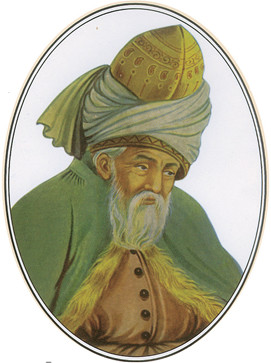
Mystic Rumi: impact on society
Welcoming the chief guest, Kazi Latafat Husain, director (culture) of the Nehru Centre, KRCOI president Muncherji Cama referred to the seminar as a "bridge for the understanding of various cultures, both contemporary and historical.” KRCOI trustee Ervad Rooyintan Peer read out the message of the President of India Dr A. P. J. Abdul Kalam who hoped the seminar would discuss "Sufism, mystical thoughts and their positive impact on society.” In his message the governor of Maharashtra S. M. Krishna appreciated the Islamic Republic of Iran’s efforts in "strengthening and expanding cultural relations with India through its various academic, cultural and social initiatives.”
In the philosophy of the Sufis and their works, love plays a prominent part inasmuch as love is the love of God, the longing to merge with God and the need for man to surrender his identity and self in that pursuit, said Husain. "The soul of Sufism lies in the understanding of cosmic rhythm and spiritual melody. The Sufi ideal is belief in an all-powerful natural order.” The celebration of Urs, the anniversary of the passing of a saint, is seen as union with the Lord and Maker, noted Husain adding, "The imagination is translated into the simplest language possible. Joy conquers every sorrow. May it be so...”
Arnavaz S. Mama