Myths And Mysteries: Indian Sport Behind The Headlines by Gulu Ezekiel. Published in 2023 by Rupa Publications India Pvt Ltd, 7/16, Ansari Road, Daryaganj, New Delhi 110002. Pp: xii + 220. Price: Rs 395.
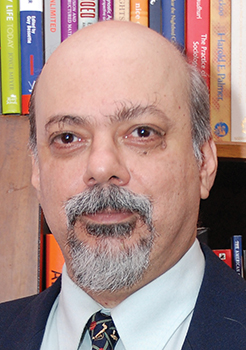
The sign of a good book is that you do not want it to end. Prolific sports writer Gulu Ezekiel’s (pictured) latest work — his 18th — is one such. In it, he continues where he left off in his earlier book, Myth-Busting: Indian Cricket Behind The Headlines. This one has a broader canvas — "mysteries” added to "myths,” and "sport” generally instead of "cricket.”
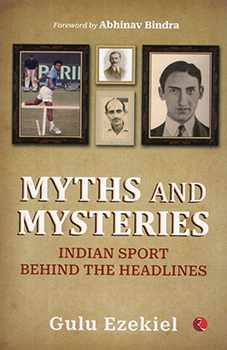
The book is extremely well-researched, revealing for the first time new facts about well-known sportsmen and events. The chapter on Norman Gilbert Pritchard (NP), the "Mystery Man of Indian Sport,” is particularly fascinating. He participated in the 1900 Paris Olympic Games — which, as Ezekiel points out, was unlike any of the Games that followed, because the events were spread over five months, from May to October!
NP won two silver medals in athletics — in the 200 m hurdles and the 200 m race — the first ever by an Indian. But did he represent India at the Games? Was he India’s first Olympian?
That’s the mystery which Ezekiel clears: many, including some official records, claimed he represented Britain, not India. Ezekiel took on the British Olympic lobby and dug up material to show that NP was as pucca (authentic)an Indian as any other. His family had made Calcutta its home since about 1780; NP was born and educated there, excelled in local events, and took part in the Olympics on his own steam, not as a selected team member of the British Olympic Association.
Prior to Indian independence in 1947, the hockey team played as India; the cricket team also represented India. Why then the controversy about NP, an Anglo-Indian, representing his country of birth, India?
The author corresponded with other Olympic historians and organizations and with support from the International Society of Olympic Historians (ISOH), eventually succeeded in getting it officially recorded that Pritchard represented India at the Paris Games.
The NP chapter reflects the author’s personal quest for the truth and the ecstasy of tracing NP’s descendants, resulting perhaps in a tad too much of non-sporting personal details of the family — parents, grandparents (maternal and paternal), brothers, sisters, aunts, uncles, et al — which may not excite sports lovers to the same extent it did the author. But then, like all good Parsis (the author’s late mother, Khorshed Wadia Ezekiel, was a Parsi), he loves to trace all the mamas, kakas and fuas (maternal and paternal uncles) of his subject.
Ezekiel also sheds new light on the many mysteries surrounding the Nawab of Pataudi (Sr), Ifthikar Ali Khan. A great deal is known about his son "Tiger” Mansur Ali Khan Pataudi, but relatively little about the father.
Pataudi (Sr) was selected to play for England on the 1932 tour to Australia — what came to be known as the infamous Bodyline series.
As Ezekiel’s research reveals, it is a myth that Pataudi (Sr) left the Australian tour midway in protest. The truth is that he (and some other members of the touring party, including its most famous participant, English cricketer Harold Larwood) left the touring party with the permission of the management at the end of the Australian leg of the tour and did not proceed to New Zealand.
Interestingly, the author reveals that Pataudi (Sr) was in contention to captain India on the first-ever official Test tour to England. He had at that time not yet played for England. He wavered, scored heavily in the "trial” matches, first agreed and then backed off. After the Bodyline tour, by 1934, Pataudi (Sr) had decided to throw in his lot with India. In 1936, he was publicly named captain well before the tour was due to commence but later lost interest in the captaincy, disgusted by the machinations of the Maharajkumar of Vizianagram (Vizzy), who cozied up to the cricket-crazy viceroy Freeman Freeman-Thomas Lord Willingdon to get himself appointed as the captain for the tour — as it turned out, a disastrous one, the team divided and Lala Amarnath sent home on disciplinary grounds.
The final twist in the Pataudi (Sr) saga was yet to come. He was "resurrected” after his playing days were virtually over, made captain for the 1946 England tour, ahead of India’s then greatest batsman, Vijay Merchant, who also had the reputation of being a sound tactician and good leader. In the result, Merchant had a fabulous tour as batsman, while the aging captain gently faded into the sunset. Pataudi (Sr) died six years later, just short of his 42nd birthday, on the very day of his son Mansur Ali Khan’s 11th birthday, January 5, 1952.
In his final chapter, Ezekiel moves 35 years ahead to 1971 and adds among his "Other Tales” the mystery of why Merchant, then chairman of selectors, exercised his casting vote in favor of Ajit Wadekar as captain in place of the incumbent "Tiger” Pataudi. The buzz has always been that Merchant’s act was his way of hitting back for the perceived injustice done to him by the elevation of Pataudi (Sr) over him in 1946. Ezekiel claims that this is confirmed. But he may not be right for Pataudi (Jr) himself confessed that he was expecting the chop, considering India’s poor performances on the field. Wadekar became captain in 1971… and the rest, as they say, is history: the first ever series’ wins in the West Indies and England!
In other chapters, Ezekiel explores the unsolved mystery of the sudden disappearance of C. Ramaswamy, an outstanding sportsman and a double international in tennis (Wimbledon 1921 and 1922, represented India in the Davis Cup in 1922) and cricket (captained Madras in the Ranji Trophy for five seasons and donned India Test colors on the 1936 tour to England).
As the author notes, "On October 14, 1985, he left home for his daily evening walk, never to return.” What became of him? Theories abound — but this is one mystery that even Ezekiel’s skills as a researcher have not been able to solve.
The book contains interesting chapters on the mysteries involving the history of political considerations that saw India playing some international tennis games and not others.
Equally interesting is the mystery of the last cricket Test match versus the 1947 West Indies side at the Brabourne Stadium — "The Test That Got Away” — the umpires A. R. Joshi and B. Mohini called "time” too early, with two minutes still remaining on a dramatic last day of the Test, depriving India of a chance at victory when it had to score only six runs for a famous win.
Ezekiel reveals many hitherto unknown facts — the umpires also called "over” when only five balls had been bowled. But more than all this is the startling disclosure that the two umpires between them actually counted one ball short four times in the innings! Why the scorers never pointed this out remains a mystery — perhaps for Ezekiel to unravel in his next book.
Every one of the 220 pages of this book (inclusive of a helpful subject index) is a treasure house of information, presented in an extremely readable style, offering new perspectives about many of Indian sport’s greatest moments, covering a wide range of subjects, from Dhyan Chand’s magic in hockey, particularly at the 1936 Berlin Games, to the little-known C. S. A. Swamy’s marathon effort at the same Games, to resolving the mystery of English cricketer Colin Cowdrey’s birthplace — Bangalore or Ooty? (Bangalore is the right answer!)
An informative, enjoyable read.
FREDUN DEVITRE
Devitre has been associated with cricket in India for almost 50 years as a commentator and freelance writer.