Died: Dr Rustom Phiroze Soonawala, 96, internationally acclaimed obstetrician and gynecologist who was equally popular with the well-heeled as also the economically disadvantaged, and a respected mentor known to share his expertise and the devices that he created to assist fertility and sterilization; in Bombay on January 4, 2025.
Serving on the scientific advisory committee of the Indian Council of Medical Research and the advisory panel on contraception to the ministry of health and family welfare, Government of India, Soonawala believed the advancement of a country depends on its healthcare and education facilities, not rockets.
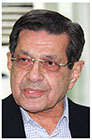
Former professor and head, Department of Gynecology at the Seth G. S. Medical College and Wadia Maternity Hospital, Soonawala was also founder chairperson of the Mahatma Gandhi University of Medical Sciences and Technology, Jaipur. A tribute from the University carried in an English daily gave him credit for being "a compassionate doctor, kind-hearted human being, inspiring mentor, committed teacher and visionary educationist. His legacy of humility, generosity and purpose will continue to inspire us and our future generations.”
Affiliated to Bombay’s leading medical hospitals like Breach Candy, Jaslok, Masina and The B. D. Petit Parsee General, to the senior consultant, the formation of an individual from the meeting of two cells was "nature’s greatest miracle.”
Dr Jeroo Bhada considered herself "very fortunate to have worked with him for many years and learning from the best of the best.” Having joined as Soonawala’s assistant in 1976 on completing her MD (Doctor of Medicine), she recalled, "What impressed me immediately was his boundless energy and enthusiasm for work. Keeping pace with him, even as juniors was difficult! Insistent that I follow his techniques accurately, he would stand behind me at times, quietly instructing me when I went wrong. His practice cut across all sections of society and he remained equally available to all. He had great compassion and empathy towards patients, especially during labor and was the first in Bombay to introduce epidural anesthesia for labor analgia when it was looked upon suspiciously by many! He was always using his engineering mind to design various instruments and intrauterine devices which are in use even today with great success.”
His accomplishments and views reported in past issues of Parsiana revealed he was erstwhile president of The Federation of Obstetric and Gynaecological Societies of India (FOGSI), and frequently represented the country at international meets and seminars on planned parenthood, female fertility and reproductive biology. He had even served the executive board of the World Federation for Voluntary Surgical Contraception.
Founder president of the Indian Society of Prenatal Diagnosis and Therapy, he never tired of reminding, "A lot of adult problems have their roots in fetal life.” Ailments like diabetes, allergies, anemia, respiratory complications in children can be avoided if pregnant women take a regular intake of folic acid, zinc, calcium, vitamins A, B12 and D, essential amino acids, coenzymes and other nutrients, he reiterated.
Top: Dr Rustom Soonawala; center: receiving Padma Shri from R. Venkataraman;
above, from l: Ch Vidyasagar Rao, Dr B. K. Goyal presenting Dhanvantari Award to Soonawala
Over the years, the distinguished doctor had been conferred the Padma Shri by the Government of India, the Lifetime Achievement Award by FOGSI and the Von Graffenberg Medal by the University of Kiel, West Germany. Yet another honor that he cherished was the Dhanvantari Award presented to him at the age of 86 in recognition of his "unending and unremitting contribution to gynecology and innate gentleness, humility and professional demeanor.”
When accepting the Award, he jokingly told the gathering that people assume all doctors are rich. "They are not.” Whilst acknowledging that sound planning of investments is essential, he added that "greed is killing human beings. If you have adequate, you are lucky. If you have plenty, give it to the poor and the needy.” More important than wealth is health and happiness, he impressed upon the audience. "If you don’t look after yourself, what will you do with the extra years?”
Besides physical and mental health, he spoke of occupational health that comes from a passion and commitment to one’s career to ensure that sacrifices are willingly made. Convinced that spiritual health "is a necessity if you want to be happy,” the doctor revealed how he invariably says a prayer before starting surgery, or seeks divine guidance if he has erred.
Social health and time set aside for family, friends and the community were vital too. At the 10th World Zoroastrian Congress in 2013 he had presented a paper on "Women’s health from birth to menopause” in which he mentioned there is a growth spurt in children at the age of five or six and then again at 15/16. "Make sure the child gets proper proteins and nutrition then.” He further advocated the need to monitor weight before it becomes "a disaster,” and to adopt an exercise regime so that it does not lead to problems like osteoporosis and loss of posture.
Clockwise from above: Rustom (sitting, far l) at a family celebration;
with Piloo and children; with Phiroze, Piroja and brothers
Those in the marriageable age were counseled, "It is caring, sharing and good communication between partners that makes a marriage happy. Give each other space.” Acknowledging that marriages are late because of situational pressures where both partners are working resulting in gynecological problems at the time of bearing children, he stated that females are fertile between the ages of 15 and 45 though male fertility can span the years from 15 to death.
With his liberal bent he believed that non-Zoroastrian spouses should be permitted entry to fire temples instead of making them wait outside. Likewise, the surgeon who had opted for cremation was among the prominent Zoroastrians who had lent their support at the time of the legal fight against the Bombay Parsi Punchayet that had banned two priests from performing religious ceremonies at Doongerwadi and three fire temples because they recited prayers for those cremated.
Observing that the number of children desired by couples was declining all over the world, Rustom mentioned that his father Phiroze was one of 14 children. His parents (Phiroze and Piroja) had four sons (all doctors, besides Rustom there was physician Jamshed, genito-urinary surgeon Fardun and dentist Soli). Likewise Rustom and his wife Piloo had four (daughters Jenai Banaji and Kamal Tata, and sons Drs Behram and Feroze). His children chose not to have more than two.
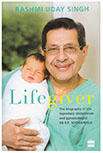
Accompanying his father, a physician, to the clinic as a little boy, Rustom learnt from him how a doctor should treat his patients. His mother enthused in him a love for sport and travel. Although he was not a brilliant student, after clearing his MBBS (Bachelor of Medicine, Bachelor of Science) and MD examinations from the Nair Hospital he proceeded to Glasgow to earn his FRCS (Fellow of the Royal College of Surgeons). Initially the Soonawalas all worked out of their father’s Grant Road clinic. As their practice increased, they moved to bigger establishments, noted Rustom’s biographer Rashmi Uday Singh in Lifegiver.
Rustom started his practice in 1956 when he would see five to seven patients in a day, aided only by a stethoscope and fetoscope (a funnel shaped instrument to listen to the fetus heartbeat). Whilst earlier 75% of births would be by normal delivery, the recent trend to have 75% by C-section "should not be encouraged,” he believed.
"His kindness, dedication and unwavering commitment to providing the best care left a lasting impact on everyone, creating a legacy that will not be forgotten,” remarked his personal secretary Roshan Merchant who had worked with him for over 49 years. "There were nights when the clinic remained open until 11 p.m. due to the sheer volume of patients. Yet working with him was always a rewarding experience. His unwavering support and guidance made even the longest days feel fulfilling and worthwhile,” she added.
In Fathers and Sons, Mothers and Daughters by Meher Bhesania, Rustom’s son Dr Feroze, also a popular obstetrician and gynecologist, described his dad: "A man of high principles and gentle thought, a giver more than a taker, his compassion and his ethics have endeared him to his patients.” Older son, Dr Behram, a physician in the US, viewed his father as an "impressive and principled man,” and recalled his words, "Make a pact with yourself and live each day with zest and treasure it as a precious gift. Let humility light up your achievements and think about what you will do for others so that they will look back at you in appreciation.”
The dedicated doctor is survived by his daughters Jenai Banaji and Kamal Tata, and sons Drs Behram and Feroze Soonawala.