Clouds by Chandrahas Choudhury. Pubilshed in 2018 by Simon and Schuster India, 818, Indraprakash Building, 21, Barakambha Road, New Delhi 110001. Pp: 280. Price: Rs 699.
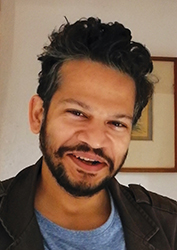
In his second novel, Clouds, Chandrahas Choudhury (pictured on pg 212) seems to have abandoned the traditional novel and has written a novel of ideas, where conversation, intellectual and philosophic debates on occasionally esoteric and philosophic subjects tend to predominate.
There are two strands in the novel. The first revolves around 42-year-old Dr Farhad Billimoria, a divorced psychotherapist, who has decided to abandon Bombay (city of "clods”) and move to San Francisco (city of "clouds”). We first encounter him, "a high-grade 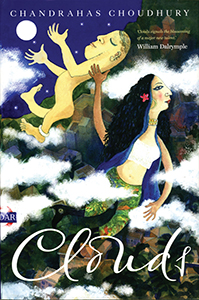 Parsi man” in "his Parsi-owned car” who has just parked his Maruti 800, Zelda, and is about to run into Zahra, "a veritable goddess from top to bottom” whom he had briefly met at a navjote ceremony. By a happy coincidence, Zahra is a native of San Francisco and Farhad is lost in dreams of meeting her once he shifts base to that city.
While Billimoria lives in the elite and comfortably well-heeled area of Worli Seaface, the second strand of the novel deals with an old couple from Bhubaneswar, living in a depressing flat in Borivali: Eeja and Ooi are staunch Brahmins with extremely narrow and rigid ideas about their religion. They are looked after by their carer, Rabi, a poor tribal boy, a worshipper of the Cloudmaker. Cloudmaker’s home is Cloud Mountain, which is being usurped by a company that wants to mine it for the rich bauxite which lies beneath. Bhagaban, the son of the old couple, is fighting elections in Bhubaneswar, and one of his key election issues is his struggle against the all-powerful company to safeguard the rights of the tribal Cloud people.
The novel often is a bit too ambitious and Choudhury seems to take on more than he can manage. Between the two stories, Choudhury paints a very broad canvas covering love, sex with bits of feministic jargon thrown in the first, and religion, politics and commercial exploitation in the second. All the information relating to the creation of a complete mythology of the Cloud people and the Cloudmaker is given to the reader by way of conversation and discussion; there are few incidents or situations where the theme could have been illustrated instead of being merely narrated.
 Since the title of the novel is Clouds and both the narratives are linked by motifs and the metaphor of clouds, the reader often feels the necessity of searching for connections between the two strands and try to unify them based on the image of the clouds. Whether Choudhury really manages to achieve this ambitious aim is questionable. But what finally links the two narratives is not so much the metaphor of clouds but the fact that both the protagonists, Farhad and Rabi, undertake a journey to ‘find themselves.’ Rabi finds it "liberating not to be a tribal carrying the yoke of his cause, only a human being carrying the flag of his self.”
It would be unfair to say that the novel is devoid of interesting characters. The protagonists are finely etched. Whether it is Farhad and his sexual conquest of Zahra, or his sparring with Hemlata, professor of English at Bombay University, an ardent feminist who is the complete antithesis of Zahra ("all the sex came from Zahra and all the text from Hemlata”); the ageing couple, Eeja, full of Sanskrit shlokas and his caring wife Ooi, or Rabi, the professional "crier” ("one cries so that the thread of compassion that binds man to the living beings around him never breaks”) who is caring for them; all are extremely pleasant company and are well drawn characters. The dialog is bright and sparkling and there are wonderfully comic scenes which abound in the novel: Eeja’s hiccups, the episode where Farhad visits Hemlata to return the keys of her car and finds himself locked in her flat and the ensuing breakfast the next morning supervised by her delightful mother, the trip to Udvada with Uncle Sheriyar, the concluding scene at Churchgate station; finally, this is what one remembers most vividly once the book is shut, not so much the religious myth of the Cloudmaker.
FIRDAUS GANDAVIA
Gandavia holds a doctorate in English literature and is a retired chartered accountant. He is a compulsive reader of fiction.