Pioneering home finance company HDFC’s vice chairman
Keki Mistry believes that every individual needs to be a home owner
Farrokh Jijina
"Now is the right time for individuals to buy homes,” according to Keki Mistry (pictured), vice chairman and chief executive officer (CEO) of Housing Development Finance Corporation Limited (HDFC), India’s pioneering company in the area of housing finance. While it is a very location-dependent market, "prices have remained fairly flat for a long period of time,” he told Parsiana in an interview in his office in downtown Bombay on May 22, 2017. "At 8.35%, interest rates on housing loans are as slow as they can get,” he avers. Mistry elaborates on the criteria for availing of the government announced subsidy on interest on housing loans: an individual should not own a house; monthly income needs to be Rs 1.5 lakhs or less and the area of the accommodation needs to
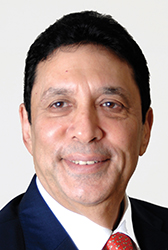
be less than 110 sq m (1,184 sq ft). If one meets these criteria, a subsidy of three percent of the interest upto Rs 12 lakhs is available, he smiles. "Every person needs to own a home… it should be one’s single largest investment.”
Due to demonetization, "the money lying in unproductive assets, mainly physical cash, has now come back into the banking system… it has found its way into equity markets, bond markets, insurance companies, basically into financial savings and pushed interest rates lower.” The soft-spoken senior executive told The Economic Times of May 5 that "we did see slowdown in demand for individual loans as people started holding back their plans to buy (immediately after demonetization), expecting property prices to come down.” The cash component in real estate has come down significantly, which makes for better governance, he noted.
In a follow-up call with Mistry on June 28, on the impact of Goods and Services Tax (GST) on property prices, he states that there is no clarity on the application of the new tax that came into effect on July 1. "GST will apply on the complete property value (cost of the land and the construction cost)… logically it should not, as land is neither ‘goods’ nor a ‘service.’” Setoffs will be available to sellers on their purchases in the construction process.” The vice chairman hopes that clarifications will be issued soon, but forecasts that "properties where land is a major component of the price will see an increase in prices (as no setoff is available on land prices).”
The money man is optimistic that RERA [Real Estate (Regulation and Development)] Act, 2016 of the central government, which seeks to protect home buyers as well as help boost investments in the real estate industry "will definitely bring in more transparency in the business.” Besides prohibiting unaccounted money from being pumped into the sector, a major benefit for consumers is that builders will have to quote prices based on carpet area, not super built-up area. The Maharashtra Real Estate Regulatory Authority (the administration of the Act is a state subject) issued a circular on June 15 defining carpet area and asked builders to adhere to this standard while drawing up sale agreements. The regulator has mandated that balconies, verandas and terraces, even if exclusive to the flat owner cannot be included in the carpet area. The MumbaiMirror said on June 17 that "the move...is expected to bring to an end the practice of builders selling flats based on…the built up area (sum of carpet area, wall thickness, ducts, exclusive balcony and verandas) or super built up area (sum of built up area and common facilities like veranda, staircase, lift, etc).”

A chartered accountant who completed his articleship with A. F. Ferguson and Company, Mistry joined HDFC in 1981 when the company was barely four years old after short stints with Hindustan Unilever and Indian Hotels Company. Also a certified public accountant, Mistry was inducted to the board of HDFC as executive director in 1993, appointed as managing director in 2000, and as vice chairman and managing director in 2007. The company website lauds his "critical role in the successful transformation of HDFC into India’s leading financial services conglomerate by facilitating the formation of companies including HDFC Bank Limited, HDFC Asset Management Company Limited, HDFC Standard Life Insurance Company Limited and HDFC ERGO General Insurance Company Limited.
Community-speak
"The Parsis have done more for community housing than any other community,” avers Mistry. Referring to the depleting Parsi population (57,264 according to the 2011 census), he states, "we need to figure out what the community would look like in terms of numbers 100 years later, before answering questions of whether we need more housing to be built.” Calling himself a liberal in thought, Mistry believes that each individual should have the choice of leading his life according to his own wishes, including the right of choice for the method of disposal of the dead.
"Fifty years ago, there were so many Parsis at top positions… lots of chartered accountants and solicitors… the good Parsi doctors are now all in their 60s and 70s,” he laments. At HDFC, they are "not getting as many (Parsis) as we would have liked.” The CEO believes that Zoroastrian trusts have a "lot of land… Why not build top quality housing for Parsis and non Parsis and use it to fund housing for lower income groups?”
"Never give up,” is Mistry’s mantra. Quoting an example from his life, the CEO recalls a knee injury three-and-a-half years ago while playing cricket ("I am a fast bowler”), that led his orthopedist to prescribe a weight loss of 30 kg. "I single-mindedly did it,” he states, matter-of-factly.

From left: Arnaz, Tinaz and Keki Mistry
Mistry’s wife Arnaz worked with Unit Trust of India for 20 years. Daughter Tinaz who completed her masters from the London School of Economics works with the IDFC Institute in the area of banking policies. With "not too many Parsi friends, except from my school (Campion in Bombay’s Cooperage),” Mistry avers that he would not like to be involved in Bombay Parsi Punchayet matters again, after having unsuccessfully contested the 2008 elections for trusteeship. "There should be a system of nominating individuals of good standing (to the apex body)… one should not need to ‘sell’ oneself,” he believes. Mistry states he contested because mother Shirin wanted him to "do something for the community.” The community needs to put in mechanisms to "encourage the youth to become more professional and to take education more seriously… get the gender bias out of the way,” he advises.
Having grown up on Bombay’s Princess Street, Mistry does not "know what it is like to live in a Parsi colony… I could not tell you what it is like to live in a gated community like (Colaba’s) Cusrow Baug vis-à-vis Dadar’s (Mancherji Edalji Joshi) Parsi Colony that has public roads going through it… If the house is nice, then, I would, I guess (live in a colony).” Looking for a new home himself, Mistry says he would like a sea facing apartment. "Reputation of a seller is paramount to me,” he states. "Like in any other business, creation of trust between a buyer and a seller is half the job done,” he avers.