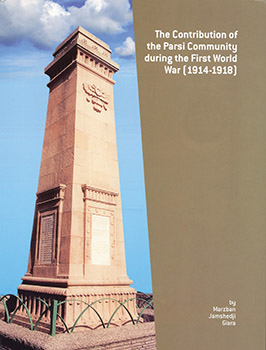
The Contribution of the Parsi Community during the First World War (1914-1918) by Marzban Jamshedji Giara. Published in 2016 by Sorabji Burjorji Garda College Trust, Parsi Cultural Division, Sayaji Road, Navsari, 396445. Pp: 154. Price: Rs 300.
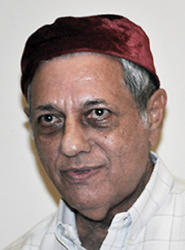
Marzban Giara (pictured), is an author, publisher and distributor of books on Zarathushti religion and Parsi history, having translated and authored a large number of books. His book, The Contribution of the Parsi Community during the First World War (1914 — 1918), is one of the must-haves on one’s book shelf. World War I (WWI), also known as the First World War or the Great War, was a global war originating in Europe that lasted from July 28, 1914 to November 11, 1918. The War was fought under the most brutal conditions involving trench warfare and the use of poison gas by both sides. More than 70 million military personnel, including 60 million Europeans, were mobilized in one of the largest wars in history. Over nine million combatants and seven million civilians died as a result of the War (including the victims of a number of genocides), a casualty rate exacerbated by the belligerents’ technological and industrial sophistication, and the tactical stalemate caused by grueling trench warfare. It was one of the deadliest conflicts in history, and paved the way for major political changes, including revolutions in many of the nations involved. Among the dead were upwards of 61 Parsi soldiers of various ranks and branches of the military out of thousands who took part, fighting on the side of the British from undivided India and other British territories. Of, these 42 Parsis never returned and seven died as a result of wounds suffered in combat.
Soon after the the Great War broke out, a group of Parsis of Bombay under the auspices of the Bombay Parsi Punchayet (BPP) gathered at the Wadiaji Atash Behram on August 11, 1914. After prayers, it was resolved to send a message to the British Government, through Sir Jamsetjee Jejeebhoy, Bart, that the Parsi community would stand loyal to the Crown. Subsequently, the Irani Zoroastrians also held a meeting at the Allbless Baug on November 22, 1914 and expressed solidarity with the British in the war effort.
At the start of the War, prominent Parsis such as Sir Pherozeshah Mehta, Dadabhai Naoroji, Jejeebhoy, Sir Dinshaw Petit, Sir Dorab Tata, Hormusji Wadia and others called a public meeting at the Town Hall on August 13, 1914 urging all the citizens of Bombay to support the British. "We are proud to think that the War that Britain is waging is a just and righteous war in a just and righteous cause,” Sir Pherozeshah stated.
What gives this great book its uniqueness is the fact that the author, Giara, has painstakingly dug out photos of most of the brave Parsi military men and written a small paragraph on each. We learn of the valuable service rendered not only by Parsi manpower, but also by commercial enterprises like the Tata Iron and Steel Company that supplied the best quality steel for the building and expansion of railways in India, Africa, Mesopotamia and elsewhere while contributing to the War effort. The Zoroastrian Iranis vowed to stay back in Bombay and India and continue to run their cafes and restaurants in support of the troops. Many Parsi doctors provided medical services to the British and French soldiers. Parsis in other walks of life also chipped in, including running the docks and trains carrying troops.
Day-to-day living for the men in trench warfare was harsh and extremely dangerous. Not only were the trenches constantly under threat of attack from shells or other weapons like machine gun fire and mustard gas, but there were also many health risks that developed into large-scale problems for medical personnel. Apart from the inescapable cold during the winters in France, trenches were often completely waterlogged and muddy, crawling with lice and rats. Trench fever (an infection caused by louse feces), trench nephritis (an inflammation of the kidneys) and trench foot (the infection and swelling of feet exposed to long periods of dampness and cold, sometimes leading to amputation) became common medical problems, causing significant loss of manpower.
Several Parsis went missing during the War and nobody could trace them. Others received mention in dispatches for their bravery. One such Parsi was Sergeant Karesasp A. D. Naoroji, grandson of Dadabhai Naoroji (see "Missing, believed killed,” Parsiana, March 21, 2015). He had gone to England for higher studies, like many Parsi young men of means, when the War broke out. He was at college in Cambridge when he enrolled in the army. He was quickly promoted to lance corporal and served in the trenches on the French front. His wrist was almost cut in half by a bullet from a German machine gun. On recovering, he was once again sent to France and promoted as sergeant. When he saw a German soldier killing a wounded British officer, Naoroji made a bayonet charge and ran the German through his abdomen and killed him. His grandfather, who was 91 when he heard the news, took great pride at his grandson’s heroism. There are many stories of courage, heroism and bravery in face of certain death exhibited by Parsi military men in the Great War. To read all about their exploits it is best to purchase the book and go through all the pages. It will make one very proud to be a Parsi!
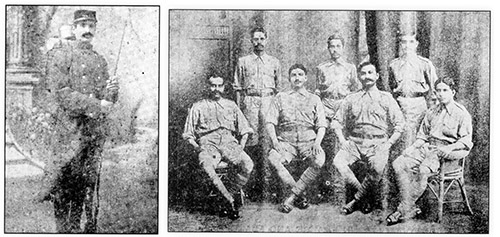
Pestonji Mehta who served in the French Army; Parsi Town Guards in Colombo
A Parsi home in London as a bomb-proof shelter
Parsi ladies helped in stitching clothes for the Army
An array of awards and decorations
The horrors of trench warfare in France, described in some detail by Dolly Framji Panday, grandson of Sir Dinshaw Petit, are worth reading about. One Burjor Karanjia served in the Shah of Iran’s Army during the War, becoming the first Zoroastrian soldier in the Persian Army after a gap of 1,300 years! He rapidly rose from the rank of lieutenant to major by the time the War ended. Capt Hormusji Framji Manekshaw of the Indian Medical Service was based in Amritsar, though his family hailed from Valsad in Gujarat. He was the father of India’s first Field Marshal Sam H. F. J. Manekshaw. Capt Jehangir Ratanshah Wadia served as a surgeon in Alexandria (Egypt) and Aleppo (Syria). There is a British Army cemetery in Aleppo where some Indian soldiers who died in battle lie buried. Giara’s book also gives details of the deaths of many Parsi soldiers and doctors on the battlefront.
The role of Parsi women in WWI was substantial and has been mentioned in the book. Jejeebhoy, 5th Baronet, noted in 1933 during the Armistice Day celebrations that although the Parsis were the smallest community in India, they had contributed many men and women in defense of the (British) empire. Parsi soldiers fought side by side with the armies of France, America, Canada, Australia, Ethiopia and of course the British army in various capacities. Many laid down their lives.
When I was studying for my Master’s degree in plant ecology and geography during 1970-1972 at the Royal Institute of Science (RIS) attached to Sir Cawasjee Jehangir Hall opposite Regal Cinema in Bombay, I wondered why the walls, about five feet from the ground, were covered with white bathroom tiles. I was informed that the RIS had been given by Sir Cawasjee to the British Government for use as a hospital to treat the wounded and it was easier to wipe off blood stains from the white tiles than from a painted wall. The B. D. Petit Parsee General Hospital had also been given on rent to the British Government for the duration of the War, a fact I was unaware of. There are many such nuggets of information that Giara has collected for this admirable book. One of the best photos in the book is on page 93 of 26 Parsi ladies in Karachi operating sewing machines to stich clothes for soldiers under the leadership of one Mrs Vajifdar.
The book mentions the inauguration of the War Memorial on April 19, 1928 to perpetuate the memory of those Parsi Zoroastrians who had died in the Great War. The pillar was erected at Khareghat Colony, Hughes Road, Bombay. In conclusion, I would recommended this painstakingly researched book to every Parsi household and also to all historians interested in the happenings of the WWI. If one’s grandfather or great-grandfather had served in the Great War, one may find his photo and exploits listed in the book. A useful index of the names of persons mentioned in the book is appended at the end. This is most thoughtful of the author, as it would be very helpful for those looking for reference to certain individuals. For the price, this book is invaluable. The back cover mentions that the author’s next book will be The Contribution of the Parsi Community during WWII. That will be worth waiting for!